
Vampire Squid
Vampyroteuthis infernalis
The Vampire Squid is a fascinating deep-sea creature with glowing eyes and a cloak-like web. Despite its spooky name, it's actually quite gentle and unique in the ocean depths.
Habitat: Deep Sea
The Vampire Squid is a small, dark red or black cephalopod with large, globe-like blue eyes and a unique cape-like web connecting its eight arms. Its gelatinous body lacks iridescence, making it look distinct from other squid.
Category
InvertebrateRarity
Rare
Danger
2/5 · Low
Snaps
Be the first to snap!
Despite its name, it feeds on decaying matter, not blood or live prey.
It can live in oxygen minimum zones where most complex life cannot survive.
Its body is incredibly soft and gelatinous, allowing it to withstand extreme deep-sea pressures.
Its scientific name, Vampyroteuthis infernalis, means 'vampire squid from hell.'
Vampire Squid can release clouds of sticky, bioluminescent mucus to startle predators, allowing it to escape into the dark.
Vampire Squid has a webbed cloak it can pull over itself to appear spiky and larger, deterring potential threats.
Vampire Squid has the largest eyes relative to its body size of any animal, helping it see faint light in the dark abyss.
Vampire Squid can use two retractable filaments to collect 'marine snow' for food, making it a unique deep-sea detritivore.
This deep-sea dweller feasts on tiny bits of decaying matter floating through the ocean.
Somniosus pacificus
Hunts deep-sea fish and cephalopods.
Macrourus berglax
Consumes deep-sea invertebrates and detritus.
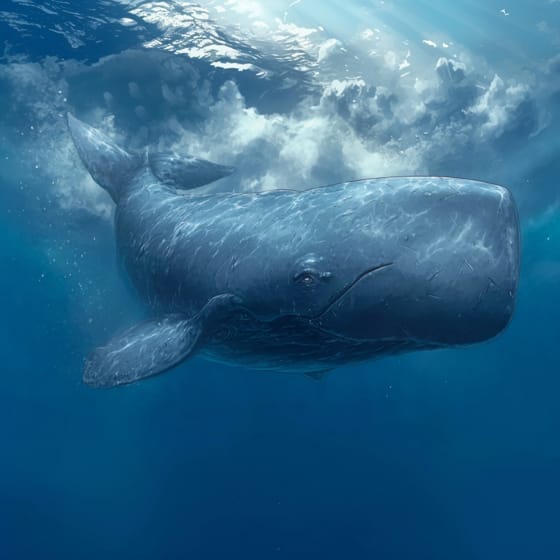
Physeter macrocephalus
Hunts various deep-sea cephalopods.
Camouflaged describes organisms that possess coloring or patterns that allow them to blend into their environment.
Filter feeders obtain nutrients by straining suspended food particles and small organisms from water.
This trait signifies organisms belonging to a very old evolutionary group with ancestors dating back millions of years.
Deep sea habitats are characterized by extreme pressure, darkness, and cold temperatures, supporting unique life forms below the sunlit zone.

This trait identifies organisms whose diet consists entirely or primarily of animal tissue.

Regenerative organisms possess the ability to regrow lost or damaged body parts, tissues, or organs.

Pertaining to organisms that emit light through bioluminescence or fluorescence.

Nocturnal animals are primarily active during the nighttime hours, typically resting or sleeping during the day.
Danger
2/5 · Low
Vampire Squids live in the deep sea, so we won't encounter them while swimming. Let's admire them from afar.
25 cm
0.4 kg
8 years
This deep-sea dweller feasts on tiny bits of decaying matter floating through the ocean.
Deep Sea
Scavenging
3000 m
Zoom in to split clusters and explore where this object has been snapped.
Recent snaps will appear here as new observations are added.