




Whirligig Beetle
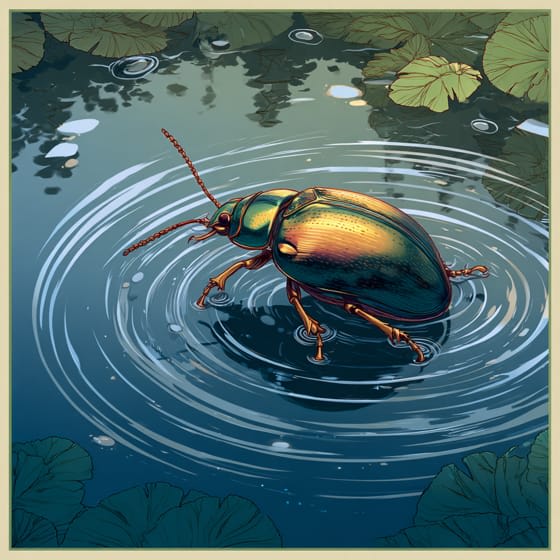
Dineutus discolor
Whirligig Beetles are fun little bugs that love to zoom around on the water's surface. They have big eyes that help them see above and below the water at the same time!
Habitat: Ponds and lakes
The Whirligig Beetle has a sleek, oval body that is shiny black or dark metallic, appearing flattened and streamlined for water. It is uniquely identifiable by its eyes, which are split to allow simultaneous viewing above and below the water.
Category
InsectsRarity
Common
Danger
2/5 · Low
Snaps
Be the first to snap!
Baby whirligig beetles have feathery gills along their bodies to breathe underwater!
They often "dance" in swirling groups on the water's surface to confuse attackers!
Whirligig beetles can also swim *underwater* by trapping an air bubble to breathe!
Whirligig beetles have extremely sensitive antennae for detecting ripples on water!
Whirligig Beetles have uniquely divided eyes that let them see both above and below the water at the same time.
Whirligig Beetles can swiftly glide across the water's surface because of their flattened, oval body shape.
Whirligig Beetles can release a foul-smelling chemical that helps them deter predators when threatened.
Whirligig Beetles can create ripples on the water to send signals and find mates.
Whirligig beetles are agile hunters that eat smaller insects found on or near water.
Age differences: Larvae also hunt small aquatic invertebrates.
Aedes aegypti
Whirligig beetles actively hunt mosquito larvae in water.
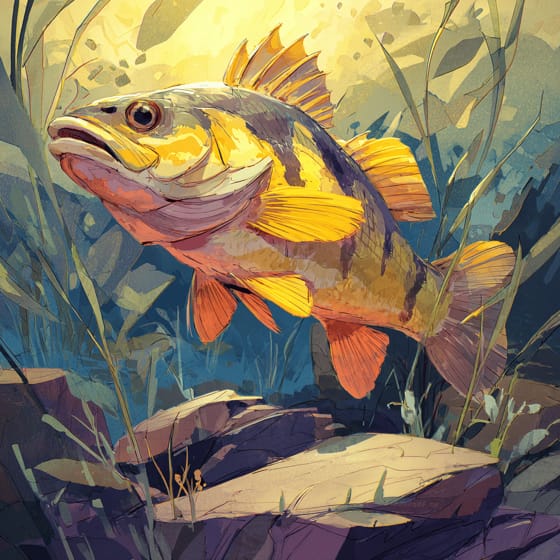
Perca flavescens
Fish like perch prey on adult and larval whirligig beetles.
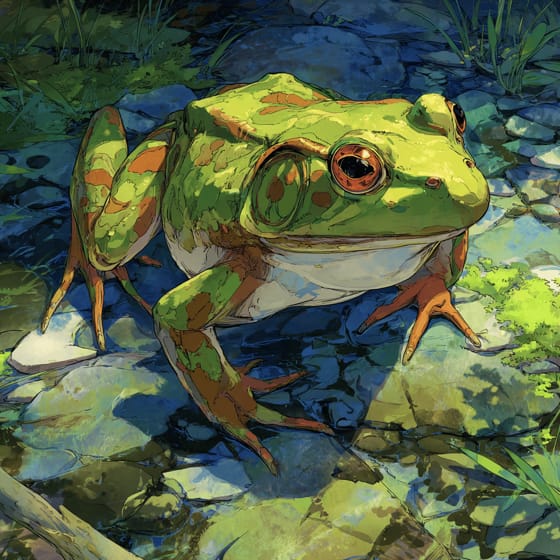
Rana catesbeiana
Bullfrogs are known to eat various aquatic insects, including beetles.
Anas platyrhynchos
Ducks often feed on insects found on the water's surface.
Wildlife encompasses all undomesticated animal and plant life existing in their natural habitats.
Social animals live in organized groups, cooperating for survival benefits such as foraging, defense, and raising offspring.
Filter feeders obtain nutrients by straining suspended food particles and small organisms from water.
This trait identifies organisms whose diet consists entirely or primarily of animal tissue.

Freshwater habitats include non-saline aquatic environments such as rivers, lakes, ponds, and wetlands, vital for numerous species.

This trait identifies organisms that exhibit exceptional swiftness in movement for hunting, escape, or travel.

Aquatic habitats encompass environments where organisms live predominantly in water, including oceans, rivers, lakes, and wetlands.

Describes organisms that transfer pollen, enabling the fertilization and reproduction of plants.
Danger
2/5 · Low
Do not touch or pick up. Some insects sting or bite. Ask an adult for help.
10-20 mm
5-10 mm
150-300 days
10 km/h
Whirligig beetles are agile hunters that eat smaller insects found on or near water.
Ponds and lakes
Pursuit
6
Zoom in to split clusters and explore where this object has been snapped.
Recent snaps will appear here as new observations are added.