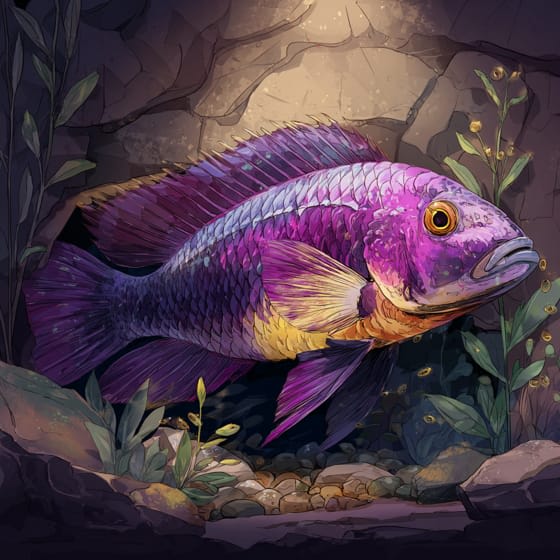





Kribensis Cichlid
Pelvicachromis pulcher
Kribensis Cichlids are small and colorful fish that enjoy hiding in plants. They are fun to watch as they swim and explore.
The Kribensis Cichlid has an elongated body with iridescent scales, often displaying a dark lateral stripe. Females are especially vibrant, developing a striking purple or pink belly, particularly noticeable during breeding. Its fin edges can be trimmed with red or yellow.
Category
FishRarity
Common
Danger
2/5 · Low
Snaps
Be the first to snap!
Kribensis can sometimes mimic small pebbles to hide from bigger fish!
Kribensis dads often guard the entrance to their family's cave home.
The 'pulcher' in their name means "beautiful" in Latin!
They use special body wiggles to communicate with each other underwater!
Kribensis Cichlid can flash a bright purple belly to show readiness for breeding or territorial defense.
Kribensis Cichlid can dig and arrange substrate to create secure tunnels and caves for their eggs and fry.
They feast on small insects, worms, and tiny plant matter found along riverbeds.
Hepsetus odoe
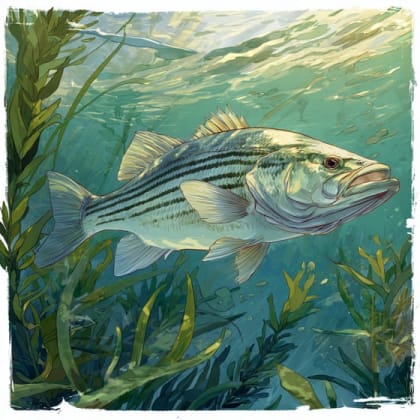
Larger fish prey on Kribensis cichlids.
Chironomus riparius
Kribensis forage for these tiny insect larvae.
Daphnia pulex
They consume small crustaceans like these zooplankton.
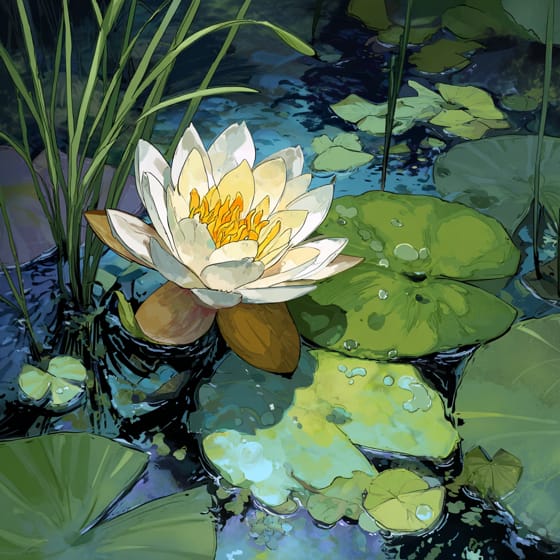
Nymphaea lotus
Aquatic plants provide hiding spots and cover.
Wildlife encompasses all undomesticated animal and plant life existing in their natural habitats.
Social animals live in organized groups, cooperating for survival benefits such as foraging, defense, and raising offspring.
This trait identifies organisms whose diet includes both plant and animal matter.
Colorful describes organisms or objects displaying a wide range of bright and distinct colors.

Freshwater habitats include non-saline aquatic environments such as rivers, lakes, ponds, and wetlands, vital for numerous species.

Aquatic habitats encompass environments where organisms live predominantly in water, including oceans, rivers, lakes, and wetlands.
Danger
2/5 · Low
Watch quietly from a distance and never try to feed or chase wild animals.
6-10 cm
0.01-0.03 kg
3-5 years
They feast on small insects, worms, and tiny plant matter found along riverbeds.
8 km/h
Foraging
3 m
Freshwater
Zoom in to split clusters and explore where this object has been snapped.
Recent snaps will appear here as new observations are added.