

Sitka spruce
Picea sitchensis
The Sitka spruce is a tall tree with soft, needle-like leaves. It grows in coastal areas and is known for its strong wood, which is used to make musical instruments and airplanes!
Habitat: Coastal areas
The Sitka spruce has sharp, stiff, blue-green needles that are individually attached to its twigs. Its bark is thin, scaly, and purplish-gray, often deeply furrowed on older trees. This combination of spiky needles and shaggy bark helps distinguish it from other conifers.
Category
PlantsRarity
Common
Danger
1/5 · Very low
Snaps
4
Indigenous peoples traditionally used its tough roots for weaving incredibly durable and watertight baskets.
Its super-strong yet light wood is highly prized for making musical instruments, especially guitars and pianos!
Some Sitka spruce trees have been alive for over 800 years, witnessing centuries of change!
The world's tallest spruce tree, towering over 100 meters, is a Sitka spruce!
Sitka spruce can tolerate salty ocean spray thanks to its tough needles and waxy coating, helping it thrive right by the sea.
Sitka spruce can grow incredibly tall, often over 90 meters, which helps it compete for precious sunlight in dense coastal forests.
Sitka spruce has a strong, wide-spreading root system that helps it stay anchored against fierce coastal gales and storms.
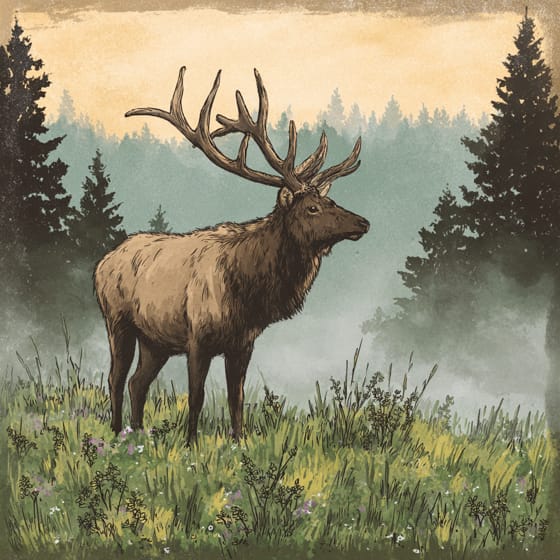
Cervus canadensis
Elk browse on young Sitka spruce trees.
Glaucomys sabrinus
Squirrels nest in and eat seeds from Sitka spruce cones.
Rhizopogon vinicolor
This truffle fungus forms a helpful partnership with spruce roots.
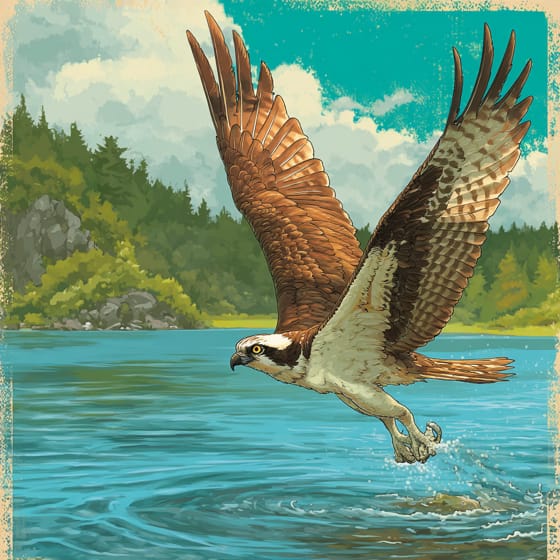
Pandion haliaetus
Ospreys often build large nests high in Sitka spruce crowns.
Coniferous plants are typically evergreen, bearing needles or scales and reproductive cones.
Evergreen plants retain their foliage throughout the year, never shedding all their leaves at once.
Timber refers to wood that has been prepared for use in building and carpentry.
This trait characterizes organisms with an exceptionally long lifespan compared to others of their kind.

Coastal habitats are dynamic environments located along the interface between land and sea, influenced by tides, waves, and saltwater.
This habitat trait identifies species found in temperate rainforests, characterized by significant rainfall, mild temperatures, and dense evergreen or deciduous forests in coastal regions.

Describes a species whose presence and role have a disproportionately large effect on its environment.

Giant describes organisms or objects of significantly larger size than average for their species or type.

Describes organisms that transfer pollen, enabling the fertilization and reproduction of plants.
No aliases listed yet.
Danger
1/5 · Very low
Stay on paths when exploring forests and be careful of falling branches.
5000-10000 cm
1000-2000 cm
Yes
None
Perennial
Wind
Coastal areas
Zoom in to split clusters and explore where this object has been snapped.