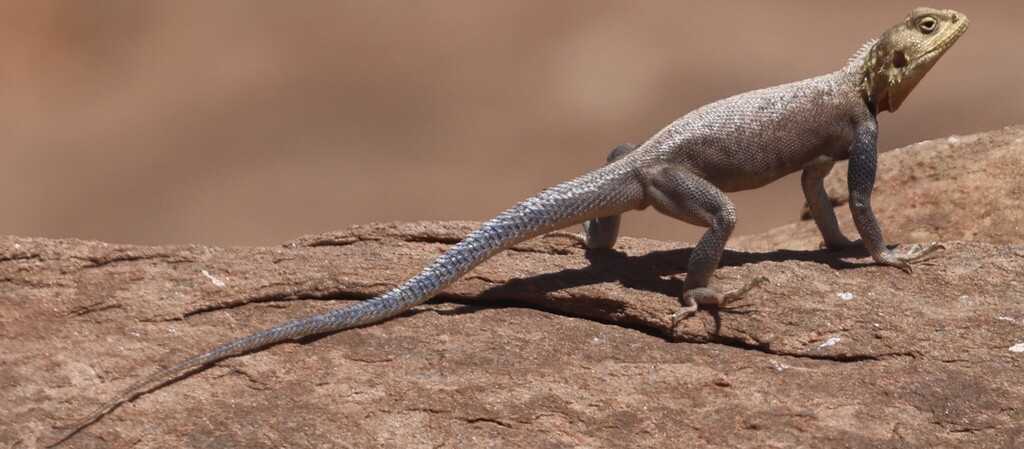





Agama somalica
Agama somalica
The Somali agama is a colorful lizard that loves to bask in the sun. With its bright colors, it can be found in rocky areas and grasslands, making it a fun creature to spot!
Habitat: Grasslands
The Agama somalica male is striking, featuring a bright blue head often marked with red or orange, contrasting with a mottled brown body. Females and juveniles display more subdued shades of brown and grey, providing excellent camouflage against rocky desert environments.
Category
ReptilesRarity
Common
Danger
1/5 · Very low
Snaps
Be the first to snap!
Agamas often stand on their hind legs to get a better view of their surroundings!
Males often do "push-ups" with their heads to show dominance or attract females!
Their scales are incredibly tough, protecting them from sharp rocks and predators!
They can run on their back legs for short distances to escape danger quickly!
Agama somalica can quickly change its skin color from light to dark because it helps them regulate body temperature by absorbing or reflecting heat.
Agama somalica has strong claws and rough scales that help them securely grip and climb steep, rocky surfaces with ease.
Agama somalica can communicate using a series of head bobs that helps them show dominance, attract mates, or warn rivals.
This lizard eats many tiny bugs and sometimes plants, staying active during the day to hunt.
Aquila rapax
A common bird of prey that hunts small lizards.
Naja pallida
A snake predator found in the same arid habitats.
Messor barbarus
A primary food source, often foraged from the ground.
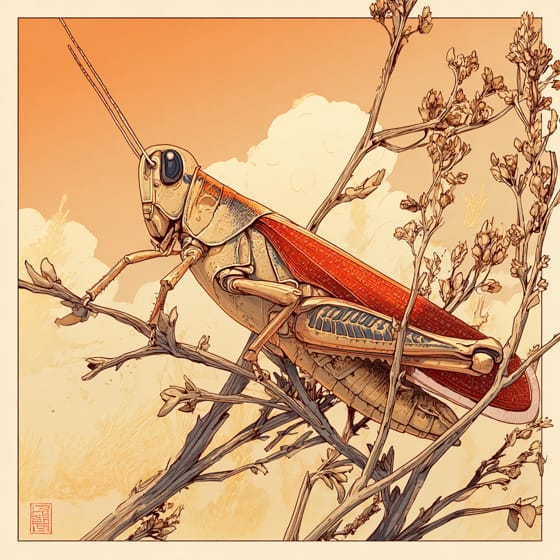
Schistocerca gregaria
Opportunistically feeds on these abundant insects.
Solitary animals live alone for most of their lives, only interacting with others for mating or parental care.
Camouflaged describes organisms that possess coloring or patterns that allow them to blend into their environment.
Colorful describes organisms or objects displaying a wide range of bright and distinct colors.
Grassland habitats are terrestrial biomes dominated by grasses and herbaceous plants, supporting a variety of grazing animals.

This trait identifies organisms whose diet primarily consists of insects and other small invertebrates.

Thermoregulating organisms maintain a stable internal body temperature despite fluctuations in the external environment.

Diurnal animals are primarily active during daylight hours, typically resting or sleeping at night.
No aliases listed yet.
Danger
1/5 · Very low
Always watch lizards from a distance and do not try to catch them.
The easiest way to identify Agama somalica is to use the Snappit nature identifier app.
20-30 cm
0.05-0.15 kg
5-10 years
25 km/h
This lizard eats many tiny bugs and sometimes plants, staying active during the day to hunt.
Grasslands
Foraging
Zoom in to split clusters and explore where this object has been snapped.
Recent snaps will appear here as new observations are added.
Take the discovery with you
Snap it with Snappit to identify it, learn what makes it special, and add the discovery to your collection.












