





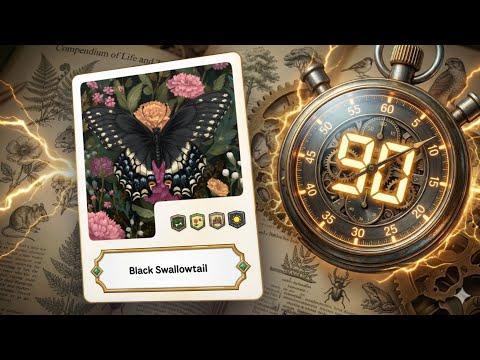
Black Swallowtail
Papilio polyxenes
The Black Swallowtail is a beautiful butterfly with striking black and yellow colors. They love to flutter around gardens and fields, bringing joy to everyone who sees them.
Habitat: Gardens
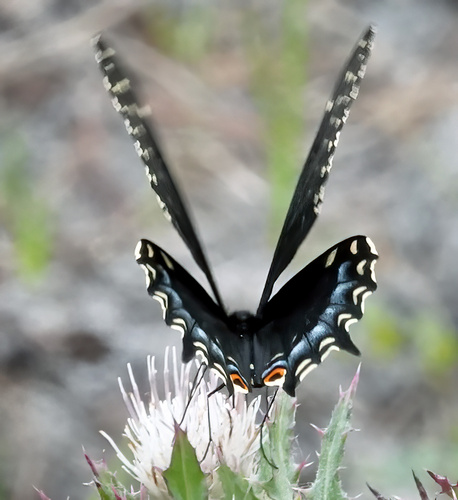
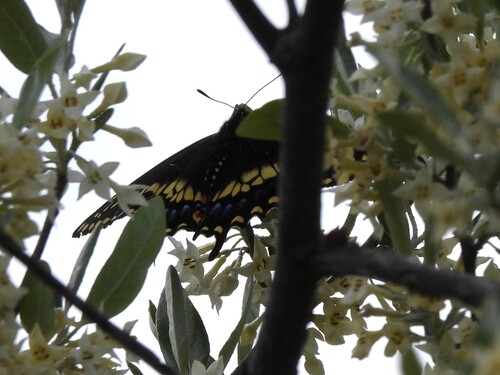
The Black Swallowtail is a large, striking butterfly with black wings adorned by rows of bright yellow spots. Its hindwings feature a band of iridescent blue scales and distinctive orange eyespots, each with a black pupil, and short, tail-like projections.
Category
InsectsRarity
Common
Danger
1/5 · Very low
Snaps
160
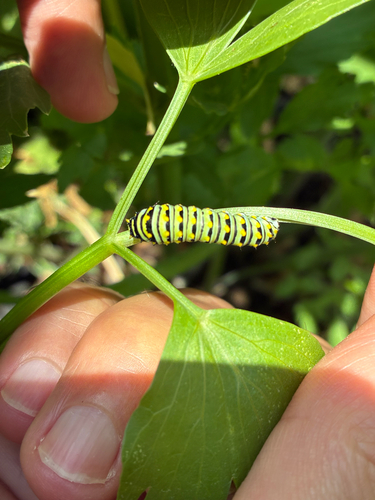
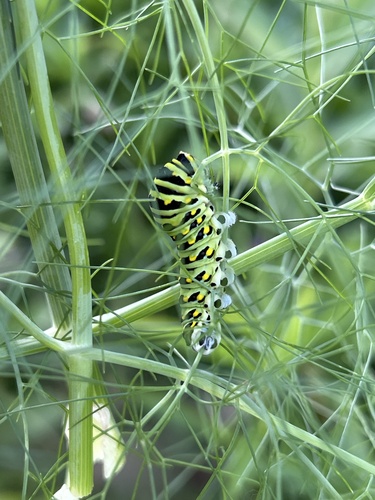
Did you know Black Swallowtail caterpillars love to munch on plants in the carrot family?
Its feet and antennae taste flowers to find the best nectar!
The 'tails' on its hindwings fool predators, protecting its body from attack!
When it's time to transform, its chrysalis can change color to match its surroundings!
Black Swallowtail caterpillars can flash orange 'horns' (osmeteria) that release a stinky, foul-tasting chemical because it helps them scare away hungry predators.
Adult female Black Swallowtails mimic the poisonous Pipevine Swallowtail's appearance that helps them avoid being eaten by birds.
A Black Swallowtail has a long, straw-like mouthpart (proboscis) that helps them sip sweet nectar deep inside flowers like a tiny straw.
Young Black Swallowtail caterpillars look like bird droppings that helps them blend into plants and hide from predators.
Caterpillars munch on leafy plants, while adult butterflies gracefully sip flower nectar.
Age differences: Young caterpillars eat plant leaves, but adults only drink sweet flower nectar.
Daucus carota
Caterpillars feed on its leaves.

Asclepias syriaca
Adults visit for nectar, spreading pollen.
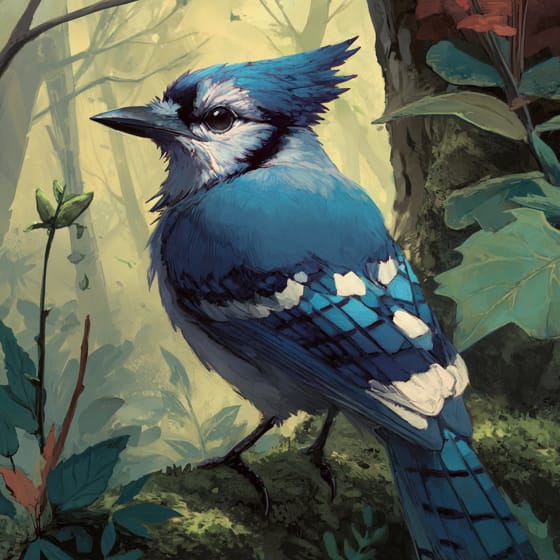
Cyanocitta cristata
Birds may prey on adult butterflies.

Petroselinum crispum
A favorite food plant for caterpillars.
Aerial creatures spend a significant portion of their lives airborne, utilizing flight for various activities such as hunting, migration, or nesting.
Colorful describes organisms or objects displaying a wide range of bright and distinct colors.
This trait characterizes organisms whose diet consists entirely or primarily of plant material.
Describes plants that are particularly attractive and beneficial to a wide range of pollinating organisms.

Diurnal animals are primarily active during daylight hours, typically resting or sleeping at night.

This trait identifies organisms that exhibit exceptional swiftness in movement for hunting, escape, or travel.

This habitat trait indicates species that can coexist with humans in urban and suburban environments, utilizing man-made structures and green spaces.

Describes organisms that transfer pollen, enabling the fertilization and reproduction of plants.
Danger
1/5 · Very low
Always watch butterflies from a distance and don't try to catch them.
The easiest way to identify Black Swallowtail is to use the Snappit nature identifier app.
80-110 mm
30-40 mm
10-14 days
18 km/h
Caterpillars munch on leafy plants, while adult butterflies gracefully sip flower nectar.
Gardens
Foraging
Zoom in to split clusters and explore where this object has been snapped.
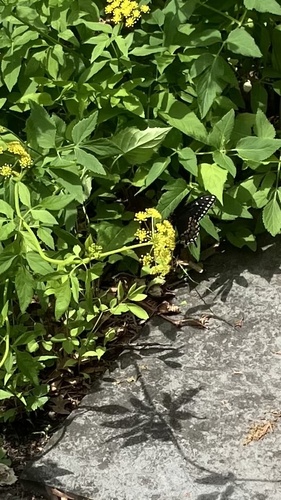
Jun 12, 2026
Center Square/Hudson–Park Historic DistrictPhoto attribution
(c) Julie Hart, some rights reserved (CC BY)
License: CC BY 4.0 ↗
Image may be shown cropped inside the card frame.
Jun 2, 2026
Archwood Avenue Historic DistrictPhoto attribution
(c) Lisa Wiencek Gerbec, some rights reserved (CC BY)
License: CC BY 4.0 ↗
Image may be shown cropped inside the card frame.
Jun 2, 2026
Winter IslandPhoto attribution
no rights reserved
License: CC0 1.0 ↗
Image may be shown cropped inside the card frame.
May 9, 2026
Matanzas State ForestPhoto attribution
(c) Pam Kleinsasser, some rights reserved (CC BY)
License: CC BY 4.0 ↗
Image may be shown cropped inside the card frame.
May 2, 2026
Midewin National Tallgrass PrairiePhoto attribution
(c) P Holroyd, some rights reserved (CC BY)
License: CC BY 4.0 ↗
Image may be shown cropped inside the card frame.

Michigan, US
You might spot Eastern Gray Squirrel, Tree-Of-Heaven, and House Sparrow.
View guide →

New Mexico, US
You might spot Tree Cholla, Colorado Pinyon, and House Finch.
View guide →

Florida, US
You might spot Atala, Monarch, and Brown Anole.
View guide →

Illinois, US
You might spot Carolina Mantis and Goldenrod Soldier Beetle.
View guide →
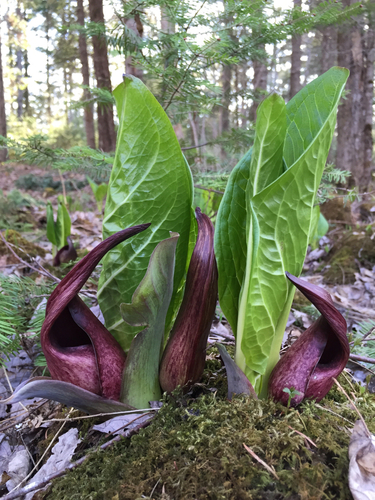
Connecticut, US
You might spot Eastern Skunk Cabbage and Eastern White Pine.
View guide →

Michigan, US
You might spot Monarch, Canada Goose, and Eastern Gray Squirrel.
View guide →
Take the discovery with you
Snap it with Snappit to identify it, learn what makes it special, and add the discovery to your collection.







.jpg&width=800)



