





Bog Labrador Tea
Rhododendron groenlandicum
Bog Labrador Tea is a special plant that grows in wet places like bogs. Its leaves can be used to make a tea that some people enjoy. The flowers are pretty and attract bees and butterflies!
Habitat: Wetlands
The Bog Labrador Tea is a small evergreen shrub with leathery, oblong leaves that are dark green on top. Its most distinctive feature is the rusty-brown, woolly hairs covering the underside of its leaves. It blooms with clusters of small, five-petaled white flowers.
Category
PlantsRarity
Common
Danger
1/5 · Very low
Snaps
9
Ancient people sometimes used its fluffy underside as tinder for starting fires!
Its leathery leaves can stay green all winter long, even under thick snow!
Rubbing its leaves can release a strong, slightly spicy scent that's easy to identify!
This plant loves growing in soggy, acidic bogs where few other plants can thrive!
Bog Labrador Tea can grow in very wet, acidic, and nutrient-poor bogs where most plants struggle to survive.
Bog Labrador Tea has thick, evergreen leaves that stay green all winter, helping it absorb sunlight early.
Bog Labrador Tea has rusty, woolly hairs on its leaf undersides to help reduce water loss in dry or windy conditions.
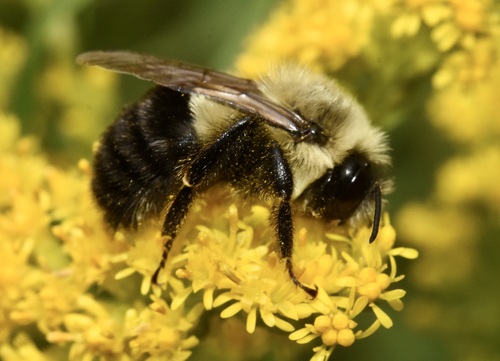
Bombus impatiens
Visits flowers for nectar and pollen.

Odocoileus virginianus
Deer may occasionally browse its tough leaves.
Sphagnum capillifolium
Its presence helps create acidic bog habitat.
Flowering plants are any plants that produce flowers as part of their reproductive cycle.
A shrub is a woody plant smaller than a tree, typically with multiple stems branching from or near the ground.
Evergreen plants retain their foliage throughout the year, never shedding all their leaves at once.
Fragrant flowers emit a pleasant aroma, often to attract pollinators or for defense.

Medicinal plants possess chemical compounds that can be used for therapeutic purposes to treat illnesses or maintain health.

Edible plants are those parts of a plant that are considered safe for human consumption.

Describes plants that are particularly attractive and beneficial to a wide range of pollinating organisms.

This habitat trait identifies species found in wetlands, which are areas of land saturated with water, either permanently or seasonally, including marshes, swamps, and bogs.

Describes organisms that transfer pollen, enabling the fertilization and reproduction of plants.
No aliases listed yet.
Danger
1/5 · Very low
Always ask an adult before touching or tasting any plants.
The easiest way to identify Bog Labrador Tea is to use the Snappit nature identifier app.
50-150 cm
30-100 cm
1-2 cm
Late spring to mid-summer
No
Moderate
Perennial
Zoom in to split clusters and explore where this object has been snapped.

Alaska, US
You might spot Cliff Swallow, Pretty Jacob's-Ladder, and Dwarf Fireweed.
View guide →

Wisconsin, US
You might spot Western Bog Laurel and Purple Pitcher Plant.
View guide →

Maine, US
You might spot Jack Pine, Lingonberry, and Sheep Laurel.
View guide →

US
You might spot Salal, Ochre Sea Star, and Leather Star.
View guide →
Maine, US
You might spot Common Eastern Bumble Bee, Duck, and Margined Calligrapher.
View guide →

Maine, US
You might spot Eastern Skunk Cabbage and Painted Turtle.
View guide →
Take the discovery with you
Snap it with Snappit to identify it, learn what makes it special, and add the discovery to your collection.








.jpg&width=800)


_001.jpg&width=800)


