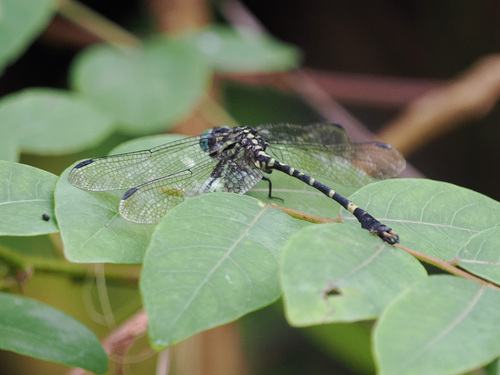


Clubtails
gomphidae
Clubtails, belonging to the family Gomphidae, are a diverse and fascinating group of dragonflies recognized for their distinctive appearance and often secretive habits. These robust insects spend the majority of their lives as aquatic nymphs, meticulously hunting small invertebrates buried in the sediment of clean, flowing water bodies. As adults, they transform into agile aerial predators, patrolling riparian zones for flying insects with remarkable speed and precision. Their presence often indicates a healthy aquatic ecosystem, making them valuable bio-indicators. Clubtails are admired by dragonfly enthusiasts for their powerful flight, unique abdominal markings, and the challenge they present for identification due to their varied species and subtle differences.
Habitat: Clubtails are predominantly found in association with clean, unpolluted freshwater environments such as rivers, streams, lakes, and ponds, where their larvae develop buried in the substrate.
Adult Clubtails are medium to large dragonflies, typically measuring between 3 to 8 cm in length. They are characterized by their widely separated eyes, a key feature distinguishing them from most other dragonfly families where the eyes meet dorsally. Their bodies are generally robust, often displaying patterns of black or dark brown with striking yellow or green markings. Many male Clubtails possess a distinctive 'club' or enlarged segment at the tip of their abdomen, a crucial identification marker. Their wings are clear and relatively broad, usually held out to the side when perching, and often feature a dark costa (leading edge vein).
Category
InsectsRarity
Common
Danger
1/5 · Very low
Snaps
Be the first to snap!
Clubtail nymphs, which can live for several years underwater, are often camouflaged with silt and debris, making them nearly invisible to both prey and predators.
Many species of Clubtails are considered indicators of good environmental health, as their presence suggests clean, unpolluted waterways.
The 'club' at the end of the male's abdomen in many species is primarily used in mating, helping to clasp the female during copulation.
Unlike most other dragonflies, Clubtails have eyes that are distinctly separated on the top of their head, a characteristic they share with damselflies.
Clubtail nymphs are uniquely adapted to burrow into sandy or silty substrates of aquatic environments. This camouflage protects them from predators and allows them to ambush unsuspecting prey effectively.
Adult Clubtails are exceptionally agile fliers, capable of swift pursuit and capturing other flying insects mid-air. Their robust bodies and powerful wings enable precise maneuvers during hunts along waterways.
Many Clubtail species are highly sensitive to water pollution and habitat degradation. Their presence in a waterway often signifies good to excellent water quality, serving as a natural bio-indicator.
Clubtails are voracious predators throughout their life cycle. Larvae are ambush hunters in aquatic sediments, while adults are aerial hunters, capturing flying insects.
Age differences: Larvae feed on aquatic invertebrates, while adults prey exclusively on flying insects.

Micropterus dolomieu
Primary prey for fish during their larval stage.
Culicidae
Adults prey on various flying insects, helping to control insect populations.
Alcedo atthis
Larvae are a food source for aquatic birds, integrating into the wetland food web.

Libellulidae
Competition for insect prey with other dragonfly species and aerial predators.
No trait badges are assigned for this object yet.
No aliases listed yet.
Collections for this object will appear here as more themes are added.
Danger
1/5 · Very low
No special safety notes yet.
Compare wing shape and resting posture, where the eyes sit, body markings and the tail segments. Males and females can look very different in color. Dragonfly Identifier: upload a photo and compare the visible details.
3-8 cm
5-10 cm
0.001-0.005 kg
1-5 years
25 km/h
Clubtails are voracious predators throughout their life cycle. Larvae are ambush hunters in aquatic sediments, while adults are aerial hunters, capturing flying insects.
Clubtails are predominantly found in association with clean, unpolluted freshwater environments such as rivers, streams, lakes, and ponds, where their larvae develop buried in the substrate.
Zoom in to split clusters and explore where this object has been snapped.
Recent snaps will appear here as new observations are added.
Take the discovery with you
Snap it with Snappit to identify it, learn what makes it special, and add the discovery to your collection.