





Common Knapweed
Centaurea nigra subsp. nigra
Common Knapweed is a bright purple flower that grows in fields. It's known for its spiky petals and attracts many pollinators.
Habitat: Fields and meadows
The Common Knapweed has striking purple-pink, thistle-like flower heads atop erect, branching stems. Its distinctive, bristly, brown-black bracts below the petals give it a scaly appearance, differentiating it from similar wildflowers. Its leaves are lance-shaped and often hairy.
Category
PlantsRarity
Common
Danger
1/5 · Very low
Snaps
Be the first to snap!
Ancient people sometimes used knapweed to treat skin problems and sore throats!
Goldfinches love to eat the tiny seeds from its dried flower heads!
It thrives in poor soil where many other beautiful flowers struggle to survive!
Its tough stems provide shelter for small insects from the wind.
Common Knapweed has a deep taproot that helps it find water in dry conditions and survive droughts.
Common Knapweed produces abundant, sweet nectar that attracts many insects, helping it get pollinated easily.
Common Knapweed can produce numerous seeds annually, ensuring new plants grow even if some are lost.
Apis mellifera
Drinks nectar, carrying pollen between flowers.
Bombus terrestris
An important pollinator, attracted to its rich nectar.
Urophora quadrifasciata
Its larvae create galls within the flower heads.
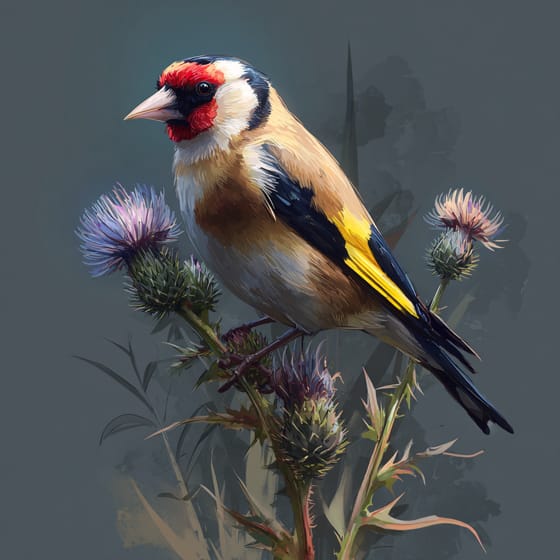
Carduelis carduelis
Feeds on the numerous seeds found within its dried flower heads.
Aromatic plants produce and emit fragrant volatile organic compounds, often for defense or to attract pollinators.
Flowering plants are any plants that produce flowers as part of their reproductive cycle.
Grassland habitats are terrestrial biomes dominated by grasses and herbaceous plants, supporting a variety of grazing animals.
Danger
1/5 · Very low
Explore with care and ask an adult if you’re unsure what to do.
The easiest way to identify Common Knapweed is to use the Snappit nature identifier app.
30-80 cm
20-40 cm
2-4 cm
Summer to early autumn
Yes
None
Perennial
Zoom in to split clusters and explore where this object has been snapped.
Recent snaps will appear here as new observations are added.
Take the discovery with you
Snap it with Snappit to identify it, learn what makes it special, and add the discovery to your collection.








.jpg&width=800)



_001.jpg&width=800)




