





greater burdock
Arctium lappa
Greater burdock is a tall plant with big leaves and purple flowers. It grows in many places and has a long, thick root that people sometimes use in cooking.
Habitat: Urban areas
The greater burdock is a tall plant known for its very large, heart-shaped leaves that are green on top and whitish-woolly underneath. Its distinctive purple, thistle-like flowers eventually develop into globe-shaped burrs covered in hooked bristles.
Category
PlantsRarity
Common
Danger
1/5 · Very low
Snaps
2
Burdock leaves can grow so huge, a single leaf can be wider than a human head!
Its incredibly deep taproot can grow over a meter long, acting like a natural well!
The spiky burrs of burdock inspired Swiss engineer George de Mestral to invent Velcro!
Young burdock roots are a popular, crunchy vegetable called 'gobo' in Japanese cuisine!
Greater burdock has sticky, hooked burrs that latch onto animal fur and clothing, helping it scatter its seeds far and wide.
Greater burdock can grow a long, sturdy taproot deep into the soil to reach underground water and nutrients.
Greater burdock has enormous, broad leaves that efficiently capture sunlight and outcompete smaller plants around it.
Apis mellifera
Collects nectar and pollen from flowers.
Vanessa cardui
Visits flowers for nectar, aiding reproduction.

Odocoileus virginianus
Browses on young leaves and shoots.
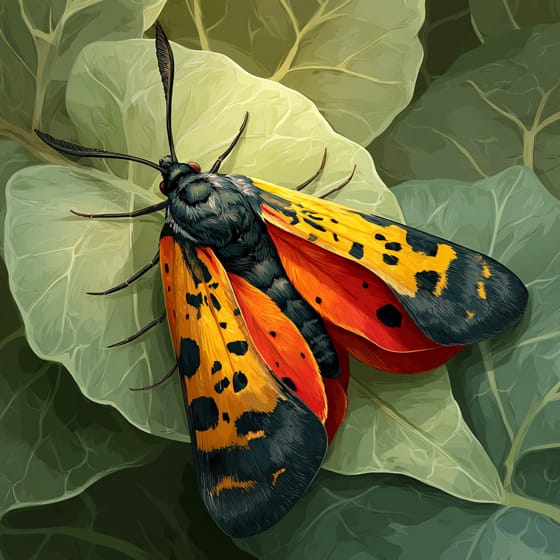
Arctia caja
Caterpillars feed on burdock leaves.
Deciduous plants periodically shed all their leaves, typically during autumn or dry seasons.
Flowering plants are any plants that produce flowers as part of their reproductive cycle.
Biennial plants complete their life cycle over two growing seasons, typically forming foliage in the first year and flowering/seeding in the second.
Medicinal plants possess chemical compounds that can be used for therapeutic purposes to treat illnesses or maintain health.

Edible plants are those parts of a plant that are considered safe for human consumption.

Describes plants that are particularly attractive and beneficial to a wide range of pollinating organisms.

Rapid growing plants exhibit accelerated growth rates, quickly increasing in size and biomass within a short period.

This habitat trait indicates species that can coexist with humans in urban and suburban environments, utilizing man-made structures and green spaces.
No aliases listed yet.
Danger
1/5 · Very low
Do not eat any plants unless a grown-up says it's safe!
The easiest way to identify greater burdock is to use the Snappit nature identifier app.
60-300 cm
50-100 cm
2-4 cm
Summer
Yes
None
Biennial
Zoom in to split clusters and explore where this object has been snapped.

Ohio, US
You might spot Turkey, Eastern Gray Squirrel, and Northern Cardinal.
View guide →

Massachusetts, US
You might spot Painted Turtle, Red-Tailed Hawk, and American Bullfrog.
View guide →

Washington, US
You might spot Rock Pigeon, American Crow, and Dogwoods.
View guide →
Take the discovery with you
Snap it with Snappit to identify it, learn what makes it special, and add the discovery to your collection.







.jpg&width=800)



_001.jpg&width=800)



