





Cross-leaved Heath
Erica tetralix
Cross-leaved Heath is a lovely little shrub that blooms with pink flowers. It grows in wet places and is a favorite for bees and butterflies, making gardens beautiful and lively!
Habitat: Wetlands
The Cross-leaved Heath is a small, upright shrub with distinctive grey-green leaves arranged in neat whorls of four. It displays clusters of charming, bell-shaped pink to purplish-pink flowers at the tips of its stems during summer, making it easily spotted in its boggy habitats.
Category
PlantsRarity
Common
Danger
1/5 · Very low
Snaps
Be the first to snap!
It's a super tough plant, happy growing where few others can, like wet, boggy places!
Its leaves have a secret waxy coating, stopping it from losing too much water.
Its name hints at leaves growing in neat groups of four, like a tiny cross!
Look closely! Its tiny pink flowers often have soft hairs, like a cozy, fuzzy blanket.
It has tiny hairs on its leaves and stems, helping it capture and hold precious water in windy, exposed habitats.
This heath keeps its leaves all year, letting it make food and photosynthesize even during mild winters.
Apis mellifera
collects nectar and pollen from its flowers
Bombus terrestris
visits its flowers for nectar and pollen
Ovis aries
sometimes grazed by sheep in moorland
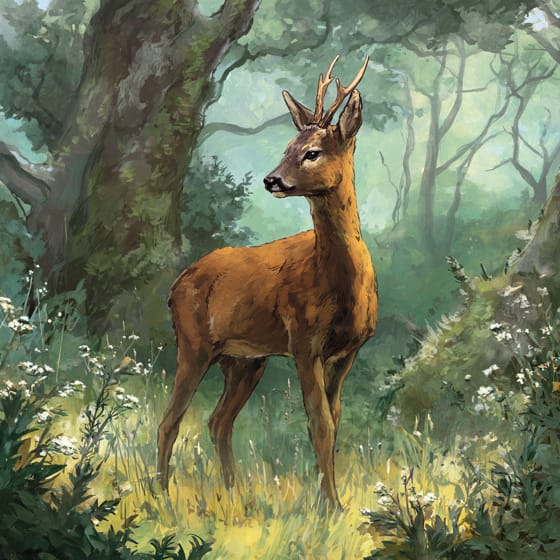
Capreolus capreolus
occasionally browsed by deer in heathland areas
Bell-shaped flowers possess petals fused or arranged to form a cup-like or campanulate structure resembling a bell.
Flowering plants are any plants that produce flowers as part of their reproductive cycle.
A shrub is a woody plant smaller than a tree, typically with multiple stems branching from or near the ground.
Spring blooming plants produce their flowers during the spring season, often signifying the end of winter and the start of new growth.

Evergreen plants retain their foliage throughout the year, never shedding all their leaves at once.

Fragrant flowers emit a pleasant aroma, often to attract pollinators or for defense.

Describes plants that are particularly attractive and beneficial to a wide range of pollinating organisms.

This habitat trait identifies species found in wetlands, which are areas of land saturated with water, either permanently or seasonally, including marshes, swamps, and bogs.
No aliases listed yet.
Danger
1/5 · Very low
Always look but don't touch plants unless an adult says it's okay!
The easiest way to identify Cross-leaved Heath is to use the Snappit nature identifier app.
10-50 cm
30-60 cm
0.5-0.7 cm
Summer
No
None
Perennial
Zoom in to split clusters and explore where this object has been snapped.
Recent snaps will appear here as new observations are added.
Take the discovery with you
Snap it with Snappit to identify it, learn what makes it special, and add the discovery to your collection.








.jpg&width=800)


_001.jpg&width=800)



