



Flying Squirrel
Pteromyini
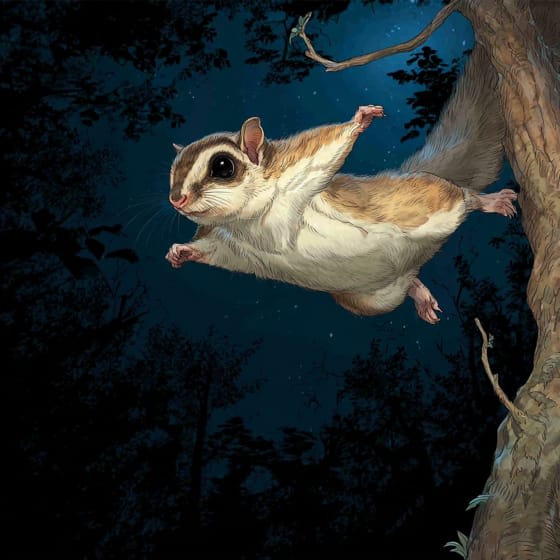
Flying squirrels are special squirrels that can glide through the air using flaps of skin between their legs. They are expert nighttime acrobats, soaring from tree to tree in search of food.
Habitat: Forests
The Flying Squirrel has soft, dense fur that is typically grey-brown on its back and white on its belly. Its most distinctive feature is a furry membrane, called a patagium, stretching from its wrists to its ankles, allowing it to glide. It also possesses large, dark eyes adapted for low-light conditions.
Category
MammalsRarity
Common
Danger
1/5 · Very low
Snaps
Be the first to snap!
Flying squirrels can communicate with high-pitched chirps and soft clucking sounds.
Some species of flying squirrels can glow a faint pink under UV light!
They build cozy nests, called dreys, inside tree hollows or abandoned bird nests.
They huddle together in groups, especially in winter, to stay warm and save energy.
Flying Squirrel can glide through the air because of a unique skin flap between its limbs that helps them travel long distances between trees.
Flying Squirrel has huge, reflective eyes that help them see in the dark while searching for food at night.
Flying Squirrel can use its flat, bushy tail as a rudder and brake during glides that helps them steer and land precisely.
These omnivores munch on nuts, seeds, fruits, fungi, and even insects.
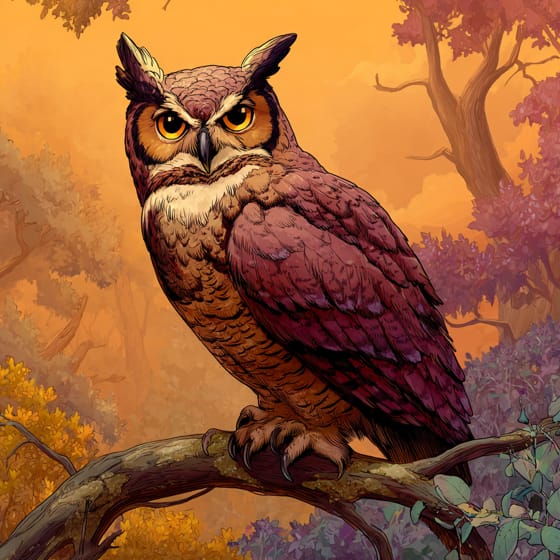
Bubo virginianus
A silent, nocturnal predator that hunts flying squirrels.

Mustela frenata
A slender, agile hunter that can pursue squirrels into tree hollows.
Rhizopogon vinicolor
Helps disperse the spores of this underground fungus, aiding forest health.
Wildlife encompasses all undomesticated animal and plant life existing in their natural habitats.
Furry describes animals possessing a dense covering of soft hair or fur.
Arboreal animals live primarily in trees, utilizing them for shelter, food, and protection from predators.
Gliding animals move through the air by launching themselves and maintaining flight with specialized body structures, without flapping wings.

This trait characterizes organisms whose diet consists entirely or primarily of plant material.

This trait signifies organisms belonging to a very old evolutionary group with ancestors dating back millions of years.

Forest habitats are terrestrial environments dominated by dense tree cover, supporting a high diversity of plant and animal life.

Nocturnal animals are primarily active during the nighttime hours, typically resting or sleeping during the day.
No aliases listed yet.
Danger
1/5 · Very low
If you ever see a flying squirrel, admire them from a distance and don't try to catch them.
The easiest way to identify Flying Squirrel is to use the Snappit nature identifier app.
12-20 cm
25-35 cm
0.05-0.15 kg
3-6 years
35 km/h
These omnivores munch on nuts, seeds, fruits, fungi, and even insects.
Forests
Zoom in to split clusters and explore where this object has been snapped.
Recent snaps will appear here as new observations are added.
Take the discovery with you
Snap it with Snappit to identify it, learn what makes it special, and add the discovery to your collection.





.jpg&width=800)


.JPG&width=800)


.jpg&width=800)
