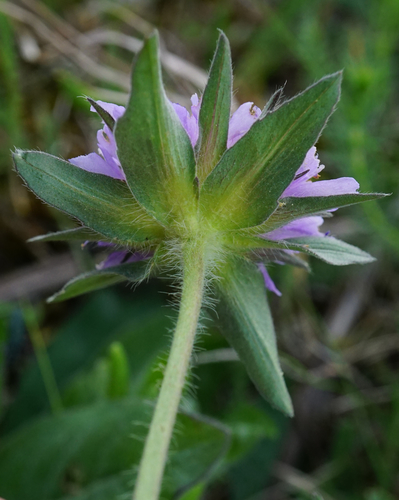


Field Scabious
knautia arvensis
Field Scabious (Knautia arvensis) is a delightful perennial wild plant that graces grasslands, meadows, and roadsides across Europe and temperate Asia. Belonging to the honeysuckle family, Caprifoliaceae, this hardy herb is well-loved for its dome-shaped, pastel lavender-blue flower heads that dance atop slender, hairy stems. Historically, it held a place in folk medicine, most notably as a treatment for scabies—a connection preserved in both its common name 'Scabious' and its genus name Knautia, which honors German botanist Christian Knaut. Beyond its historical uses, Field Scabious is an ecological powerhouse, attracting a massive variety of pollinating insects by providing abundant nectar over a long blooming season from mid-summer into autumn. This makes it a crucial species for biodiversity conservation in meadow restoration projects.
Habitat: Found in dry, open grasslands, meadows, pastures, and along sunny roadsides, particularly preferring chalky, well-drained, and nutrient-poor soils.
Field Scabious is characterized by its pin-cushion-like flower heads, which measure 3 to 4 centimeters across and feature pale violet, lavender, or light blue blossoms with prominent, protruding pinkish-white anthers. Its upright, stiff stems are rough and covered in downward-pointing bristles. The plant features highly variable foliage: the basal leaves form a dense rosette and are lance-shaped, while the stem leaves are deeply pinnately-lobed, giving the plant an airy appearance against surrounding grasses.
Category
PlantsRarity
Common
Danger
1/5 · Very low
Snaps
1
Each flower head is actually a composite cluster of up to 50 individual small flowers, with the outer ones growing larger to act as a landing pad for insects.
Folk legend suggests that the devil tried to bite off the root of the plant because he hated its healing properties, leading to another common name for the family: Devil's-bit.
The common name 'Scabious' comes from the Latin word 'scabies', meaning itch, because the plant was historically used to treat skin conditions.
Features a deep, sturdy taproot that allows it to access water deep within dry, chalky soils during hot summer months.
Produces massive amounts of nectar and staggered flower openings, ensuring a reliable food source that attracts dozens of insect species.
Exhibits heterophylly, producing broad basal leaves to shade out competitors in spring, and deeply lobed stem leaves later to minimize water loss.
As a photoautotrophic plant, Field Scabious produces its own sugars through photosynthesis, utilizing sunlight, carbon dioxide, and water.
Apis mellifera
Provides abundant nectar and pollen to foraging worker bees.

Aglais urticae
Adult butterflies frequently visit the nectar-rich flowers for sustenance.
Hemaris tityus
Acts as a primary larval host plant for the caterpillars of this rare moth.
No trait badges are assigned for this object yet.
No aliases listed yet.
Collections for this object will appear here as more themes are added.
Danger
1/5 · Very low
No special safety notes yet.
Start with the whole plant, then compare leaf arrangement, leaf edges, stems and any flowers or fruit. Opposite leaves grow in pairs; alternate leaves come one at a time along the stem. These details tell you far more together than a single green leaf does. Plant Identifier: upload a photo and compare the visible details.
30-100 cm
2-10 years
As a photoautotrophic plant, Field Scabious produces its own sugars through photosynthesis, utilizing sunlight, carbon dioxide, and water.
Found in dry, open grasslands, meadows, pastures, and along sunny roadsides, particularly preferring chalky, well-drained, and nutrient-poor soils.
Zoom in to split clusters and explore where this object has been snapped.
Take the discovery with you
Snap it with Snappit to identify it, learn what makes it special, and add the discovery to your collection.