





sweet vernal grass
Anthoxanthum odoratum
Sweet vernal grass is a lovely green plant that grows in fields and meadows. It has a sweet smell, especially when it blooms in spring, making it a favorite among butterflies and bees!
Habitat: Grasslands
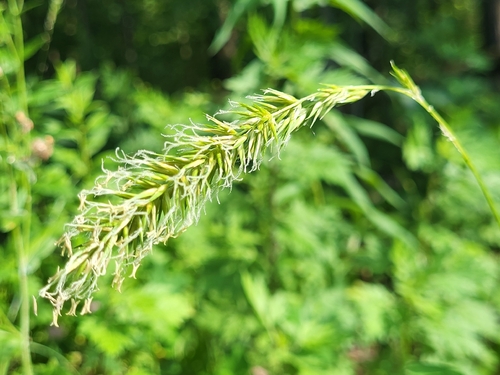
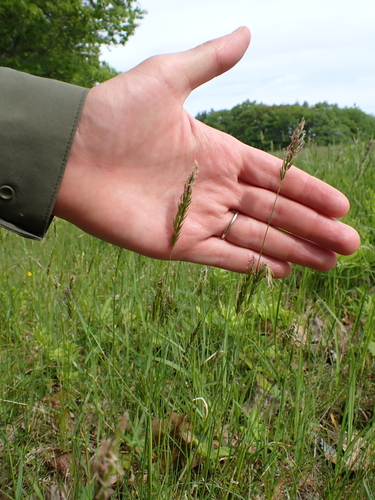
The sweet vernal grass has slender, upright stems and flat, narrow leaves. It features a pale green, sometimes purplish, compact flower spike, or panicle, which is its most distinctive visual characteristic. This makes it visually different from many other grasses.
Category
PlantsRarity
Common
Danger
1/5 · Very low
Snaps
16
Farmers sometimes call its pleasant scent the "smell of summer hay"!
It's one of the very first grasses to flower in spring, often in April!
Its wonderful sweet smell comes from a special chemical called coumarin!
This grass's scientific name, "odoratum," means fragrant in Latin!
Sweet vernal grass produces coumarin, which gives it a sweet smell but also deters some herbivores from eating too much.
Sweet vernal grass can grow and flower early in the spring, allowing it to grab sunlight before taller plants emerge.
This grass releases its pollen into the wind, letting the breeze carry it to other plants for reproduction.
Aromatic plants produce and emit fragrant volatile organic compounds, often for defense or to attract pollinators.
Flowering plants are any plants that produce flowers as part of their reproductive cycle.
Biennial plants complete their life cycle over two growing seasons, typically forming foliage in the first year and flowering/seeding in the second.
Grass-like plants are herbaceous plants that visually resemble true grasses, typically having long, narrow leaves.

Spring blooming plants produce their flowers during the spring season, often signifying the end of winter and the start of new growth.

Fragrant flowers emit a pleasant aroma, often to attract pollinators or for defense.

Grassland habitats are terrestrial biomes dominated by grasses and herbaceous plants, supporting a variety of grazing animals.

Describes plants that are particularly attractive and beneficial to a wide range of pollinating organisms.
No aliases listed yet.
Danger
1/5 · Very low
Always stay on paths when exploring fields and be careful not to pick too many plants.
The easiest way to identify sweet vernal grass is to use the Snappit nature identifier app.
20-60 cm
10-30 cm
0.6-1 cm
Late spring to early summer
No
Mild
Perennial
Zoom in to split clusters and explore where this object has been snapped.
Jun 5, 2026
Schenley Farms Historic DistrictPhoto attribution
(c) Brandon McCracken, some rights reserved (CC BY)
License: CC BY 4.0 ↗
Image may be shown cropped inside the card frame.
May 27, 2026
Pittsfield Center Historic DistrictPhoto attribution
(c) Steven Lamonde, some rights reserved (CC BY)
License: CC BY 4.0 ↗
Image may be shown cropped inside the card frame.

Pennsylvania, US
You might spot Pinesap, Great Rhododendron, and Mountain Laurel.
View guide →

New York, US
You might spot Dame's Rocket, American Pokeweed, and American Toad.
View guide →
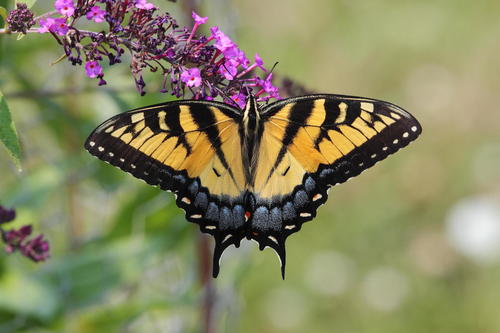
Pennsylvania, US
You might spot Eastern Tiger Swallowtail, Eastern Bluebird, and Monarch.
View guide →
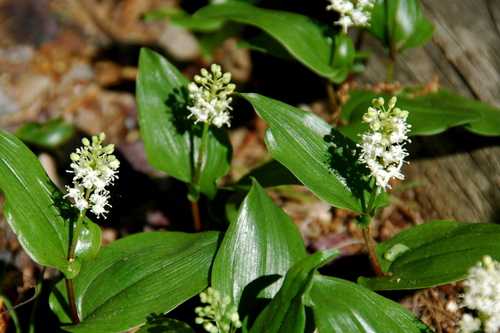
Connecticut, US
You might spot Canada Mayflower and Eastern White Pine.
View guide →

Massachusetts, US
You might spot African Lion, Tiger, and Southern White Rhinoceros.
View guide →

Pennsylvania, US
You might spot Eastern Newt, Ghost Pipe, and American Toad.
View guide →
Take the discovery with you
Snap it with Snappit to identify it, learn what makes it special, and add the discovery to your collection.









.jpg&width=800)


_001.jpg&width=800)




