Frilled Dogwinkle
nucella lamellosa
The Frilled Dogwinkle is a fun sea snail with a frilly shell! It loves to crawl on rocky shores and can be found in tidal pools.
Habitat: Rocky coastal areas and tidal pools
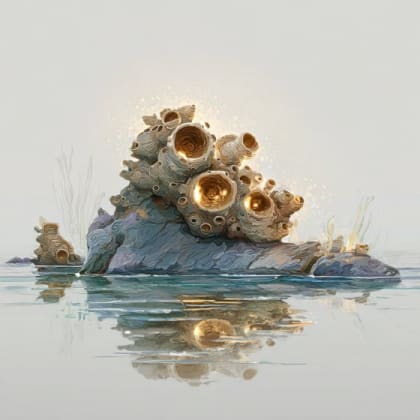
The Frilled Dogwinkle has a thick, spiral shell adorned with prominent, wavy frills or ridges that can be white, grey, yellow, orange, or brown. Its wide aperture often reveals a yellowish or purplish interior, making it visually distinct from smoother, plainer snails.
Category
InvertebrateRarity
Common
Danger
0/5 · No known danger
Snaps
1
Female Frilled Dogwinkles lay their eggs in tall, vase-shaped capsules.
Its shell color can vary greatly even within the same tide pool!
Some Frilled Dogwinkles drill and eat as many as three barnacles a day!
They use a ribbon-like tongue, called a radula, covered in tiny teeth to feed.
Frilled Dogwinkle can drill perfect holes into prey shells because of its radula and acid, helping them access soft bodies inside.
Frilled Dogwinkle has a muscular foot that can create strong suction, allowing it to cling tightly to rocks against powerful waves.
Frilled Dogwinkle can produce a purple dye because of specialized glands, which may deter predators or be a waste product.
Frilled Dogwinkle has a sturdy, ridged shell that helps it withstand crashing waves and protects it from predators.
This sea snail munches on tasty barnacles and mussels by drilling through their hard shells.
Balanus glandula
Drills shell to consume soft parts.

Mytilus edulis
A primary food source drilled for sustenance.
Pisaster ochraceus
A significant predator in tide pools.
Cancer productus
Crushes shells to eat the snail inside.
Solitary animals live alone for most of their lives, only interacting with others for mating or parental care.
Camouflaged describes organisms that possess coloring or patterns that allow them to blend into their environment.
Colorful describes organisms or objects displaying a wide range of bright and distinct colors.
This trait identifies organisms whose diet consists entirely or primarily of animal tissue.

Marine habitats encompass all saltwater environments of the Earth's oceans, supporting an immense diversity of aquatic life.
Danger
0/5 · No known danger
No special safety notes yet.
The easiest way to identify Frilled Dogwinkle is to use the Snappit nature identifier app.
10 g
5 years
This sea snail munches on tasty barnacles and mussels by drilling through their hard shells.
Rocky coastal areas and tidal pools
Pursuit
4.5 cm
Zoom in to split clusters and explore where this object has been snapped.

Washington, US
You might spot Purple Shore Crab, Western Bunchberry, and Mule Deer.
View guide →

Washington, US
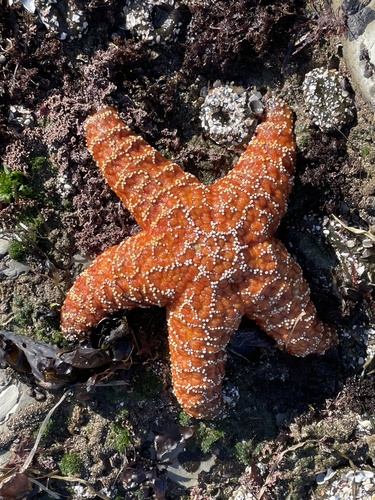
You might spot Ochre Sea Star, Painted Anemone, and Aggregating Anemone.
View guide →
British Columbia, CA
You might spot Ochre Sea Star, Fringe Cups, and Moonglow Anemone.
View guide →
Washington, US
You might spot Ochre Sea Star, Purple Shore Crab, and Strawberry Tree.
View guide →

Washington, US
You might spot Red Valerian, Ocean Spray, and Yellow Shore Crab.
View guide →
Take the discovery with you
Snap it with Snappit to identify it, learn what makes it special, and add the discovery to your collection.