




Gold Tegu
Tupinambis teguixin
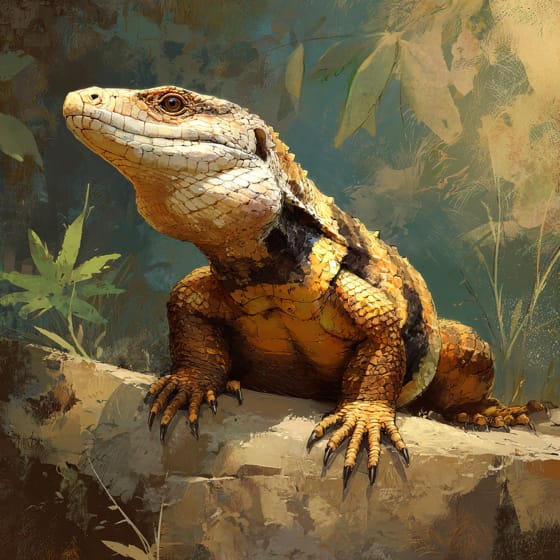
The Gold Tegu is a shiny, golden lizard that loves to bask in the sun. They are curious and enjoy playing in the leaves!
Habitat: Tropical forests
The Gold Tegu is a large, powerfully built lizard with striking black and yellow-gold banded patterns across its body and tail. Its robust scales give it a textured appearance, distinct from smoother-skinned reptiles. The bright coloration provides camouflage in its sun-dappled habitats.
Category
ReptilesRarity
Common
Danger
2/5 · Low
Snaps
Be the first to snap!
Gold Tegus are surprisingly intelligent for reptiles, even learning to recognize people!
Their long, muscular tails are important for swimming and for balancing while climbing!
These fascinating lizards often make loud hissing or huffing sounds when feeling threatened.
They can regulate their body temperature more actively than many other reptiles!
Gold Tegu can use its forked tongue to 'taste' the air for scents, helping them find hidden prey or detect danger.
Gold Tegu can detach its tail to distract predators, allowing them to escape to safety.
Gold Tegu can dig burrows with its strong claws, providing shelter from heat, cold, and enemies.
Gold Tegu has powerful jaws and sharp teeth that help them crush insects, eggs, and small vertebrate prey.
Gold Tegus are omnivores, eating almost anything from insects and fruit to eggs and small animals.
Social animals live in organized groups, cooperating for survival benefits such as foraging, defense, and raising offspring.
This trait identifies organisms whose diet includes both plant and animal matter.
Arboreal animals live primarily in trees, utilizing them for shelter, food, and protection from predators.
Colorful describes organisms or objects displaying a wide range of bright and distinct colors.

This trait signifies organisms belonging to a very old evolutionary group with ancestors dating back millions of years.

This habitat trait refers to species found in tropical rainforests, characterized by high annual rainfall, high biodiversity, and dense tree cover.

This trait identifies organisms whose diet consists entirely or primarily of animal tissue.

Diurnal animals are primarily active during daylight hours, typically resting or sleeping at night.
Danger
2/5 · Low
Look but don’t touch. Keep a safe distance and wash hands after exploring.
The easiest way to identify Gold Tegu is to use the Snappit nature identifier app.
60-100 cm
3.5-7 kg
10-15 years
20 km/h
Gold Tegus are omnivores, eating almost anything from insects and fruit to eggs and small animals.
5 km/h
Tropical forests
Zoom in to split clusters and explore where this object has been snapped.
Recent snaps will appear here as new observations are added.
Take the discovery with you
Snap it with Snappit to identify it, learn what makes it special, and add the discovery to your collection.