

Sodalite
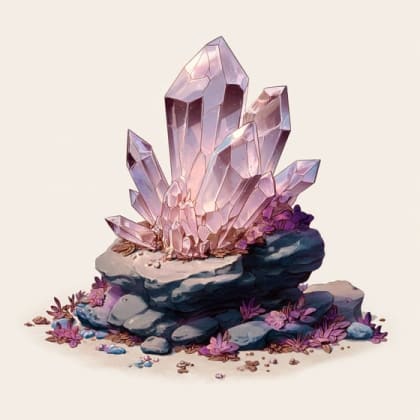
Sodalite is a beautiful blue mineral often used in jewelry and ornamental carvings. Its striking color and patterns make it a favorite among collectors and artists.
The Sodalite typically boasts a rich, deep blue hue, often marbled with striking white veins or patches of other minerals. Its glassy luster makes it shine, setting it apart from similar blue stones that may have metallic flecks.
Category
MineralRarity
Rare
Danger
1/5 · Very low
Snaps
Be the first to snap!
It was once so rare that only kings and queens could afford its deep blue beauty!
Massive blocks of Sodalite are sometimes carved into stunning sculptures and decorative objects!
Sodalite is found in ancient volcanoes, blasted out by fiery eruptions long ago!
Some types of Sodalite can surprisingly change their color when exposed to direct sunlight!
Sodalite contains a special chemical structure allowing some varieties to temporarily change color from white to pink in sunlight.
Sodalite has a unique chemical composition that causes it to fizz and form a jelly when tested with acid.
Sodalite can glow brilliant colors like orange or pink under ultraviolet (UV) light, a property called fluorescence.
Colorful describes organisms or objects displaying a wide range of bright and distinct colors.
Fluorescent minerals emit visible light when exposed to ultraviolet light or other non-visible radiation, a phenomenon called fluorescence.
A gemstone is a piece of mineral crystal which, when cut and polished, is used to make jewelry or other adornments.
Crystalline describes a mineral or rock composed of crystals, often exhibiting a regular atomic structure and geometric external form.

Natural refers to organisms, materials, or phenomena existing or produced by nature, not artificially created.
Danger
1/5 · Very low
Sodalite is safe to handle, but it is best enjoyed without touching to preserve its beauty.
The easiest way to identify Sodalite is to use the Snappit nature identifier app.
blue, gray, white, green, pink
5.5
vitreous
2.2
cubic
Zoom in to split clusters and explore where this object has been snapped.
Recent snaps will appear here as new observations are added.
Take the discovery with you
Snap it with Snappit to identify it, learn what makes it special, and add the discovery to your collection.