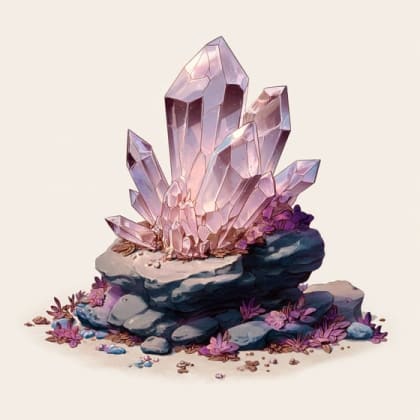




Hydrozincite
Hydrozincite is a rare mineral that forms in zinc ore deposits. It is known for its white color and can be found in caves and mines.
The Hydrozincite is usually a soft, powdery white to greyish-white mineral, often forming crusts or botryoidal (grape-like) masses. Its distinct chalky appearance and lack of obvious crystal forms make it visually different from many other white minerals.
Category
MineralRarity
Rare
Danger
1/5 · Very low
Snaps
Be the first to snap!
Even though it's a mineral, Hydrozincite's texture can feel like soft chalk or even clay when you touch it!
Hydrozincite is a 'secondary mineral,' meaning it forms from older minerals breaking down due to water and air.
Hydrozincite often forms beautiful crusts inside caves, sometimes creating a dazzling white coating on the walls.
This mineral is like a natural detective! Its presence helps geologists find hidden deposits of valuable zinc ore.
Hydrozincite has strong fluorescence under ultraviolet light, making it glow in exciting colors like blue or white!
Hydrozincite contains zinc, a vital metal used in batteries, rust-proofing, and even many important medicines.
Hydrozincite is so soft that you can scratch it with your fingernail, making it easy to identify in the field.
Fluorescent minerals emit visible light when exposed to ultraviolet light or other non-visible radiation, a phenomenon called fluorescence.
Crystalline describes a mineral or rock composed of crystals, often exhibiting a regular atomic structure and geometric external form.
A fossil is the preserved remains or traces of an ancient organism embedded in rock or other geological deposits.
Natural refers to organisms, materials, or phenomena existing or produced by nature, not artificially created.
No aliases listed yet.
Danger
1/5 · Very low
When exploring caves or mines, always stay with an adult and never touch minerals without permission.
The easiest way to identify Hydrozincite is to use the Snappit nature identifier app.
white, greyish-white, yellowish-white, bluish-white
2.5
Earthy to dull
3.6
Monoclinic
Zoom in to split clusters and explore where this object has been snapped.
Recent snaps will appear here as new observations are added.
Take the discovery with you
Snap it with Snappit to identify it, learn what makes it special, and add the discovery to your collection.