





Isabella Tiger Moth
Pyrrharctia isabella
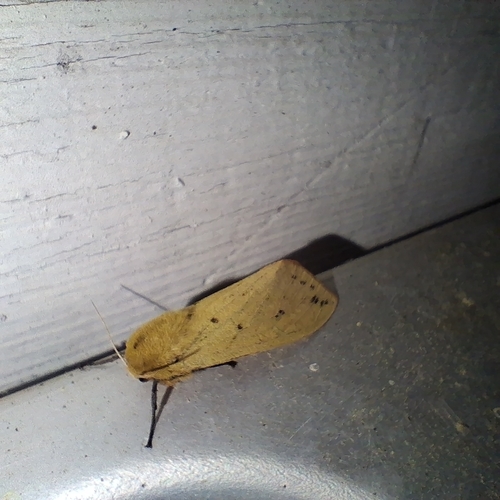
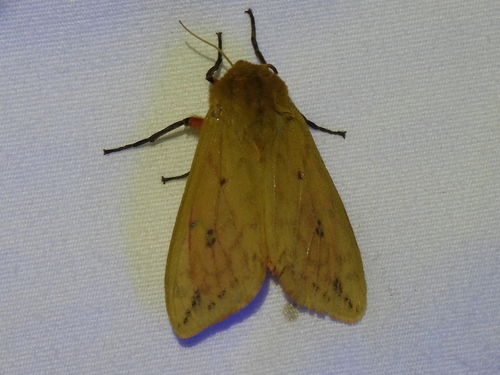
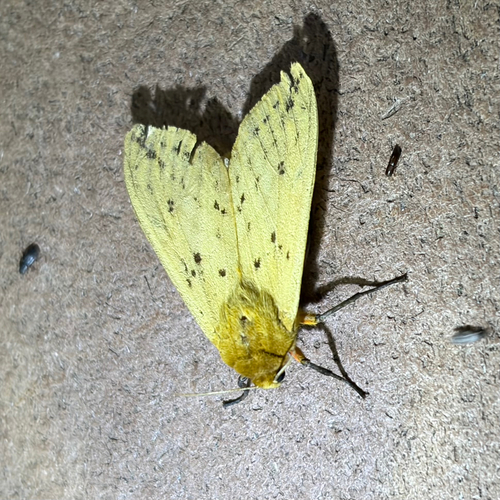
The Isabella Tiger Moth is a cute, fuzzy moth with a mix of orange and black. It can be found flying around at night!
Habitat: Fields and gardens
The Isabella Tiger Moth has pale yellow to orange-brown forewings, sometimes with small black spots, and often more vivid orange hindwings. Its body is notably furry and bright orange, with a distinct row of black dots along its back, making it stand out from most drab moths.
Category
InsectsRarity
Common
Danger
2/5 · Low
Snaps
111
Adult Isabella Tiger Moths fly mostly at night, using their fuzzy antennae to find mates in the dark.
Its famous caterpillar, the Woolly Bear, is said to predict winter severity by its band pattern!
They get their "Tiger Moth" name from the striped patterns seen on many species in their family.
Woolly Bear caterpillars can literally freeze solid and then come back to life when it warms up.
Isabella Tiger Moth caterpillars can survive freezing solid because they produce a natural antifreeze, allowing them to thaw and revive.
The caterpillar's dense, stiff hairs, called setae, protect it from many predators by making it irritating and difficult to eat.
When severely threatened, the caterpillar can roll into a ball and release a bad-tasting fluid to deter attackers.
Woolly bear caterpillars munch on many types of low-growing plants, while adult moths rarely eat.
Age differences: Caterpillars are voracious herbivores; adult moths focus on reproduction and rarely sip nectar.

Taraxacum officinale
Caterpillars feed on their leaves.
Plantago major
Caterpillars feed on their leaves.
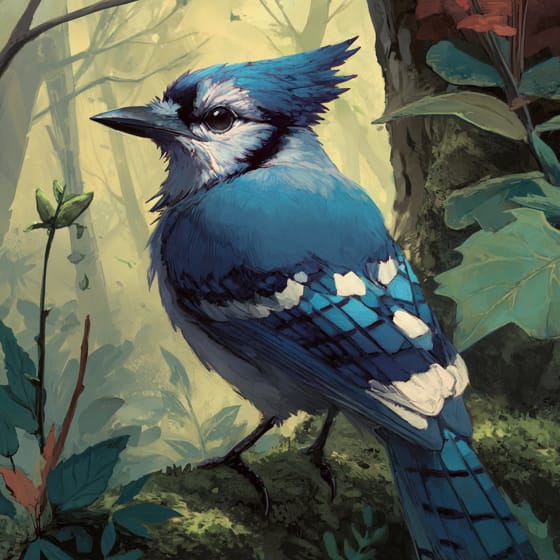
Cyanocitta cristata
Birds prey on adult moths and caterpillars.
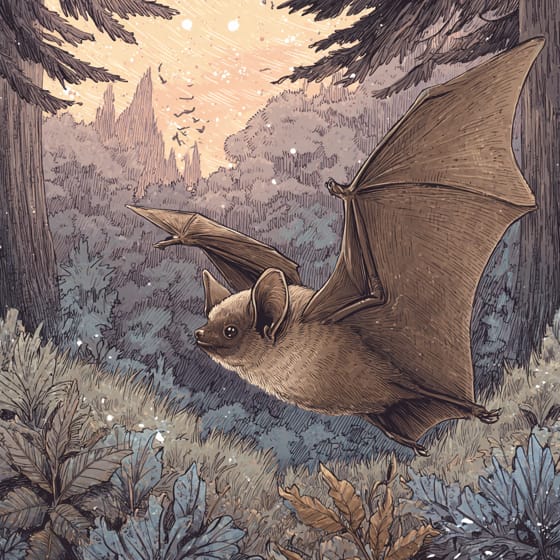
Myotis lucifugus
Nocturnal adults are hunted by bats.
Wildlife encompasses all undomesticated animal and plant life existing in their natural habitats.
Furry describes animals possessing a dense covering of soft hair or fur.
Grassland habitats are terrestrial biomes dominated by grasses and herbaceous plants, supporting a variety of grazing animals.
This trait characterizes organisms whose diet consists entirely or primarily of plant material.

Nocturnal animals are primarily active during the nighttime hours, typically resting or sleeping during the day.

Describes organisms that transfer pollen, enabling the fertilization and reproduction of plants.
Danger
2/5 · Low
Do not touch or pick up. Some insects sting or bite. Ask an adult for help.
The easiest way to identify Isabella Tiger Moth is to use the Snappit nature identifier app.
45-65 mm
25-35 mm
300-365 days
Woolly bear caterpillars munch on many types of low-growing plants, while adult moths rarely eat.
Fields and gardens
Foraging
6
Zoom in to split clusters and explore where this object has been snapped.
Jun 14, 2026
East Windsor Hill Historic DistrictPhoto attribution
(c) Mark Apgar, some rights reserved (CC BY)
License: CC BY 4.0 ↗
Image may be shown cropped inside the card frame.
Jun 1, 2026
Julia Davis ParkPhoto attribution
(c) Sam Kieschnick, some rights reserved (CC BY)
License: CC BY 4.0 ↗
Image may be shown cropped inside the card frame.
May 19, 2026
Sugar Loaf MountainPhoto attribution
(c) Jacqueline Raiford, some rights reserved (CC BY)
License: CC BY 4.0 ↗
Image may be shown cropped inside the card frame.

Pennsylvania, US
You might spot Mountain Laurel, Ghost Pipe, and Sweetfern.
View guide →
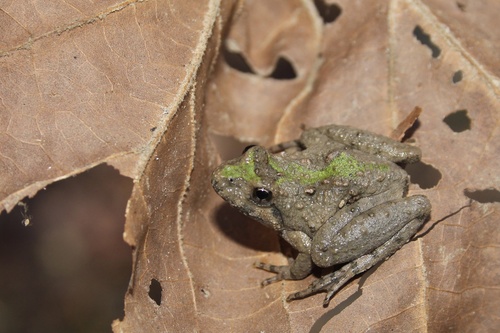
Delaware, US
You might spot Northern Cricket Frog, Fan Clubmoss, and Fowler's Toad.
View guide →
.jpg)
Virginia, US
You might spot Great Blue Heron and Canada Goose.
View guide →

Maryland, US
You might spot American Cancer-Root and Rue Anemone.
View guide →

Connecticut, US
You might spot American Robin, Eastern Poison Ivy, and Duck.
View guide →

New York, US
You might spot American Toad and Intermediate Wood Fern.
View guide →
Take the discovery with you
Snap it with Snappit to identify it, learn what makes it special, and add the discovery to your collection.







.jpg&width=800)




