





Little Brown Bat
Myotis lucifugus
The Little Brown Bat is a small, friendly creature that loves to fly at night. They help our environment by eating lots of insects!
Habitat: Caves, forests, and buildings
The Little Brown Bat has soft, glossy fur that ranges from reddish-brown to dark brown, with a slightly paler belly. Its delicate, dark wing membranes stretch between its slender fingers and body. It features small, mouse-like ears and a short snout, making it look quite tiny.
Category
MammalsRarity
Common
Danger
1/5 · Very low
Snaps
3
A deadly fungus called white-nose syndrome has caused their populations to sharply decline.
Baby bats can fly and hunt on their own just three to four weeks after being born!
Females gather in huge nursery colonies, sometimes numbering thousands, to raise their single pup.
They often hang upside down in caves or buildings, which helps them launch into flight quickly.
Little Brown Bat can 'see' in the dark by sending out high-pitched squeaks that echo back, creating a detailed sound map of its surroundings.
Little Brown Bat has the ability to hibernate deeply through winter, drastically slowing its body to survive without food.
Little Brown Bat can fly with incredible agility and speed because of its specially designed wings, helping it snatch insects mid-air.
These tiny hunters zoom through the night, munching on pesky flying insects like mosquitoes!
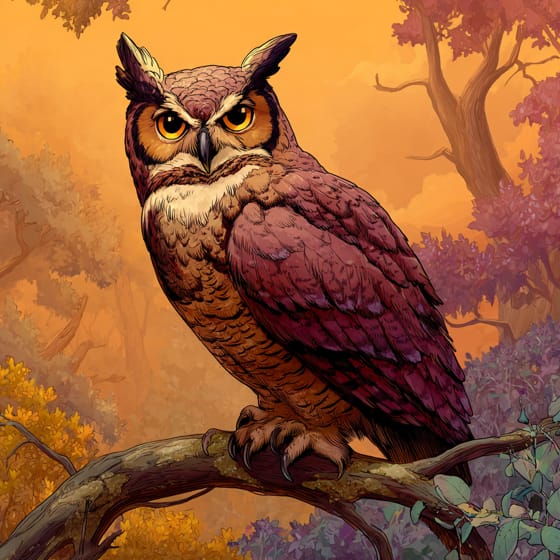
Bubo virginianus
Owls are common predators of bats.

Procyon lotor
Raccoons may prey on bats in roosts or during hibernation.
Culex pipiens
Bats actively hunt mosquitoes, helping control their numbers.
Agrotis ipsilon
Moths are a major food source for these insectivorous bats.
Wildlife encompasses all undomesticated animal and plant life existing in their natural habitats.
Furry describes animals possessing a dense covering of soft hair or fur.
Cave dwelling describes organisms specifically adapted to live in underground cave systems, often exhibiting specialized traits due to lack of light.
This trait identifies organisms whose diet primarily consists of insects and other small invertebrates.

Echolocation is a biological sonar used by animals to navigate, hunt, and communicate by emitting sound waves and interpreting the echoes.

This trait characterizes organisms with an exceptionally long lifespan compared to others of their kind.

Nocturnal animals are primarily active during the nighttime hours, typically resting or sleeping during the day.
Danger
1/5 · Very low
Little Brown Bats are not dangerous and prefer to stay away from people. If you see one, just admire it from a distance!
The easiest way to identify Little Brown Bat is to use the Snappit nature identifier app.
6-10 cm
22-27 cm
0.005-0.011 kg
6-34 years
35 km/h
These tiny hunters zoom through the night, munching on pesky flying insects like mosquitoes!
Caves, forests, and buildings
Zoom in to split clusters and explore where this object has been snapped.

Oregon, US
You might spot Duck, Pacific Trillium, and Wood Duck.
View guide →

Oregon, US
You might spot Tree-Of-Heaven, Duck, and Canada Goose.
View guide →

Pennsylvania, US
You might spot Eastern Skunk Cabbage and American Hornbeam.
View guide →

Vermont, US
You might spot Common Eastern Bumble Bee and Red Trillium.
View guide →

Michigan, US
You might spot Star-Flowered Lily-Of-The-Valley and Common Silverweed.
View guide →
Take the discovery with you
Snap it with Snappit to identify it, learn what makes it special, and add the discovery to your collection.





.jpg&width=800)



.JPG&width=800)



.jpg&width=800)
