




Ivy
Simpsonlemur Robinson &
Ivy is a climbing plant with green leaves that can grow on walls, trees, or the ground. It helps provide shelter for small animals and insects.
Habitat: Forests, Gardens, Walls
The Ivy has distinctive dark green, glossy leaves, often with 3-5 pointed lobes when mature. Young leaves can be heart-shaped, growing densely as it climbs. Its rich, evergreen foliage provides year-round color, differing from many deciduous climbers.
Category
PlantsRarity
Common
Danger
2/5 · Low
Snaps
Be the first to snap!
Did you know Ivy flowers smell like honey to attract buzzing insects?
Its dark berries are a vital, energy-rich food source for many birds in winter.
Ivy can completely cover huge areas, even entire old buildings, with its dense leaves!
Ivy plants can live for hundreds of years, becoming thick and woody like a tree!
Ivy can produce tiny 'holdfast' roots that help it cling securely to surfaces like walls and tree trunks to reach sunlight.
Ivy has evergreen leaves that stay green all year round, allowing it to photosynthesize even in winter when other plants sleep.
Ivy can grow well even in very low light, adapting its leaves to capture dim sunlight in shady forest floors or dense areas.
Turdus merula
eats its winter berries
Apis mellifera
attracted to its late-season flowers
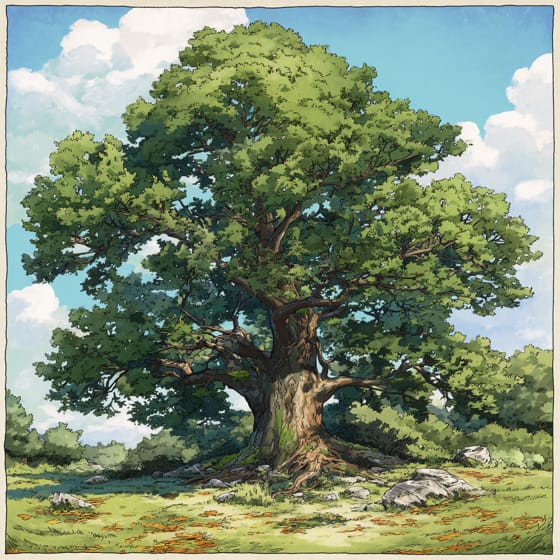
Quercus robur
provides shelter for small animals

Pyrrhula pyrrhula
eats its juicy fruit
Climbing or vine plants are characterized by a growth habit that allows them to ascend upwards by twining, tendrils, or adhesive roots.
Groundcover plants are low-growing vegetation that spreads horizontally to cover the ground, often suppressing weeds and preventing soil erosion.
Shade tolerant plants are adapted to grow and thrive in areas with low light levels, requiring less direct sunlight.
Evergreen plants retain their foliage throughout the year, never shedding all their leaves at once.

Fruit-bearing plants produce fruits, which are the mature ovaries of flowering plants containing seeds.

Fall color refers to the seasonal change in foliage pigmentation, primarily in deciduous plants, displaying vibrant hues.

This trait signifies organisms belonging to a very old evolutionary group with ancestors dating back millions of years.

Forest habitats are terrestrial environments dominated by dense tree cover, supporting a high diversity of plant and animal life.
Danger
2/5 · Low
Enjoy looking at ivy, but avoid touching or eating it as some types can be irritating to the skin or harmful if eaten.
The easiest way to identify Ivy is to use the Snappit nature identifier app.
10-3000 cm
10-1000 cm
0.3-0.5 cm
Late summer to late autumn
No
Mild
Perennial
Zoom in to split clusters and explore where this object has been snapped.
Recent snaps will appear here as new observations are added.

South Carolina, US
You might spot Anole, Green Treefrog, and Eastern Gray Squirrel.
View guide →

Pennsylvania, US
You might spot American Robin, Red-Winged Blackbird, and Lesser Celandine.
View guide →

Rhode Island, US
You might spot Spotted Lanternfly, Duck, and American Robin.
View guide →

District of Columbia, US
You might spot Eastern Gray Squirrel, Duck, and House Sparrow.
View guide →

New York, US
You might spot White Snakeroot, Rock Pigeon, and Eastern Gray Squirrel.
View guide →

District of Columbia, US
You might spot Spotted Lanternfly and Eastern Gray Squirrel.
View guide →
Take the discovery with you
Snap it with Snappit to identify it, learn what makes it special, and add the discovery to your collection.








.jpg&width=800)



_001.jpg&width=800)


