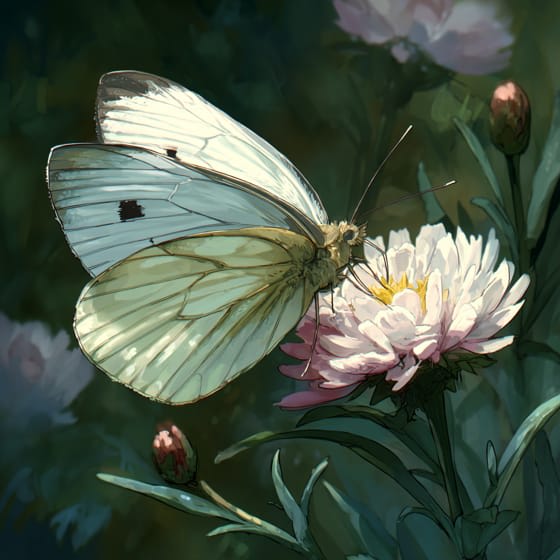





Large White
Pieris brassicae
The Large White butterfly is a big, beautiful butterfly with white wings and black spots. It flits around gardens and parks, looking for tasty flowers.
Habitat: Gardens and fields
The Large White has chalky white wings with distinctive black tips on the forewings. Females also display two prominent black spots on their forewings, which males often lack or have only faintly, helping distinguish sexes.
Category
InsectsRarity
Common
Danger
2/5 · Low
Snaps
4
Did you know the Large White caterpillar is sometimes called a "cabbage worm" for its favourite snack?
Female Large Whites can lay up to 600 eggs in batches, usually on the underside of leaves!
Their bright colours might be a warning sign to predators: "I taste bad, so don't eat me!"
These common garden visitors undergo a spectacular transformation from tiny egg to flying butterfly!
Adults can fly hundreds of miles to find new food and warmer places, expanding their territory.
Large Whites possess complex compound eyes, helping them quickly spot vibrant flowers for nectar and potential mates.
Their strong mandibles allow caterpillars to efficiently chew through tough plant leaves, growing quickly.
Caterpillars munch on leaves, while adult butterflies flutter about sipping sweet flower nectar.
Age differences: Caterpillars feed on plant leaves; adults drink nectar from flowers.

Brassica oleracea
As a primary food source for larvae.
Apanteles glomeratus
Lays eggs inside Large White caterpillars.
%2C_Parc_de_Woluw%C3%A9%2C_Brussels_(13042792905).jpg&width=800)
Parus major
Feeds on caterpillars and pupae.

Buddleja davidii
Adults feed on its nectar, helping pollination.
Wildlife encompasses all undomesticated animal and plant life existing in their natural habitats.
This trait characterizes organisms whose diet consists entirely or primarily of plant material.
Diurnal animals are primarily active during daylight hours, typically resting or sleeping at night.
Describes organisms that transfer pollen, enabling the fertilization and reproduction of plants.
Danger
2/5 · Low
Do not touch or pick up. Some insects sting or bite. Ask an adult for help.
The easiest way to identify Large White is to use the Snappit nature identifier app.
50-65 mm
20-25 mm
10-20 days
18 km/h
Caterpillars munch on leaves, while adult butterflies flutter about sipping sweet flower nectar.
Gardens and fields
Foraging
Zoom in to split clusters and explore where this object has been snapped.
.jpg)
Municipal District of Cobh, IE
You might spot Ring-Tailed Lemur, Giraffes, and Cheetahs.
View guide →
.jpg)
Ústí nad Labem Region, CZ
You might spot Bears, South American Tapir, and Macaques.
View guide →

Spain, ES
You might spot African Elephant, Brown Bear, and Gorilla.
View guide →

Andalusia, ES
You might spot African Elephant, Iberian Lynx, and Tiger.
View guide →
Take the discovery with you
Snap it with Snappit to identify it, learn what makes it special, and add the discovery to your collection.







.jpg&width=800)




