





Liometopum luctuosum
Liometopum luctuosum
The black garden ant is a small, shiny insect that loves to live in gardens. They work together in big groups to find food and build their homes underground.
Habitat: Urban areas
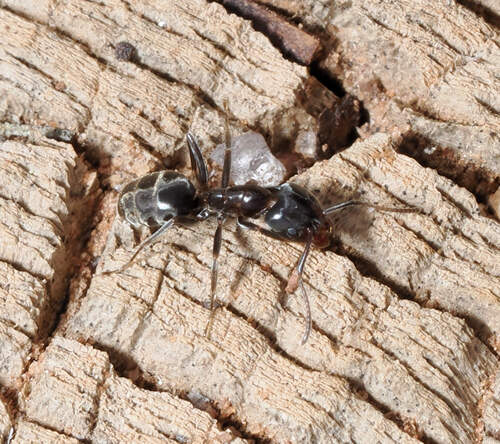
The Liometopum luctuosum is a dark brown to black ant with a distinctive velvety sheen, making it appear soft. Its body is relatively robust with a single-segmented waist (petiole), and it often has a slightly reddish tint on its legs.
Category
InsectsRarity
Common
Danger
2/5 · Low
Snaps
1
A single colony can have more than fifty thousand ants working together!
If you disturb them, they release a strong, lemony, citronella-like smell!
These ants are often found nesting inside dead wood high up in tall trees!
They are sometimes called 'velvety tree ants' because of their soft, dark look.
Liometopum luctuosum can release a strong, citronella-like scent because of special glands that help them deter predators and warn other ants.
Liometopum luctuosum has the ability to construct nests high up in trees because of their strong mandibles that helps them excavate soft wood.
Liometopum luctuosum can 'farm' tiny insects like aphids because they protect them, which helps them collect sweet honeydew for food.
These ants enjoy sweet honeydew from tiny insects and also eat dead bugs!
Aphis gossypii
Ants protect aphids for their sweet honeydew.
Coccinella septempunctata
Ladybugs prey on aphids, which ants protect.
Phrynosoma coronatum
Lizards might occasionally eat these ants.
Social animals live in organized groups, cooperating for survival benefits such as foraging, defense, and raising offspring.
This trait identifies organisms whose diet includes both plant and animal matter.
Describes organisms that break down dead organic material, recycling nutrients back into the ecosystem.
Diurnal animals are primarily active during daylight hours, typically resting or sleeping at night.

Pertaining to species that are significantly smaller than typical or average for their kind.

This habitat trait indicates species that can coexist with humans in urban and suburban environments, utilizing man-made structures and green spaces.

Describes organisms that transfer pollen, enabling the fertilization and reproduction of plants.
No aliases listed yet.
Danger
2/5 · Low
Be careful not to disturb their nests, as they can bite if they feel threatened.
The easiest way to identify Liometopum luctuosum is to use the Snappit nature identifier app.
3-6 mm
60-365 days
These ants enjoy sweet honeydew from tiny insects and also eat dead bugs!
Urban areas
Foraging
6
50000
Zoom in to split clusters and explore where this object has been snapped.
Apr 9, 2026
Grandview MinePhoto attribution
(c) Wendy McCrady, some rights reserved (CC BY)
License: CC BY 4.0 ↗
Image may be shown cropped inside the card frame.
Take the discovery with you
Snap it with Snappit to identify it, learn what makes it special, and add the discovery to your collection.









.jpg&width=800)




