





Lodgepole Pine
Pinus contorta var. latifolia Engelm. ex S.Watson
The Lodgepole Pine is a tall tree that grows straight up, often found in groups. Its needles are long and thin, like little green brushes.
Habitat: Mountain regions and forests
The Lodgepole Pine has a remarkably straight, slender trunk and a narrow, conical crown when young. Its bark is thin, scaly, and reddish-brown, complementing its bundles of two dark green needles.
Category
TreesRarity
Common
Danger
1/5 · Very low
Snaps
12
Early explorers named it for the perfectly straight trunks used as lodgepoles for tipis!
In some coastal areas, Lodgepole Pines grow as twisted, shrubby forms, showing their adaptability!
Lodgepole Pine forests are sometimes called 'dog-hair stands' because the trees grow so close together!
This tough tree can grow in really poor, sandy soils where other trees struggle to survive!
Lodgepole Pine has serotinous cones that need intense heat from a wildfire to open and release their seeds, helping it reproduce after fires.
Lodgepole Pine can quickly colonize disturbed areas like burned forests or clearcuts, outcompeting other plants to establish new stands.

Tamiasciurus hudsonicus
eats the nutritious seeds from its cones.
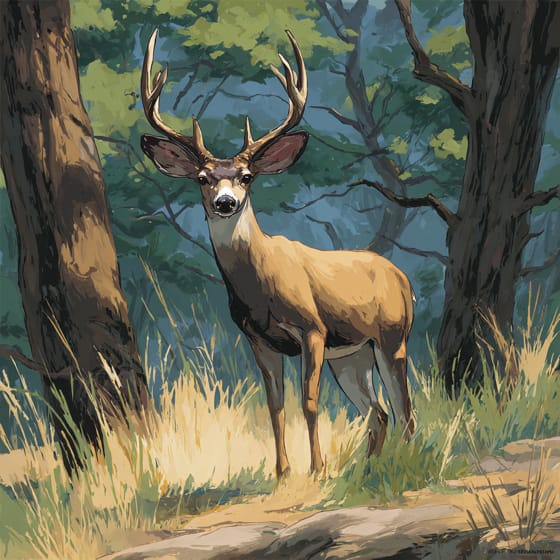
Odocoileus hemionus
browses on young seedlings and needles, especially in winter.
Picoides arcticus
nests and forages for insects in fire-damaged Lodgepole Pine snags.
Rhizopogon vinicolor
shares nutrients with its roots for better growth.
Coniferous plants are typically evergreen, bearing needles or scales and reproductive cones.
Evergreen plants retain their foliage throughout the year, never shedding all their leaves at once.
Rapid growing plants exhibit accelerated growth rates, quickly increasing in size and biomass within a short period.
Timber refers to wood that has been prepared for use in building and carpentry.

This habitat trait identifies species found in mountainous regions, characterized by high elevation, steep slopes, and varying climate zones.

Forest habitats are terrestrial environments dominated by dense tree cover, supporting a high diversity of plant and animal life.
Danger
1/5 · Very low
Do not pick or eat anything you find. Some plants and mushrooms can be harmful.
The easiest way to identify Lodgepole Pine is to use the Snappit nature identifier app.
20-50 m
3-6 m
Yes
30-80 cm
150-400 years
Mountain regions and forests
Woody cone
Zoom in to split clusters and explore where this object has been snapped.

Colorado, US
You might spot Fireweed, Scentless Mayweed, and Quaking Aspen.
View guide →

Montana, US
You might spot Sticky Geranium, White-Tailed Deer, and Common Toadflax.
View guide →

Washington, US
You might spot Cascade Oregon-Grape, Douglas Fir, and Salal.
View guide →

Wyoming, US
You might spot Creeping Mahonia, Utah Honeysuckle, and Woodland Pinedrops.
View guide →

Montana, US
You might spot Black Bear, Moose, and Lodgepole Pine.
View guide →

Colorado, US
You might spot Great Basin Bristlecone Pine and Fireweed.
View guide →
Take the discovery with you
Snap it with Snappit to identify it, learn what makes it special, and add the discovery to your collection.












