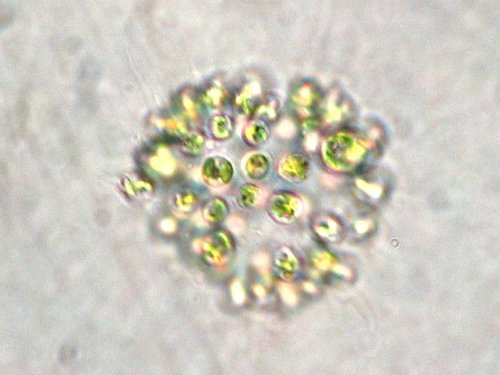


Microcystis Aeruginosa
microcystis aeruginosa
Microcystis aeruginosa is a ubiquitous freshwater cyanobacterium, often notorious for its ability to form extensive and harmful algal blooms (HABs) in nutrient-rich aquatic environments. While individually microscopic, these bacteria aggregate into visible colonies, creating green or blue-green scums on the water surface. These blooms are not merely unsightly; they can produce potent toxins called microcystins, which pose significant health risks to humans, livestock, and wildlife, and can severely impact aquatic ecosystems by depleting oxygen and blocking sunlight. Understanding Microcystis aeruginosa is crucial for managing water quality and mitigating the environmental and public health consequences of eutrophication.
Habitat: This cyanobacterium is typically found in eutrophic (nutrient-rich), warm, and relatively still freshwater bodies such as lakes, ponds, reservoirs, and slow-moving rivers.
Microcystis aeruginosa colonies appear as macroscopic aggregations, ranging from small, granular dots to large, irregularly shaped clumps or extensive surface mats. These colonies are typically green or blue-green, sometimes appearing greenish-brown, and have a gelatinous or scummy texture that floats on the water. Individual cells are spherical to ovoid, measuring 3-8 micrometers in diameter, and are densely packed within a mucilaginous sheath, contributing to the colony's buoyant, often turbid appearance.
Category
AnimalRarity
Common
Danger
1/5 · Very low
Snaps
Be the first to snap!
Microcystis aeruginosa is one of the most common causes of harmful algal blooms (HABs) in freshwater bodies worldwide.
Microcystis blooms often contribute to oxygen depletion (hypoxia) in water bodies when the large masses of bacteria die and decompose, harming fish and other aquatic life.
The toxins produced by Microcystis, called microcystins, are potent hepatotoxins that can cause severe liver damage in animals and humans.
These cyanobacteria can control their buoyancy using gas vesicles, allowing them to move vertically in the water column to optimize light exposure and nutrient uptake.
Microcystis aeruginosa possesses gas vacuoles that allow it to regulate its position in the water column, moving up to the surface for optimal sunlight or down to access nutrients.
It produces potent hepatotoxins called microcystins, which are harmful to the liver and can be toxic to humans and animals upon ingestion or exposure.
Individual cells aggregate into large colonies enclosed in a mucilage, providing protection against grazing, UV radiation, and allowing for efficient nutrient acquisition.
Microcystis aeruginosa is a photoautotroph, producing its own food through photosynthesis by converting sunlight, carbon dioxide, and inorganic nutrients into energy and organic matter.
Daphnia magna
Certain species of zooplankton, though some may avoid it due to toxins.
N/A
Excess nutrients in water bodies leading to bloom formation.

Homo sapiens
Humans are impacted by toxins in drinking water or recreational exposure.
N/A
Competes for light and nutrients, especially in dense blooms, impacting their growth.
No trait badges are assigned for this object yet.
No aliases listed yet.
Collections for this object will appear here as more themes are added.
Danger
1/5 · Very low
No special safety notes yet.
The easiest way to identify Microcystis Aeruginosa is to use the Snappit nature identifier app.
0 cm
Microcystis aeruginosa is a photoautotroph, producing its own food through photosynthesis by converting sunlight, carbon dioxide, and inorganic nutrients into energy and organic matter.
This cyanobacterium is typically found in eutrophic (nutrient-rich), warm, and relatively still freshwater bodies such as lakes, ponds, reservoirs, and slow-moving rivers.
Photosynthesis, Nutrient Uptake
Zoom in to split clusters and explore where this object has been snapped.
Recent snaps will appear here as new observations are added.
Take the discovery with you
Snap it with Snappit to identify it, learn what makes it special, and add the discovery to your collection.