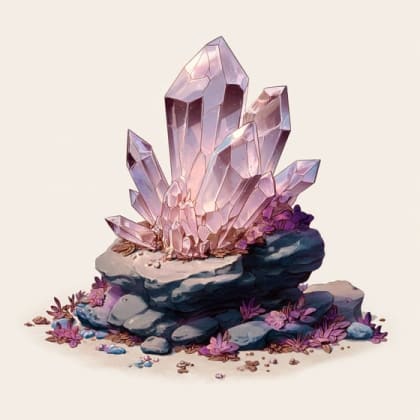




Molybdenite
Molybdenite is a shiny mineral that looks like silver. It is often found in rocks and has a unique metallic luster that sparkles in the light.
The Molybdenite is a soft, bluish-lead gray mineral with a bright metallic luster. It often forms in flaky, layered crystals that can be mistaken for graphite, but its distinct blue tint and heavier feel help identify it.
Category
MineralRarity
Rare
Danger
1/5 · Very low
Snaps
Be the first to snap!
Ancient people often confused molybdenite with lead and even graphite!
It feels so slippery, like a pencil lead, but even smoother!
Molybdenite is a super important source for making extra strong steel!
Scientists are using tiny layers of molybdenite in future electronics.
Molybdenite has a very soft, slippery texture that makes it an excellent natural lubricant for machines.
Molybdenite has a unique atomic structure allowing it to conduct electricity, a rare trait for minerals.
Molybdenite has weak bonds between its layers, letting it easily cleave into extremely thin, flexible sheets.
Metallic refers to substances, materials, or objects possessing properties characteristic of metals, such as luster and conductivity.
Metallic luster describes a mineral's appearance when reflecting light, resembling polished metal, often opaque.
Magnetic geological traits refer to minerals or rocks that exhibit natural magnetism, attracting or repelling other magnetic substances.
Crystalline describes a mineral or rock composed of crystals, often exhibiting a regular atomic structure and geometric external form.

A fossil is the preserved remains or traces of an ancient organism embedded in rock or other geological deposits.
No aliases listed yet.
Danger
1/5 · Very low
Molybdenite is safe to observe but should not be ingested or played with as it is a mineral.
The easiest way to identify Molybdenite is to use the Snappit nature identifier app.
bluish-lead gray, black
1
metallic
4.75
hexagonal
Zoom in to split clusters and explore where this object has been snapped.
Recent snaps will appear here as new observations are added.
Take the discovery with you
Snap it with Snappit to identify it, learn what makes it special, and add the discovery to your collection.