





northern starflower
Lysimachia borealis
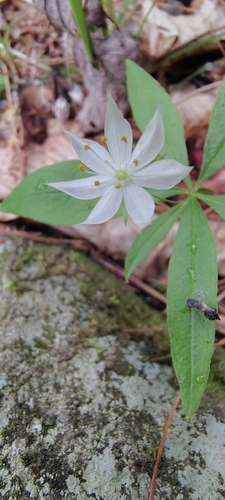
The northern starflower is a pretty little flower that blooms in the spring. Its star-shaped white flowers look like tiny stars shining in the forest!
Habitat: Forests
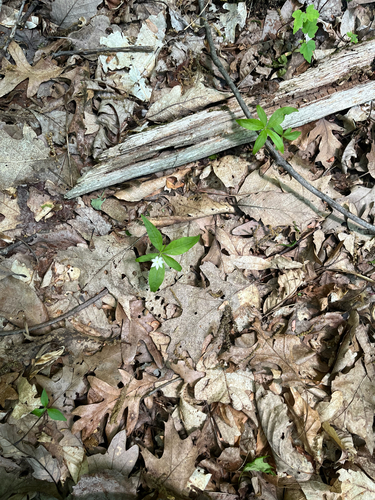
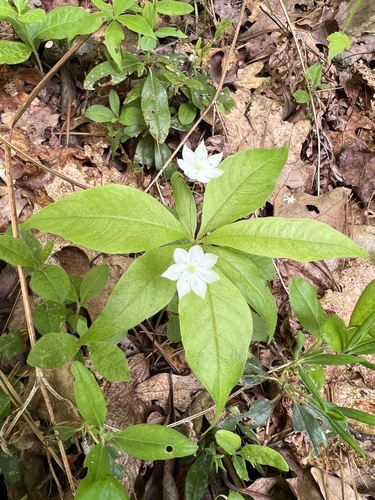
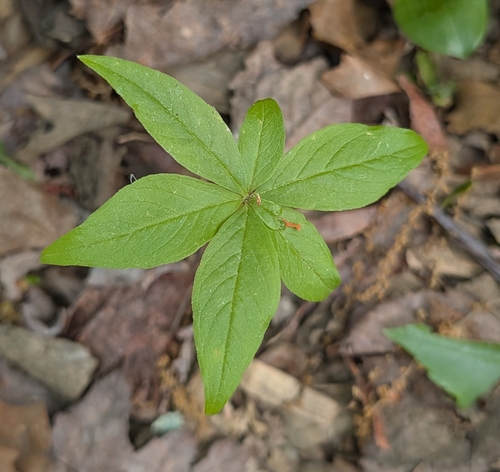
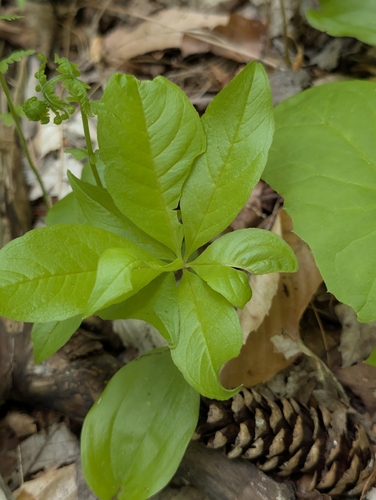
The northern starflower is a small plant with slender stems reaching up to 20 cm tall. It has delicate white, star-shaped flowers with five petals, often blooming singly from its upper leaf axils. Its bright green leaves are typically oval and arranged in whorls.
Category
PlantsRarity
Common
Danger
1/5 · Very low
Snaps
82
Even though it's small, a patch of northern starflowers can carpet the forest floor!
Its scientific genus, Lysimachia, might be named after an ancient Greek king!
This tiny plant is sometimes called 'Maystar' because it often blooms in late spring.
You can often find them growing alongside mosses and ferns, sharing cool, damp ground.
Northern starflower can spread using creeping underground stems, called rhizomes, which helps it form colonies and find new damp spots to grow.
Northern starflower has a special ability to thrive in deep shade, allowing it to grow in dark forest floors where other plants struggle.
Northern starflower's small, bright white flowers are like tiny beacons that stand out in dimly lit undergrowth, attracting small insect pollinators.
Bombus impatiens
Visits flowers for nectar and pollen
Apis mellifera
Gathers nectar and pollen from its flowers
Lasioglossum vierecki
Small native bee pollinates starflower
Flowering plants are any plants that produce flowers as part of their reproductive cycle.
Shade tolerant plants are adapted to grow and thrive in areas with low light levels, requiring less direct sunlight.
Spring blooming plants produce their flowers during the spring season, often signifying the end of winter and the start of new growth.
Fragrant flowers emit a pleasant aroma, often to attract pollinators or for defense.

Describes plants that are particularly attractive and beneficial to a wide range of pollinating organisms.

Forest habitats are terrestrial environments dominated by dense tree cover, supporting a high diversity of plant and animal life.
No aliases listed yet.
Danger
1/5 · Very low
Always look but don't pick flowers. They are homes for many tiny creatures!
The easiest way to identify northern starflower is to use the Snappit nature identifier app.
5-20 cm
5-15 cm
0.6-1 cm
Late spring to mid-summer
No
None
Perennial
Zoom in to split clusters and explore where this object has been snapped.
Jun 2, 2026
Binghamton Zoo at Ross ParkPhoto attribution
(c) Christina S. Baer, some rights reserved (CC BY)
License: CC BY 4.0 ↗
Image may be shown cropped inside the card frame.
Jun 1, 2026
High PointPhoto attribution
no rights reserved
License: CC0 1.0 ↗
Image may be shown cropped inside the card frame.
May 30, 2026
Quaker Farms Historic DistrictPhoto attribution
(c) Jessica Utrup, some rights reserved (CC BY)
License: CC BY 4.0 ↗
Image may be shown cropped inside the card frame.
May 27, 2026
Lyme Common Historic DistrictPhoto attribution
(c) Nick Kleinschmidt, some rights reserved (CC BY)
License: CC BY 4.0 ↗
Image may be shown cropped inside the card frame.
May 23, 2026
Canton Center Historic DistrictPhoto attribution
no rights reserved
License: CC0 1.0 ↗
Image may be shown cropped inside the card frame.

Connecticut, US
You might spot Green Frog and Mountain Laurel.
View guide →

Maine, US
You might spot American Bullfrog and Three-Toothed Cinquefoil.
View guide →

New Hampshire, US
You might spot Eastern Red-Backed Salamander and Eastern Newt.
View guide →

Massachusetts, US
You might spot Mountain Laurel, Azure Bluet, and Partridgeberry.
View guide →

Massachusetts, US
You might spot Threeleaf Goldthread and Spotted Salamander.
View guide →

US
You might spot Pink Lady's Slipper and Canada Mayflower.
View guide →
Take the discovery with you
Snap it with Snappit to identify it, learn what makes it special, and add the discovery to your collection.







.jpg&width=800)


_001.jpg&width=800)



