


Onion-Leafed Asphodel
asphodelus fistulosus
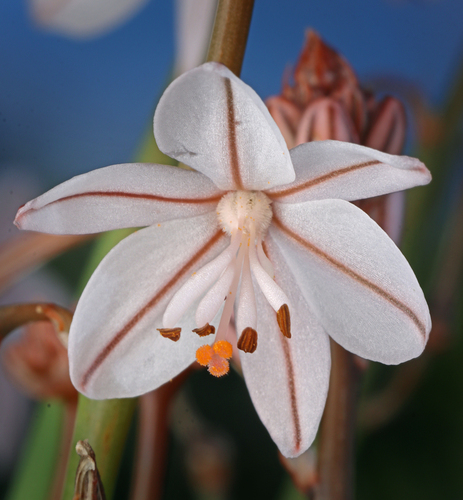
The Onion-Leafed Asphodel, scientifically known as Asphodelus fistulosus, is a hardy and highly adaptable herbaceous plant native to the Mediterranean region. Frequently called "onionweed" due to its hollow, cylindrical leaves that closely resemble those of culinary chives or onions, this plant produces delicate, star-shaped white or pale pink flowers. Each tepal features a distinctive, dark reddish-brown central stripe, making it a beautiful sight when in full bloom despite its status as an invasive species in many parts of the world.
Habitat: Found in open, sunny, disturbed habitats such as roadsides, degraded pastures, coastal dunes, and sandy or rocky grasslands.
This plant features a dense tuft of erect, hollow, cylindrical blue-green leaves that reach up to 40 cm in length. From this foliage, stiff, hollow, branched flowering stems emerge, standing between 30 and 70 cm tall. The flowers are arranged in loose racemes; each blossom is about 1.5 to 2 cm wide with six white or pale pink tepals, each marked by a prominent brown or purplish mid-vein. The fruits are small, rounded, three-valved capsules containing wrinkled, black seeds.
Category
PlantsRarity
Common
Danger
1/5 · Very low
Snaps
Be the first to snap!
Despite its name 'onion-leafed asphodel' and onion-like appearance, it does not have an onion scent or taste and is actually toxic to ingest.
In Australia and the United States, it is officially declared a noxious weed because livestock avoid eating it, leading to degraded pasture quality.
It is highly fire-tolerant; its seeds survive wildfire heat and germinate rapidly in the nutrient-rich ash left behind.
The hollow, cylindrical structure of the leaves minimizes surface area relative to volume, reducing water loss through transpiration in hot, arid environments.
A single plant can produce thousands of small, hardy seeds that remain viable in the soil for several years, allowing rapid colonization after disturbances.
The plant contains compounds that render it unpalatable or mildly toxic to most livestock, preventing grazing pressure and allowing it to flourish in active pastures.
As a photosynthetic plant, it generates its own energy from sunlight, carbon dioxide, and water while absorbing essential minerals from the soil.
Themeda triandra
Outcompetes native grasses for water, nutrients, and sunlight in disturbed pastoral lands.
Apis mellifera
Visited by honey bees for nectar and pollen, aiding in pollination.
No trait badges are assigned for this object yet.
No aliases listed yet.
Collections for this object will appear here as more themes are added.
Danger
1/5 · Very low
No special safety notes yet.
Start with the whole plant, then compare leaf arrangement, leaf edges, stems and any flowers or fruit. Opposite leaves grow in pairs; alternate leaves come one at a time along the stem. These details tell you far more together than a single green leaf does. Plant Identifier: upload a photo and compare the visible details.
15+ cm
1+ years
As a photosynthetic plant, it generates its own energy from sunlight, carbon dioxide, and water while absorbing essential minerals from the soil.
Found in open, sunny, disturbed habitats such as roadsides, degraded pastures, coastal dunes, and sandy or rocky grasslands.
7+ days
Zoom in to split clusters and explore where this object has been snapped.
Recent snaps will appear here as new observations are added.
Take the discovery with you
Snap it with Snappit to identify it, learn what makes it special, and add the discovery to your collection.


















