

Pacific Oyster
magallana gigas
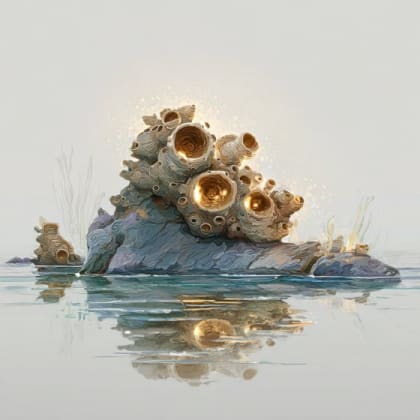
The Pacific Oyster (Magallana gigas) is a remarkably resilient and fast-growing bivalve mollusc native to the shores of East Asia. Because of its high adaptability, rapid growth rate, and commercial value, it has been introduced to coastal regions across the globe, becoming the most widely cultivated oyster species in the world today. This species plays a foundational role in marine ecosystems. As ecosystem engineers, Pacific oysters clump together to build massive reefs that stabilize shorelines against erosion, provide vital nursery grounds for fish and crabs, and shelter a vast array of marine organisms. Additionally, their outstanding water-filtering capabilities help clear the water column of excess nutrients and particulates, directly improving the health of coastal estuaries. Despite these benefits, their aggressive colonization in non-native waters sometimes leads to competition with native bivalve species, making them a subject of ecological management.
Habitat: Typically found in intertidal and shallow subtidal zones of estuaries, bays, and rocky coastlines, where they cement themselves to rocks, shells, or artificial structures.
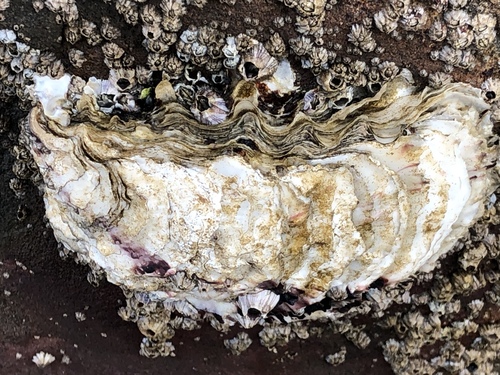
The Pacific Oyster is easily identified by its extremely rugged, thick, and highly irregular shell, which varies dramatically depending on the substrate it grows on. The lower valve is deeply cupped and cemented to a hard surface, while the upper valve is flatter and acts as a lid. Its exterior displays a rough texture with sharp, wavy radial folds, colored in shades of whitish-grey, yellowish-brown, and often streaked with deep purple. Inside, the shell is smooth, pearly white, and features a distinctive purple or brown adductor muscle scar near the center-posterior edge. They typically range from 8 to 20 centimeters in length, though exceptional individuals can reach up to 30 centimeters.
Category
InvertebrateRarity
Common
Danger
1/5 · Very low
Snaps
1
A single adult Pacific oyster can filter up to 120 liters of water a day, helping to prevent harmful algal blooms.
The cement they produce to stick to rocks is so strong that scientists are studying it to develop underwater adhesives for medical use.
Their shell shape is highly dynamic, morphing to squeeze into the exact shape of the rocky crevice where they settle.
They form massive living reefs that act as natural seawalls, protecting coastlines from erosion caused by heavy waves.
Can filter huge volumes of water daily, removing organic particles and microalgae to dramatically improve local water clarity.
Possesses the ability to change sex throughout its life cycle, typically starting as a male and transitioning to a female as it grows larger.
Secretes a rapid-hardening liquid bio-cement from its mantle to permanently anchor itself to solid surfaces, resisting heavy surf.
Feeds by filtering tiny food particles from the water column using its specialized gills.

Carcinus maenas
Juvenile oysters are heavily preyed upon by this invasive crab species.
Urosalpinx cinerea
A predatory marine snail that bores holes through the oyster's shell to feed on its soft body.

Mytilus edulis
Competes directly with the Pacific oyster for hard substrate and planktonic food sources.
No trait badges are assigned for this object yet.
No aliases listed yet.
Collections for this object will appear here as more themes are added.
Danger
1/5 · Very low
No special safety notes yet.
The easiest way to identify Pacific Oyster is to use the Snappit nature identifier app.
8+ cm
0.05+ kg
Feeds by filtering tiny food particles from the water column using its specialized gills.
Typically found in intertidal and shallow subtidal zones of estuaries, bays, and rocky coastlines, where they cement themselves to rocks, shells, or artificial structures.
Filtering
Zoom in to split clusters and explore where this object has been snapped.

California, US
You might spot Western Fence Lizard, Eastern Fox Squirrel, and Duck.
View guide →

British Columbia, CA
You might spot Bald Eagle, Seal, and Sea Star.
View guide →
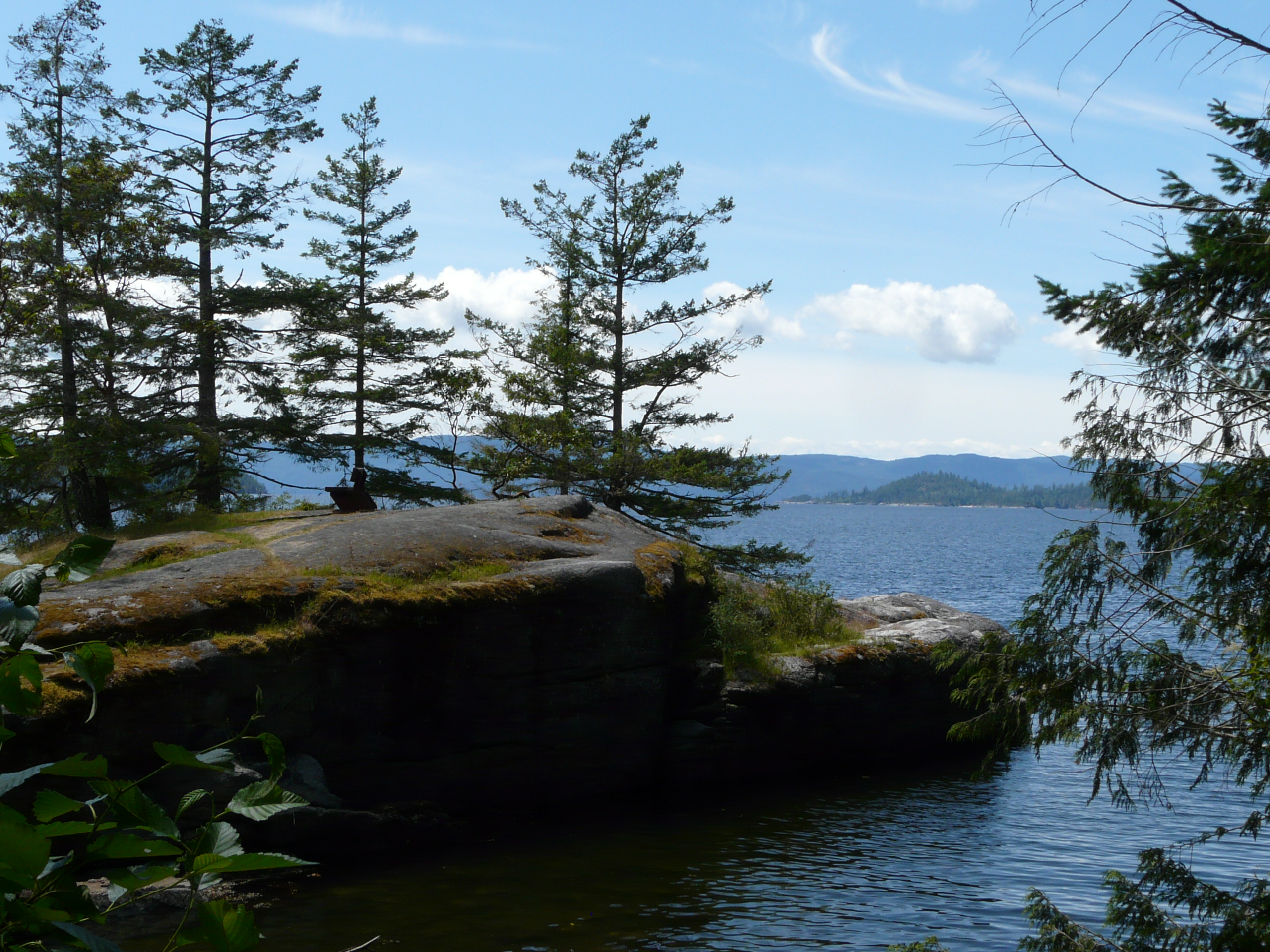
British Columbia, CA
You might spot Ochre Sea Star and Yellow Shore Crab.
View guide →
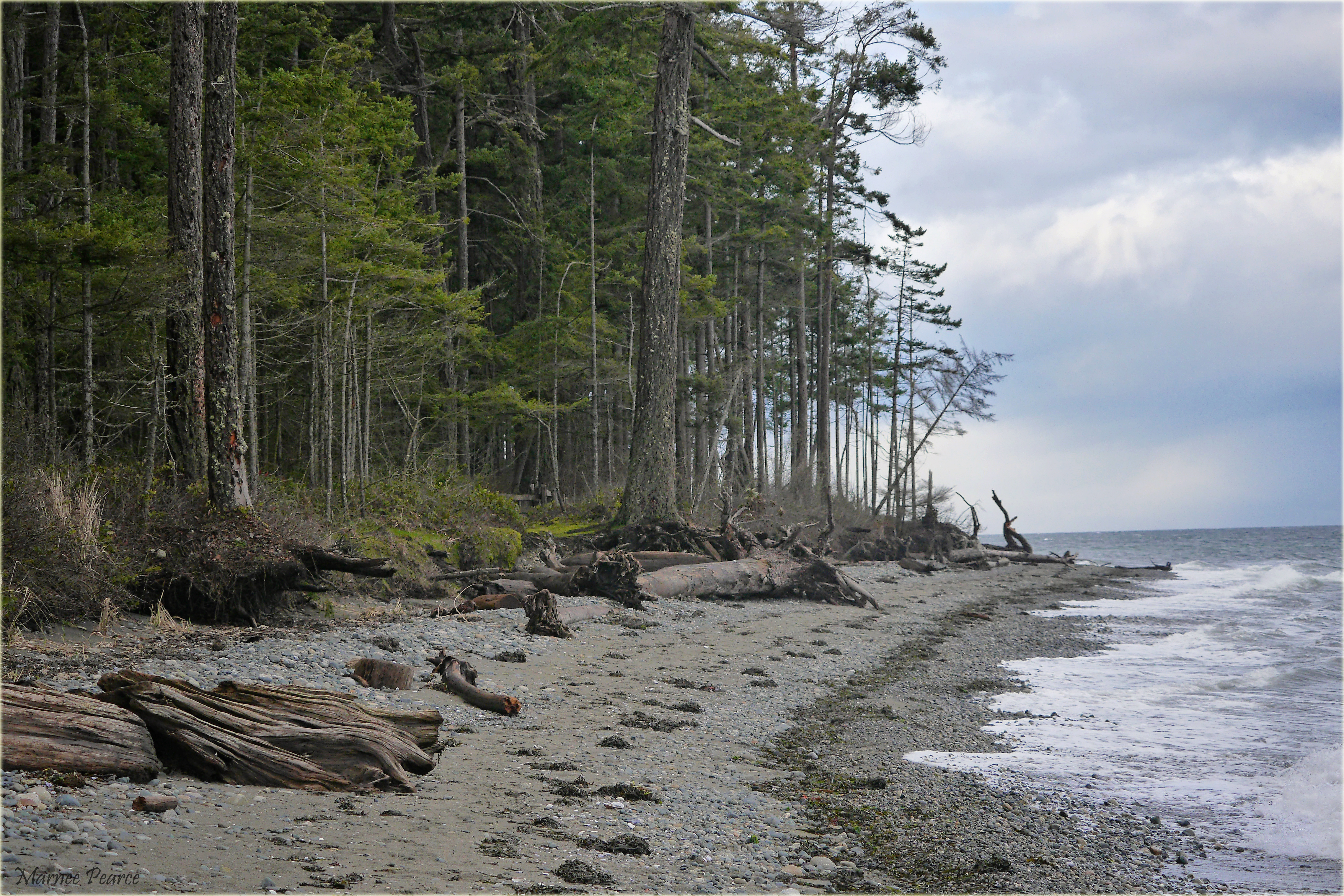
British Columbia, CA
You might spot European Rabbit, Yellow Shore Crab, and Nootka Rose.
View guide →
British Columbia, CA
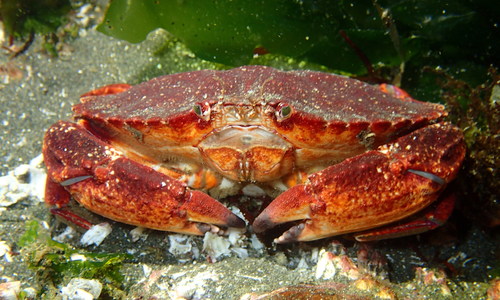
You might spot Red Rock Crab, Dungeness Crab, and Salal.
View guide →

Washington, US
You might spot Evergreen Huckleberry and Barrow's Goldeneye.
View guide →
Take the discovery with you
Snap it with Snappit to identify it, learn what makes it special, and add the discovery to your collection.