.jpg&width=800)





Pyrrhotite
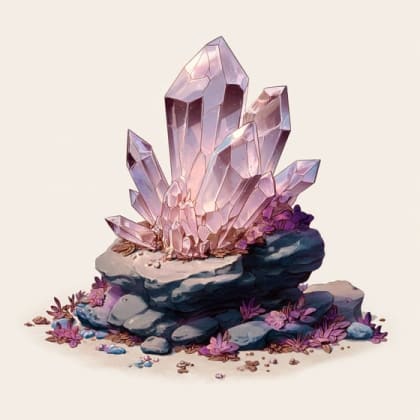
Pyrrhotite is a shiny mineral that looks like a metallic bronze or brass. It is often found in rocks and can be magnetic, attracting small metal objects like a magnet.
The Pyrrhotite has a distinct bronze-yellow to copper-red color with a bright metallic luster. It can appear tarnished, showing iridescent blues or purples. Unlike brighter pyrite, Pyrrhotite often has a duller, more reddish hue and may form irregular masses.
Category
MineralRarity
Rare
Danger
1/5 · Very low
Snaps
Be the first to snap!
Its name "pyrrhotite" means "fire stone" in Greek, perhaps for its fiery color.
Pyrrhotite can sometimes be mistaken for gold, though it's much softer and less shiny.
Pyrrhotite tarnishes quickly, turning from bronze to a dull gray-brown in air.
Strike Pyrrhotite and it might spark, thanks to its unique composition!
Pyrrhotite has strong magnetism, meaning it can attract small metal objects or even affect a compass.
Pyrrhotite often forms near valuable minerals like gold or nickel, helping prospectors find riches!
This mineral contains sulfur, which can be extracted for industrial uses like making sulfuric acid.
Metallic refers to substances, materials, or objects possessing properties characteristic of metals, such as luster and conductivity.
Magnetic geological traits refer to minerals or rocks that exhibit natural magnetism, attracting or repelling other magnetic substances.
Crystalline describes a mineral or rock composed of crystals, often exhibiting a regular atomic structure and geometric external form.
A fossil is the preserved remains or traces of an ancient organism embedded in rock or other geological deposits.
Danger
1/5 · Very low
Pyrrhotite is a mineral and safe to handle, but avoid ingesting it.
The easiest way to identify Pyrrhotite is to use the Snappit nature identifier app.
Bronze-yellow, Bronze-brown, Copper-red
3.5
Metallic
4.6
Monoclinic
Zoom in to split clusters and explore where this object has been snapped.
Recent snaps will appear here as new observations are added.
Take the discovery with you
Snap it with Snappit to identify it, learn what makes it special, and add the discovery to your collection.