
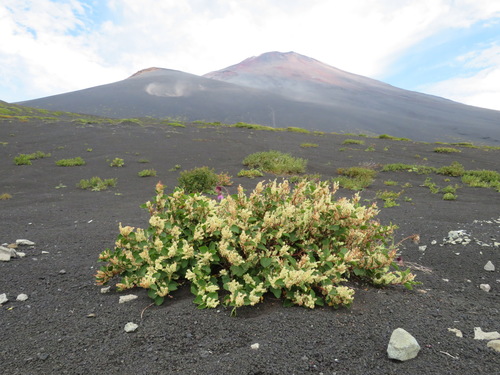


Rhizomatous Knotweeds
reynoutria
Rhizomatous Knotweeds, primarily represented by species like Japanese Knotweed (Reynoutria japonica), are highly successful and notorious invasive plants known for their incredibly aggressive growth and ability to dominate diverse ecosystems. Originally from East Asia, these plants have become a global menace, outcompeting native vegetation, reducing biodiversity, and causing significant economic damage to infrastructure. Their ecological impact is profound, forming dense monocultures that alter soil chemistry, prevent the growth of other plants, and disrupt natural habitats for wildlife. Understanding their biology and spread is crucial for managing their widespread presence and mitigating their detrimental effects on natural landscapes.
Habitat: Rhizomatous Knotweeds are typically found in disturbed areas, riverbanks, roadsides, railway embankments, waste ground, and neglected urban sites.
These plants are characterized by their hollow, bamboo-like stems, which can grow up to 3-4 meters tall and are typically green with distinctive reddish-purple speckles, turning reddish-brown in autumn. The leaves are broadly ovate to heart-shaped, up to 15 cm long, arranged alternately along the stems. In late summer to early autumn, they produce numerous small, creamy-white flowers arranged in dense, plume-like clusters (panicles) in the leaf axils, giving the plant a soft, feathery appearance despite its robust structure.
Category
PlantsRarity
Common
Danger
1/5 · Very low
Snaps
Be the first to snap!
Controlling knotweed is so difficult that in the UK, its presence can affect property sales, as mortgage lenders may refuse loans on affected properties until a professional management plan is in place.
Despite its invasive reputation, young knotweed shoots are edible and are sometimes consumed in its native range and by adventurous foragers, often prepared similarly to rhubarb.
Rhizomatous Knotweeds can grow an astonishing 10-15 centimeters (4-6 inches) per day during their peak growing season, making them one of the fastest-growing plants.
Their incredibly strong and pervasive rhizomes are capable of exploiting weaknesses in concrete, asphalt, and drainage systems, causing costly damage to buildings, roads, and flood defenses.
Knotweeds develop an extensive and deep underground network of rhizomes (underground stems) that can spread horizontally for several meters. This system stores vast amounts of energy, allowing the plant to regrow rapidly from even small fragments and to resist removal efforts.
These plants exhibit extremely fast growth rates, capable of growing several centimeters per day during peak season. This rapid accumulation of above-ground biomass allows them to quickly outcompete and shade out native vegetation, forming dense, impenetrable thickets.
Rhizomatous Knotweeds are incredibly resilient; they can regenerate from tiny pieces of stem or root, making control efforts exceptionally challenging. Mowing, cutting, or digging can inadvertently propagate the plant if fragments are dispersed.
As a photosynthetic plant, Rhizomatous Knotweeds produce their own food through the process of photosynthesis, converting light energy into chemical energy. They utilize sunlight, atmospheric carbon dioxide, and water, while absorbing essential mineral nutrients from the soil.
Various native herbaceous plants
Forms dense monocultures, aggressively outcompeting and suppressing the growth of native flora.
Various native arthropods and annelids
Its extensive rhizome system can displace and alter the soil structure, negatively impacting soil-dwelling organisms and microfauna.
Apis mellifera
While providing late-season nectar, its dense growth reduces overall plant diversity, potentially impacting specialist pollinators and other insects dependent on native species.
Various native fish species
Can destabilize riverbanks and increase erosion due to its shallow root mat and annual die-back, impacting aquatic habitats through increased siltation.
No trait badges are assigned for this object yet.
No aliases listed yet.
Collections for this object will appear here as more themes are added.
Danger
1/5 · Very low
No special safety notes yet.
Start with the whole plant, then compare leaf arrangement, leaf edges, stems and any flowers or fruit. Opposite leaves grow in pairs; alternate leaves come one at a time along the stem. These details tell you far more together than a single green leaf does. Plant Identifier: upload a photo and compare the visible details.
100-400 cm
0.5-5 kg
20-60 years
As a photosynthetic plant, Rhizomatous Knotweeds produce their own food through the process of photosynthesis, converting light energy into chemical energy. They utilize sunlight, atmospheric carbon dioxide, and water, while absorbing essential mineral nutrients from the soil.
Rhizomatous Knotweeds are typically found in disturbed areas, riverbanks, roadsides, railway embankments, waste ground, and neglected urban sites.
Photosynthesis/nutrient Absorption
Zoom in to split clusters and explore where this object has been snapped.
Recent snaps will appear here as new observations are added.
Take the discovery with you
Snap it with Snappit to identify it, learn what makes it special, and add the discovery to your collection.


















