
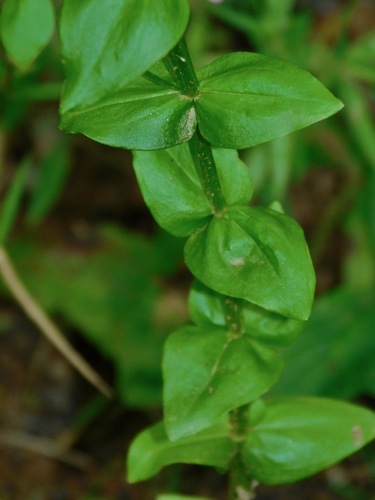


Rosepink
sabatia angularis
Rosepink (Sabatia angularis), also known as common rosepink or bitter-bloom, is a striking biennial wildflower native to the eastern and central United States. Belonging to the gentian family, this vibrant herb is celebrated for its showy pink blossoms that brighten open fields, meadows, and woodland edges during the heat of mid-to-late summer. In its first year, it grows as a low-key basal rosette of leaves, storing energy for its second year when it shoots up a highly branched, square-angled stem topped with a profusion of star-like flowers. Rosepink has a historical place in traditional herbal medicine, where it was once brewed into a bitter tonic to treat fevers and digestive issues.
Habitat: Found in open fields, prairies, glades, roadsides, and open woodlands, typically preferring dry to moist, sandy, or clay soils.
Rosepink stands out with its sharply four-angled, square stems that branch repeatedly toward the top, creating a bushy, pyramidal silhouette. The plant typically reaches heights of 30 to 90 centimeters. Its leaves are opposite, ovate to lanceolate, clasping the stem directly without petioles. The most striking feature is the clusters of fragrant, star-shaped flowers, each spanning about 2 to 3 centimeters across. Each flower boasts 5 rose-pink petals centered around a bright yellow, star-like eye bordered by a thin red outline, and a prominent, twisted green style that gives the bloom a unique sculptural elegance.
Category
PlantsRarity
Common
Danger
1/5 · Very low
Snaps
Be the first to snap!
Its scientific genus name, Sabatia, honors Liberato Sabbati, an eminent 18th-century Italian botanist.
The bitter chemicals inside Rosepink were once used by 19th-century physicians as a substitute for quinine to treat malaria and reduce high fevers.
The bright yellow eye in the center of the pink flower acts as a nectar guide, mimicking the appearance of pollen to lure bees directly to the reproductive organs.
The style of the rosepink flower twists as it matures, a physical mechanism that prevents self-pollination by separating the pollen-releasing anthers from the receptive stigma in time.
The sharply four-angled, winged stem provides superior structural support and resistance against bending in open, windy grassland environments.
The plant produces bitter secoiridoid glycosides, which act as a powerful chemical defense deterring herbivorous insects and mammals from eating its foliage.
Rosepink is a photosynthetic plant that manufactures its own food using sunlight, carbon dioxide, water, and essential mineral nutrients absorbed from the soil.
Bombus impatiens
Pollinates the flowers while gathering nectar and pollen.

Odocoileus virginianus
Occasionally browses on the young foliage, though often deterred by its bitter taste.
Lasioglossum vierecki
Frequently visits the bright yellow centers of the flowers to collect pollen.
No trait badges are assigned for this object yet.
No aliases listed yet.
Collections for this object will appear here as more themes are added.
Danger
1/5 · Very low
No special safety notes yet.
Start with the whole plant, then compare leaf arrangement, leaf edges, stems and any flowers or fruit. Opposite leaves grow in pairs; alternate leaves come one at a time along the stem. These details tell you far more together than a single green leaf does. Plant Identifier: upload a photo and compare the visible details.
30-90 cm
2 years
Rosepink is a photosynthetic plant that manufactures its own food using sunlight, carbon dioxide, water, and essential mineral nutrients absorbed from the soil.
Found in open fields, prairies, glades, roadsides, and open woodlands, typically preferring dry to moist, sandy, or clay soils.
Photosynthesis
Zoom in to split clusters and explore where this object has been snapped.
Recent snaps will appear here as new observations are added.
Take the discovery with you
Snap it with Snappit to identify it, learn what makes it special, and add the discovery to your collection.


















