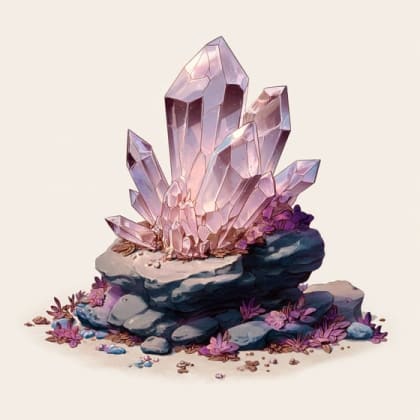




Serpentinite
Serpentinite is a shiny, greenish rock that forms deep in the Earth's crust. It is often found in areas where tectonic plates collide, creating beautiful patterns and textures.
The Serpentinite is typically a leafy or fibrous mineral, often found in shades of green, from light yellow-green to dark, almost black-green. It has a distinctive waxy or greasy feel and can appear smooth and mottled, sometimes resembling snake skin.
Category
MineralRarity
Common
Danger
1/5 · Very low
Snaps
Be the first to snap!
Ancient Romans carved Serpentinite into beautiful ornaments and practical objects.
Serpentinite's unusual soil helps rare plants grow only in certain places!
This rock forms deep underground when oceanic crust minerals react with water.
You can find Serpentinite in giant slabs within mountain ranges like the Alps!
Serpentinite is soft enough (Mohs 2.5-4) to be easily carved, making it a favorite for sculptors to create beautiful art.
Serpentinite has a unique chemical composition that helps it naturally absorb carbon dioxide from the air, locking it away!
When Serpentinite breaks down, it creates unusual 'serpentine soils' rich in magnesium, which many special plants need to grow.
Metamorphic rocks are formed when existing rocks are changed by heat, pressure, or chemical alteration.
Colorful describes organisms or objects displaying a wide range of bright and distinct colors.
Crystalline describes a mineral or rock composed of crystals, often exhibiting a regular atomic structure and geometric external form.
Natural refers to organisms, materials, or phenomena existing or produced by nature, not artificially created.
Danger
1/5 · Very low
Serpentinite is a rock and safe to observe, but be cautious of sharp edges.
The easiest way to identify Serpentinite is to use the Snappit nature identifier app.
Green, Yellow-green, Brownish-green, Blackish-green
3
Greasy
2.55
Monoclinic
Zoom in to split clusters and explore where this object has been snapped.
Recent snaps will appear here as new observations are added.
Take the discovery with you
Snap it with Snappit to identify it, learn what makes it special, and add the discovery to your collection.