
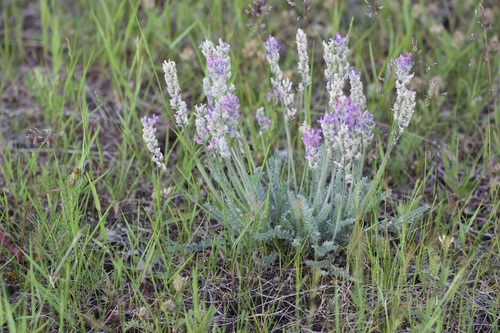


Showy Locoweed
oxytropis splendens
The Showy Locoweed (Oxytropis splendens) is a striking, perennial wildflower native to the open, gravelly grasslands and alpine regions of western North America. A member of the legume family, this resilient plant is famous for its vibrant displays of deep pink to purple flower spikes that rise above a basal clump of silvery-green foliage. It gets its 'showy' name from its brilliant color and the shimmering appearance created by thousands of fine, silky hairs that cover its leaves and stems. Despite its beauty, Showy Locoweed has a notorious reputation among ranchers because it contains a toxic alkaloid that can cause severe neurological damage, known as 'locoism,' in grazing livestock. In the wild, however, it is a vital pioneer species that thrives in nutrient-poor soils, thanks to its nitrogen-fixing capabilities and extreme drought tolerance. It provides essential nectar for native pollinators while beautifully adapting to harsh, windswept landscapes.
Habitat: Found in dry, open grasslands, gravelly slopes, alpine meadows, and rocky ridges.
Showy Locoweed is easily distinguished by its dense clusters of bright pinkish-purple to violet pea-like flowers, which bloom in compact spikes standing 10 to 40 centimeters tall. The entire plant—including the stems, calyxes, and compound pinnate leaves—is covered in a dense coat of long, silky, silver-white hairs, giving it a distinct shimmering or woolly grayish-green appearance. The leaves arise mostly from the base, divided into 7 to 17 pairs of narrow, pointed leaflets. The seed pods are also heavily woolly, pointed, and mature into a dark brown color.
Category
PlantsRarity
Common
Danger
1/5 · Very low
Snaps
Be the first to snap!
Despite its toxicity to livestock, native wildlife like elk and bighorn sheep occasionally graze on it with fewer severe side effects.
Its scientific name 'splendens' is Latin for splendid or glittering, referring to the shimmering silver sheen of its woolly hairs.
The term 'locoweed' comes from the Spanish word 'loco' (crazy), describing the erratic behavior and loss of coordination seen in livestock that eat it.
A dense covering of fine silver hairs reflects excessive sunlight, reduces wind evaporation, and traps moisture close to the plant.
Partners with subterranean rhizobia bacteria to convert atmospheric nitrogen into usable soil nutrients, allowing it to colonize barren soils.
Hosts an endophytic fungus that produces swainsonine, a potent chemical deterrent that protects the plant from being overgrazed by herbivores.
As a photosynthetic plant, it generates its own energy from sunlight, water, carbon dioxide, and essential minerals absorbed from the soil.
Alternaria oxytropis
The systemic fungus Alternaria oxytropis lives inside the plant tissues, producing the toxic alkaloid swainsonine that deters herbivores.
Bombus bifarius
Bumble bees are the primary pollinators, visiting the bright purple flowers to harvest nectar and pollen.
Bos taurus
Cattle may consume the plant during early spring when other forage is scarce, leading to chronic neurological poisoning.
No trait badges are assigned for this object yet.
No aliases listed yet.
Collections for this object will appear here as more themes are added.
Danger
1/5 · Very low
No special safety notes yet.
Start with the whole plant, then compare leaf arrangement, leaf edges, stems and any flowers or fruit. Opposite leaves grow in pairs; alternate leaves come one at a time along the stem. These details tell you far more together than a single green leaf does. Plant Identifier: upload a photo and compare the visible details.
10-40 cm
0.05-0.2 kg
5-15 years
As a photosynthetic plant, it generates its own energy from sunlight, water, carbon dioxide, and essential minerals absorbed from the soil.
Found in dry, open grasslands, gravelly slopes, alpine meadows, and rocky ridges.
Zoom in to split clusters and explore where this object has been snapped.
Recent snaps will appear here as new observations are added.
Take the discovery with you
Snap it with Snappit to identify it, learn what makes it special, and add the discovery to your collection.


















