

Signal Crayfish
pacifastacus leniusculus
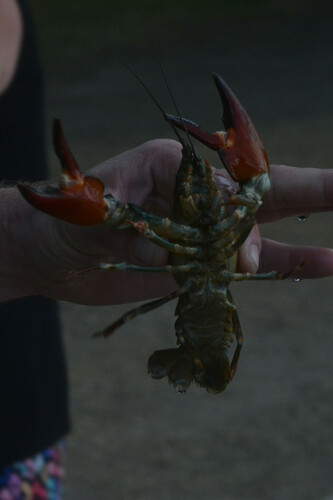
The Signal Crayfish is a robust, fascinating freshwater crustacean native to western North America. While cherished in its homeland, it has gained notoriety across Europe and Asia as a highly successful invasive species. Extremely adaptable and aggressive, this crayfish can tolerate a wide range of water conditions and is famous for outcompeting local species wherever it is introduced. Its common name comes from the bright white or turquoise patches at the hinge of its claws, resembling a railway signalman's flags. This hardy creature plays a major role in aquatic ecosystems, modifying riverbeds through its extensive burrowing habits and acting as a key player in freshwater food webs. Spotting one of these mini-lobsters crawling along a riverbed offers an exciting glimpse into the hidden, active world of freshwater invertebrates.
Habitat: Typically found in clear, cool freshwater environments such as streams, rivers, lakes, and ponds, where it utilizes rocky substrates or clay banks to dig protective burrows.
A relatively large freshwater crayfish, the Signal Crayfish typically measures between 9 to 16 centimeters in length. Its body is smooth, lacking the heavy spines found on some other crayfish species, and varies in color from bluish-brown to reddish-brown. Its most defining field identifier is the bright white or light-blue patch located on the hinge of its massive, robust claws. The undersides of its claws are a striking, bright red, which it flashes aggressively when threatened. It possesses a smooth carapace, long antennae, and a fan-shaped tail used for rapid backward swimming.
Category
AnimalRarity
Common
Danger
1/5 · Very low
Snaps
Be the first to snap!
Female signal crayfish carry their fertilized eggs under their tails for up to eight months, protecting them through the cold winter.
The distinctive white patches on their claws mimic the signaling flags once used by railway workers, giving them their 'signal' name.
Their intensive burrowing behavior can undermine riverbanks, occasionally causing severe bank erosion and collapse in areas with high populations.
Carries the lethal water mold known as crayfish plague without suffering significant illness, acting as a highly effective vector that devastates native competitors.
Capable of crawling substantial distances over damp land at night to move between disconnected water bodies or escape poor water conditions.
Can voluntarily shed a claw or leg to escape a predator's grasp and fully regenerate the lost limb during subsequent molting cycles.
An opportunistic feeder that consumes almost any organic matter it can find, balancing its diet between vegetation and animal protein.
Age differences: Juveniles feed heavily on protein-rich aquatic invertebrates, while mature adults consume a higher ratio of plant matter and decaying leaf litter.
Astacus astacus
Outcompetes this native European species for food and shelter while transmitting lethal crayfish plague.

Lutra lutra
Preys heavily upon signal crayfish, utilizing them as a valuable, protein-rich aquatic food source.
Aphanomyces astaci
Acts as a carrier for this deadly parasitic water mold, spreading it to vulnerable native crayfish species.
No trait badges are assigned for this object yet.
No aliases listed yet.
Collections for this object will appear here as more themes are added.
Danger
1/5 · Very low
No special safety notes yet.
Start with body shape, legs or fins, fur, feathers or scales, and standout markings. Then weigh size, habitat and where you saw it. Young animals and seasonal coats can look very different from familiar adults. Animal Identifier: upload a photo and compare the visible details.
9+ cm
0.05+ kg
10+ years
An opportunistic feeder that consumes almost any organic matter it can find, balancing its diet between vegetation and animal protein.
Typically found in clear, cool freshwater environments such as streams, rivers, lakes, and ponds, where it utilizes rocky substrates or clay banks to dig protective burrows.
Foraging
100200+
Zoom in to split clusters and explore where this object has been snapped.
Recent snaps will appear here as new observations are added.

Oregon, US
You might spot Duck, Pacific Trillium, and Wood Duck.
View guide →
Nevada, US
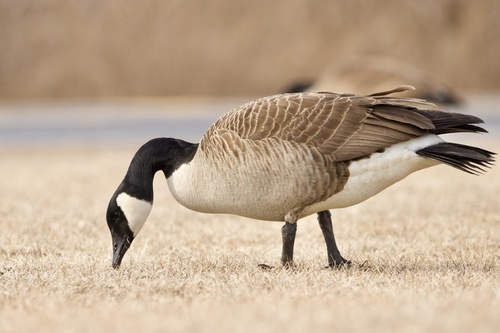
You might spot Canada Goose, Antelope Bitterbrush, and Steller's Jay.
View guide →

California, US
You might spot Pipevine Swallowtail and Western Fence Lizard.
View guide →
Take the discovery with you
Snap it with Snappit to identify it, learn what makes it special, and add the discovery to your collection.