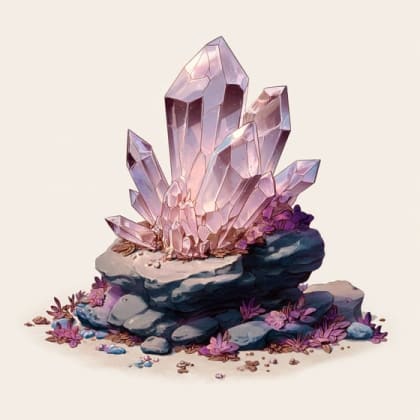




Siltstone
Siltstone is a type of sedimentary rock made of fine particles like sand and clay. It feels smooth and often has layers that show its formation over time.
The Siltstone has a dull, earthy appearance, often in shades of gray, brown, or reddish-brown. It feels slightly gritty to the touch, distinguishing it from the smoother feel of shale. Its fine grains are usually too small to see individually without magnification.
Category
MineralRarity
Common
Danger
1/5 · Very low
Snaps
Be the first to snap!
Its name comes from "silt," tiny dust-like grains smaller than sand!
Siltstone often shows ancient ripple marks from long-gone rivers or seas!
Some ancient tools, like grinding stones, were crafted from tough siltstone!
This rock is like a "middle child" between sandy sandstone and super-fine shale!
Siltstone's very fine grains allow it to preserve delicate impressions of ancient life, acting like Earth's old photo album.
Siltstone's dense, sometimes impermeable layers can trap underground water or oil, making it an important natural reservoir component.
Siltstone can be crushed and used in cement or as aggregate, contributing its strength and bulk to modern construction.
Sedimentary rocks are formed from the accumulation and compaction of sediments, organic matter, or chemical precipitates.
Vitreous luster describes a mineral's appearance when reflecting light, resembling glass, often translucent or transparent.
A fossil is the preserved remains or traces of an ancient organism embedded in rock or other geological deposits.
No aliases listed yet.
Danger
1/5 · Very low
Siltstone is safe to touch but can be sharp if broken, so be careful when exploring.
The easiest way to identify Siltstone is to use the Snappit nature identifier app.
gray, brown, reddish-brown, green, buff
2.5
dull
2.65
Zoom in to split clusters and explore where this object has been snapped.
Recent snaps will appear here as new observations are added.
Take the discovery with you
Snap it with Snappit to identify it, learn what makes it special, and add the discovery to your collection.