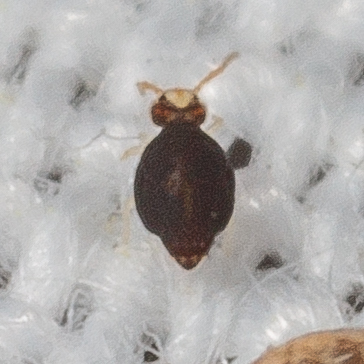


Sminthurinus Minutus
sminthurinus minutus
Sminthurinus minutus is a remarkable, yet frequently overlooked, member of the micro-world beneath our feet. Belonging to the globular springtails (order Symphypleona), this tiny hexapod looks like a microscopic, colorful sphere scurrying among decaying leaves. Though closely related to insects, springtails belong to a distinct lineage known as Entognatha, possessing internal mouthparts adapted for grazing on microscopic fungi and detritus. What makes this species truly fascinating is its spectacular method of locomotion and predator evasion. When threatened, it releases a spring-loaded appendage tucked beneath its abdomen, launching itself into the air in a fraction of a second. As a vital component of soil ecosystems, Sminthurinus minutus helps regulate fungal growth and breaks down organic matter, playing a crucial, unseen role in global nutrient cycling.
Habitat: Found primarily in moist microhabitats such as dense leaf litter, decaying wood, damp soil, and among mosses in woodlands and temperate gardens.
Measuring scarcely 1 millimeter in length, Sminthurinus minutus has a distinctive globular, teardrop-shaped body that lacks wings. Its coloration is often dark, ranging from deep brown to purple or mottled black, sometimes with subtle lighter patches that provide camouflage in soil. It features a prominent, segmented pair of antennae that it constantly taps against the substrate, and simple eyes called ocelli visible as dark patches on the side of its head. Tucked under its rounded abdomen is a specialized forked appendage known as the furcula, which is held under tension by a microscopic catch (the tenaculum) until needed for jumping.
Category
AnimalRarity
Common
Danger
1/5 · Very low
Snaps
Be the first to snap!
A Sminthurinus minutus can accelerate its body during a jump faster than the blink of an eye, experiencing G-forces that would be instantly lethal to a human.
Despite frequently being called 'snow fleas' or 'soil bugs', springtails are not technically insects; they belong to a parallel evolutionary lineage called Entognatha.
They are so exceptionally minute that hundreds of them could comfortably fit on the surface of a small coin.
They shed their skin (molt) throughout their entire lives, even after reaching sexual maturity, which is a rare trait in the broader arthropod world.
It utilizes a tail-like, spring-loaded appendage called a furcula to instantly catapult itself many times its own body length into the air to evade predators.
It possesses a unique ventral tube called a collophore, which functions as a tiny sponge to absorb ambient moisture and maintain strict osmotic balance.
Its exoskeleton is covered in microscopic, water-repellent hairs and structures that prevent it from drowning in water droplets and allow it to walk on the surface tension of puddles.
It feeds heavily on decaying organic matter, fungal hyphae, and microscopic organisms in the soil.
Age differences: Nymphs consume the exact same types of food as adults, simply targeting smaller particulate sizes.
Stratiolaelaps scimitus
Predatory mites actively hunt and consume small springtails in soil and compost environments.
Erigone atra
Dwarf spiders weave small webs or actively stalk tiny arthropods like springtails within the leaf litter.
Trichoderma harzianum
Springtails graze heavily on the mycelium and spores of common soil fungi, helping to control its spread and disperse spores.
No trait badges are assigned for this object yet.
No aliases listed yet.
Collections for this object will appear here as more themes are added.
Danger
1/5 · Very low
No special safety notes yet.
Start with body shape, legs or fins, fur, feathers or scales, and standout markings. Then weigh size, habitat and where you saw it. Young animals and seasonal coats can look very different from familiar adults. Animal Identifier: upload a photo and compare the visible details.
0 cm
1e-8-5e-8 kg
0-1 years
It feeds heavily on decaying organic matter, fungal hyphae, and microscopic organisms in the soil.
Found primarily in moist microhabitats such as dense leaf litter, decaying wood, damp soil, and among mosses in woodlands and temperate gardens.
Foraging
5-40
Zoom in to split clusters and explore where this object has been snapped.
Recent snaps will appear here as new observations are added.
Take the discovery with you
Snap it with Snappit to identify it, learn what makes it special, and add the discovery to your collection.