

Smooth Cliffbrake
pellaea glabella
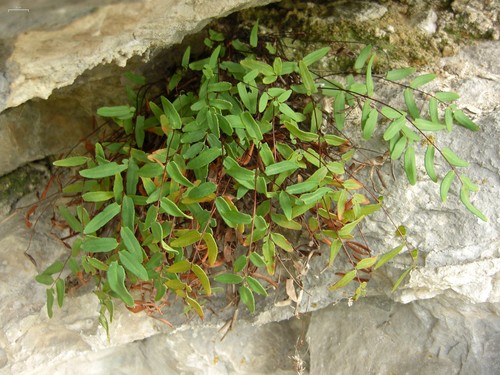
The Smooth Cliffbrake is a small, resilient rock-dwelling fern that thrives where few other plants can survive. Often nestled tightly into the crevices of dry limestone cliffs and dolomite outcrops, this fern is highly adapted to calcareous environments. Its tough, leathery fronds and rich purplish-brown stems give it an elegant yet rugged appearance, standing as a testament to nature's ability to colonize the harshest of stone faces. As a perennial evergreen or semi-evergreen species, the Smooth Cliffbrake provides subtle green coloration to gray cliffs throughout the year. Its ability to curl up during dry spells and completely rejuvenate after rainfall makes it a fascinating subject for botany enthusiasts and hikers exploring rocky gorges.
Habitat: Found growing directly in dry to moist crevices of calcareous cliffs, limestone outcroppings, and occasionally old mortar walls.
This small fern typically grows in tufts, reaching 5 to 25 centimeters in height. Its fronds are once- or twice-pinnate, displaying a distinct bluish-green color and a leathery texture. The defining feature of the Smooth Cliffbrake is its smooth, shiny, purplish-brown to black stalks that lack the prominent hairs found on related species. Spores are produced in narrow bands along the undersides of the leaf margins, which curl inward to protect them.
Category
PlantsRarity
Common
Danger
1/5 · Very low
Snaps
4
During extreme drought, this resilient fern looks dead and brown, but a single rainstorm can trigger a complete green recovery within a day.
It is a true calciphile, which means it depends on calcium-rich rocks like dolomite or limestone to survive and grow.
The species name 'glabella' means 'smooth' or 'hairless', referring to its glossy, hairless stems which differentiate it from other cliffbrakes.
The fern can lose most of its water content and curl its leaves during droughts, only to uncurl and resume photosynthesis within hours of receiving rain.
It utilizes highly specialized roots that can penetrate microscopic fissures in limestone, securing the plant against strong winds and erosion.
It can reproduce without liquid water fertilization, allowing new sporophytes to develop directly from gametophytes to adapt to dry cliff faces.
As a photosynthetic plant, it manufactures its own sugars using sunlight, water, and carbon dioxide, while absorbing calcium and other minerals through its roots.
Pellaea atropurpurea
Competes for narrow crevice spaces and limited water resources on calcareous rock faces.
Deroceras reticulatum
Feeds occasionally on the young gametophytes and tender fronds in humid conditions.
No trait badges are assigned for this object yet.
No aliases listed yet.
Collections for this object will appear here as more themes are added.
Danger
1/5 · Very low
No special safety notes yet.
The easiest way to identify Smooth Cliffbrake is to use the Snappit nature identifier app.
5-25 cm
0.01-0.05 kg
5-15 years
As a photosynthetic plant, it manufactures its own sugars using sunlight, water, and carbon dioxide, while absorbing calcium and other minerals through its roots.
Found growing directly in dry to moist crevices of calcareous cliffs, limestone outcroppings, and occasionally old mortar walls.
Foraging
Zoom in to split clusters and explore where this object has been snapped.
Take the discovery with you
Snap it with Snappit to identify it, learn what makes it special, and add the discovery to your collection.












.jpg&width=800)



_001.jpg&width=800)




