Walleye
Sander vitreus
The Walleye is a fish that is known for its big eyes, which help it see well in dark waters. It's a popular fish for anglers!
Habitat: Lakes and rivers
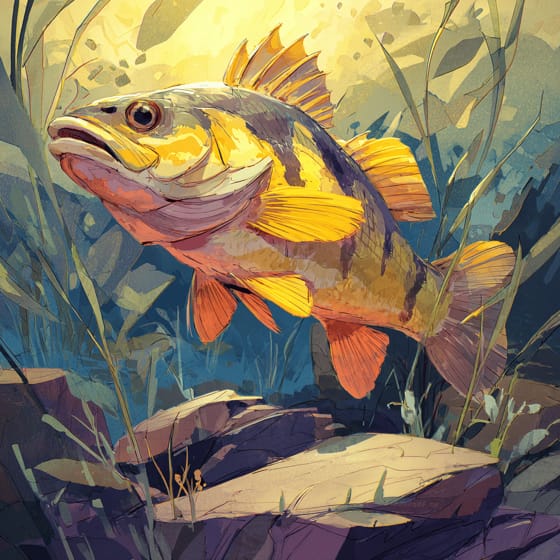
The Walleye has a long, slender body typically olive to gold with a white belly, featuring distinct dark bars on its sides. Its most striking feature is its large, opaque, light-sensitive eyes that reflect light, giving them a cloudy appearance.
Category
FishRarity
Common
Danger
2/5 · Low
Snaps
3
Female Walleye can lay hundreds of thousands of tiny eggs in just one season!
They are so popular, some states in the USA call them their official state fish!
Walleye can change how much light enters their eye, just like a camera lens!
Walleye eyes glow like marbles in the dark due to a special reflective layer!
Walleye can see well in low light because their large, reflective eyes gather more light, helping them hunt at dawn and dusk.
Walleye has sharp, spiny fins that can deter predators, making them a less appealing meal for bigger fish.
Walleye can blend into murky waters because its mottled, olive-gold skin provides excellent camouflage, helping it ambush prey.
Walleye are expert hunters, mostly eating smaller fish, but also insects and crayfish when young.
Age differences: Young Walleye eat mostly insects and small crustaceans, shifting to fish as they grow larger.
Wildlife encompasses all undomesticated animal and plant life existing in their natural habitats.
Colorful describes organisms or objects displaying a wide range of bright and distinct colors.
Piscivorous organisms are animals that primarily subsist on a diet of fish.
An ambush predator hunts by patiently waiting and concealing itself, then launching a sudden attack when unsuspecting prey comes within range.

Freshwater habitats include non-saline aquatic environments such as rivers, lakes, ponds, and wetlands, vital for numerous species.

Aquatic habitats encompass environments where organisms live predominantly in water, including oceans, rivers, lakes, and wetlands.

Nocturnal animals are primarily active during the nighttime hours, typically resting or sleeping during the day.
Danger
2/5 · Low
Watch quietly from a distance and never try to feed or chase wild animals.
The easiest way to identify Walleye is to use the Snappit nature identifier app.
35-75 cm
0.7-5 kg
7-15 years
Walleye are expert hunters, mostly eating smaller fish, but also insects and crayfish when young.
15 km/h
Lakes and rivers
Ambush
Zoom in to split clusters and explore where this object has been snapped.
Take the discovery with you
Snap it with Snappit to identify it, learn what makes it special, and add the discovery to your collection.