



Blue Crab
Callinectes sapidus
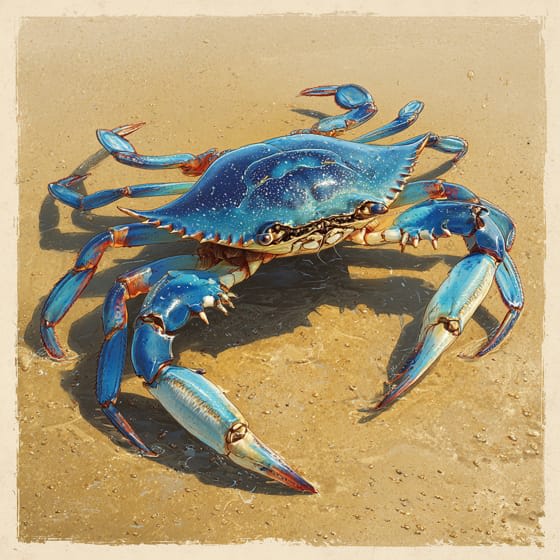
The Blue Crab is a colorful crustacean found in coastal waters. It has bright blue claws and a hard shell that protects it from predators. Blue Crabs are excellent swimmers and scavengers, helping keep the ocean clean.
Habitat: Coastal areas
The Blue Crab has a distinctive greenish-blue to brownish shell, often wider than it is long, with prominent pointed spines on the sides. Its vibrant blue claws and legs, especially noticeable on males, set it apart. Females often have red-tipped claws.
Category
InvertebrateRarity
Common
Danger
2/5 · Low
Snaps
17
A female blue crab can lay up to 2 million tiny eggs at one time!
Blue crabs drum their claws on the seabed to talk to other crabs!
Blue crabs regrow lost claws or legs when they shed their old shell!
Their amazing paddle-like back legs let them swim super fast, even backward!
Blue Crabs can regrow lost claws and legs after molting, which helps them survive attacks from predators.
Blue Crabs have flattened, oar-like back legs, helping them swim quickly to escape danger or hunt prey.
Blue Crabs' mottled shell helps them blend with the muddy seafloor, making it hard for predators to spot them.
These hungry crabs eat almost anything they can find, from tiny fish to plants!
Age differences: Younger crabs eat smaller prey, growing to consume a wider variety as they mature.
Sciaenops ocellatus
Large fish like red drum hunt crabs.

Procyon lotor
Raccoons often feast on crabs in shallow waters.

Crassostrea virginica
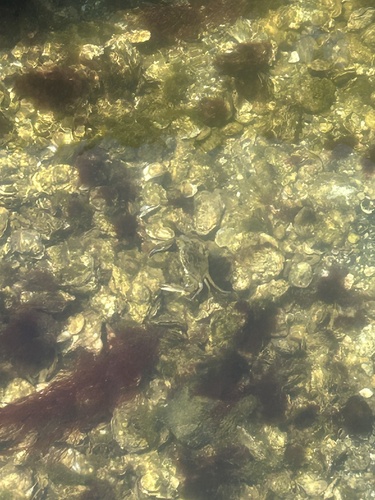
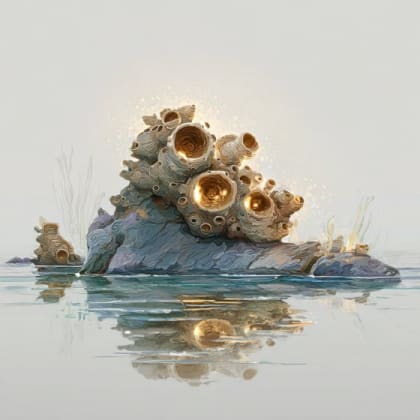
Crabs are important predators of oysters.
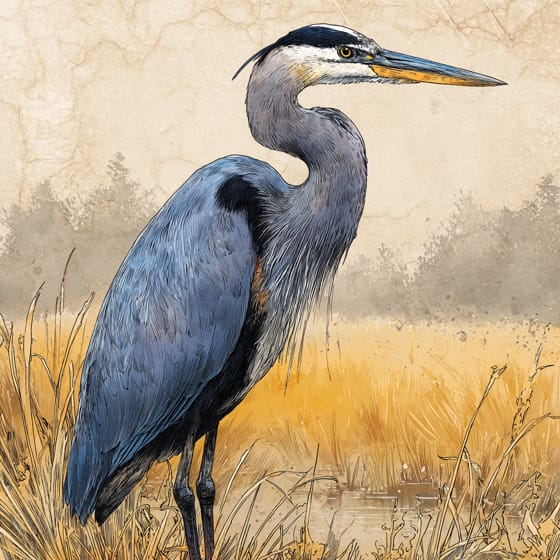
Ardea herodias
Herons stalk and eat crabs in coastal shallows.
Wildlife encompasses all undomesticated animal and plant life existing in their natural habitats.
Social animals live in organized groups, cooperating for survival benefits such as foraging, defense, and raising offspring.
This trait identifies organisms whose diet includes both plant and animal matter.
Scavengers consume dead organic matter, helping to decompose carcasses and other waste in the ecosystem.

This trait signifies organisms belonging to a very old evolutionary group with ancestors dating back millions of years.

Coastal habitats are dynamic environments located along the interface between land and sea, influenced by tides, waves, and saltwater.
Regenerative organisms possess the ability to regrow lost or damaged body parts, tissues, or organs.
Danger
2/5 · Low
Avoid touching Blue Crabs in the wild as they can pinch with their claws.
The easiest way to identify Blue Crab is to use the Snappit nature identifier app.
50-200 mm
365-1095 days
These hungry crabs eat almost anything they can find, from tiny fish to plants!
Coastal areas
Ambush, Scavenging, and Foraging
10
Zoom in to split clusters and explore where this object has been snapped.
May 20, 2026
St. Mary's CityPhoto attribution
(c) steffiland, some rights reserved (CC BY-SA)
License: CC BY-SA 4.0 ↗
Image may be shown cropped inside the card frame.

Rhode Island, US
You might spot Spotted Lanternfly, Duck, and American Robin.
View guide →

Rhode Island, US
You might spot Spotted Lanternfly, Duck, and American Robin.
View guide →

US
You might spot Firewheel, Domestic Horse, and Atlantic Horseshoe Crab.
View guide →

Rhode Island, US
You might spot Spotted Lanternfly, American Robin, and Duck.
View guide →

Rhode Island, US
You might spot Spotted Lanternfly, American Robin, and Duck.
View guide →

Rhode Island, US
You might spot Spotted Lanternfly, Duck, and American Robin.
View guide →
Take the discovery with you
Snap it with Snappit to identify it, learn what makes it special, and add the discovery to your collection.