

Tasselled Wobbegong
eucrossorhinus dasypogon
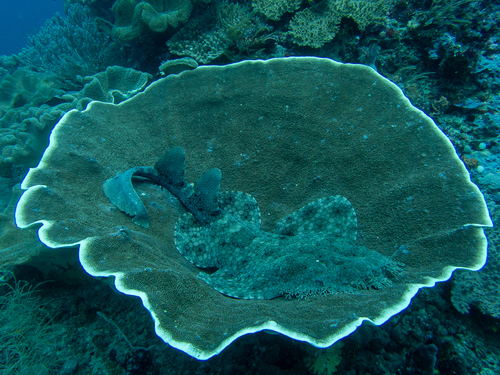
The Tasselled Wobbegong is one of the most visually striking and highly specialized ambush predators of the ocean. Found in the warm coral reefs of the tropical Indo-Pacific, this bottom-dwelling carpet shark is famous for its mind-boggling camouflage. Its name comes from the intricate fringe of branching dermal lobes that outline its broad, flattened head, perfectly mimicking marine algae and weed-covered rock. During the day, it lies almost completely motionless on the seafloor, under ledges, or nestled within complex reef structures, blending seamlessly with its surroundings. Under the cover of darkness, this nocturnal hunter becomes more active, using its massive mouth to create a vacuum that sucks in prey. For divers and snorkelers, spotting one of these masterfully disguised sharks is an unforgettable highlight of any underwater excursion.
Habitat: Typically found on shallow coral reefs, reef flats, and inshore channels, often resting in caves or under overhangs.
This shark features a highly flattened body, an extremely broad head, and a distinctive fringe of branching skin flaps around the edge of its head, chin, and throat. Its skin boasts a complex, mosaic-like camouflage pattern of dark lines, spots, and reticulations on a light yellowish or brownish background, closely resembling a coral reef surface. It has small, cat-like eyes, two dorsal fins positioned far back on the body, and typically ranges from 120 to 180 centimeters in length.
Category
AnimalRarity
Common
Danger
1/5 · Very low
Snaps
Be the first to snap!
Despite their sluggish daytime appearance, they have been known to bite divers who accidentally step on or get too close to their highly camouflaged bodies.
The name 'Wobbegong' comes from an Australian Aboriginal language, meaning 'shaggy beard', referring to the tassels around its mouth.
They are so sedentary that the same individual can often be found resting under the exact same reef ledge day after day, and even year after year.
Its flattened body and branching dermal flaps allow it to blend seamlessly into coral reefs, making it virtually invisible to both prey and predators.
It can open its wide mouth with incredible speed, creating a powerful vacuum pressure that sucks in nearby fish and crustaceans.
It sometimes wiggles its tail to mimic a small, swimming fish, drawing curious prey within striking range of its mouth.
An ambush predator that feeds on reef fishes, cephalopods, and nocturnal invertebrates, often swallowing them whole using suction.
Age differences: Juveniles feed primarily on smaller benthic invertebrates and tiny fishes, whereas adults can consume much larger teleost fish, including other sharks.
Myripristis berndti
Hunted by the Tasselled Wobbegong as it shelters in caves and under reef ledges during the night.
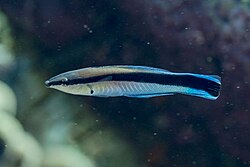
Labroides dimidiatus
Visits cleaning stations where the wrasse removes parasites and dead skin from the shark's mouth and body.
Carcharhinus amblyrhynchos
Competes with the Tasselled Wobbegong for benthic fish and cephalopod prey within the same coral reef ecosystems.
No trait badges are assigned for this object yet.
No aliases listed yet.
Collections for this object will appear here as more themes are added.
Danger
1/5 · Very low
No special safety notes yet.
Look for fins, arms, tentacles, shells and body symmetry. Underwater light shifts colors, so structure and markings usually matter more than shade. Sea Creature Identifier: upload a photo and compare the visible details.
120-180 cm
15-50 kg
15-25 years
15 km/h
An ambush predator that feeds on reef fishes, cephalopods, and nocturnal invertebrates, often swallowing them whole using suction.
Typically found on shallow coral reefs, reef flats, and inshore channels, often resting in caves or under overhangs.
Ambush
Zoom in to split clusters and explore where this object has been snapped.
Recent snaps will appear here as new observations are added.
Take the discovery with you
Snap it with Snappit to identify it, learn what makes it special, and add the discovery to your collection.