%2C_mar_Rojo%2C_Egipto%2C_2023-04-17%2C_DD_90.jpg&width=800)





bluestreak cleaner wrasse
Labroides dimidiatus
The bluestreak cleaner wrasse is a colorful fish that helps keep other fish clean by eating their parasites. They are friendly and often found in coral reefs, making them important helpers in the ocean.
Habitat: Coral reefs
The bluestreak cleaner wrasse has a slender body with a brilliant electric blue stripe running from its snout to its tail. Below this striking line, its body is dark black, fading to a white or yellowish belly, making it easily recognizable on coral reefs.
Category
FishRarity
Common
Danger
1/5 · Very low
Snaps
Be the first to snap!
Even big, scary predators wait patiently for the wrasse to clean them!
Some sneaky fish pretend to be them, then take a bite out of unsuspecting clients!
These tiny fish bravely clean inside the mouths and gills of giant clients!
They run 'cleaning stations' where other reef fish line up for service!
Bluestreak cleaner wrasse can safely remove tiny parasites and dead skin from larger fish because it has specialized mouthparts and a trusting relationship with clients.
Bluestreak cleaner wrasse performs a special 'waving dance' that helps them signal to other fish that their cleaning station is open for business!
Bluestreak cleaner wrasse can change its sex from female to male, which helps maintain social structure when the dominant male is gone.
These helpful fish eat tiny parasites and dead skin that they carefully pick off other reef fish.
Acanthurus triostegus
Removes parasites from its skin.
Carcharhinus amblyrhynchos
Brave wrasse cleans this large predator.
Aspidontus taeniatus
Mimics the wrasse to bite unsuspecting fish.
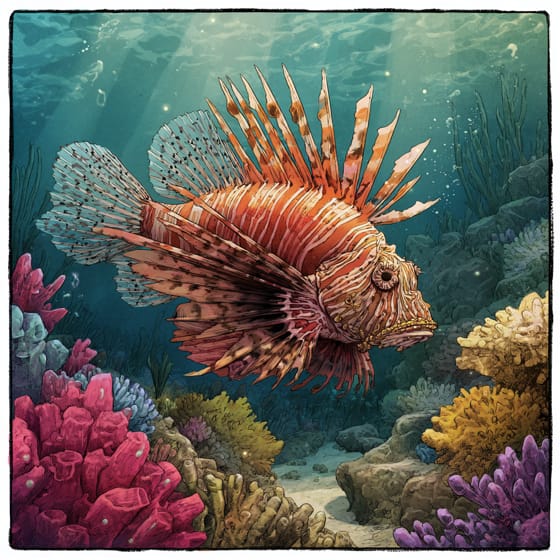
Pterois volitans
Even venomous fish get cleaned.
Social animals live in organized groups, cooperating for survival benefits such as foraging, defense, and raising offspring.
Colorful describes organisms or objects displaying a wide range of bright and distinct colors.
Describes a relationship between two different species where they live in close association, often benefiting one or both.
This trait identifies organisms whose diet consists entirely or primarily of animal tissue.

Diurnal animals are primarily active during daylight hours, typically resting or sleeping at night.

Describes a species whose presence and role have a disproportionately large effect on its environment.

Marine habitats encompass all saltwater environments of the Earth's oceans, supporting an immense diversity of aquatic life.
No aliases listed yet.
Danger
1/5 · Very low
Always watch fish from a distance and don't try to touch them in the water.
The easiest way to identify bluestreak cleaner wrasse is to use the Snappit nature identifier app.
10-14 cm
0.005-0.015 kg
2-4 years
These helpful fish eat tiny parasites and dead skin that they carefully pick off other reef fish.
8 km/h
Coral reefs
Foraging
Zoom in to split clusters and explore where this object has been snapped.
Recent snaps will appear here as new observations are added.
Take the discovery with you
Snap it with Snappit to identify it, learn what makes it special, and add the discovery to your collection.