

Vetches
vicia
Vetches (genus Vicia) are a diverse and ecologically vital group of climbing or sprawling herbaceous plants belonging to the legume family. Widely recognized by their delicate, pea-like blossoms and intricate tendrils, vetches are celebrated both as beautiful wildflowers and as industrious soil-builders. They are famous for their ability to form symbiotic relationships with subterranean bacteria, which allows them to capture atmospheric nitrogen and enrich the surrounding soil, making them a favorite cover crop among organic farmers worldwide. Whether clambering up neighboring vegetation in a meadow or forming dense mats along roadside verges, these hardy plants provide essential food and shelter for a vast array of wildlife, from feeding hungry bumblebees in early spring to nourishing grazing herbivores.
Habitat: Found in open meadows, grasslands, agricultural field margins, and disturbed roadsides where they can bask in full sunlight.
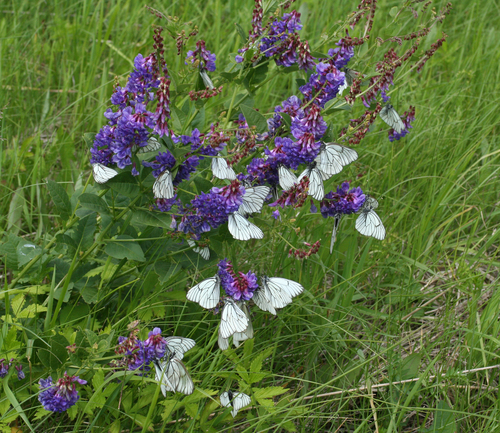
Vetches are climbing or trailing herbs characterized by pinnate leaves that typically terminate in grasping, branched tendrils used to cling to other plants. Their flowers are classically pea-like, ranging in color from deep violet and pastel pink to creamy white or pale yellow, often arranged in dense one-sided clusters or solitary pairs. After pollination, they produce elongated, flattened seed pods that turn brown or black as they mature, eventually splitting open to release small, round seeds.
Category
PlantsRarity
Common
Danger
1/5 · Very low
Snaps
Be the first to snap!
The broad bean (Vicia faba) is one of the oldest cultivated plants in human history, dating back to ancient Mediterranean civilizations.
Their seed pods dry in a spiral twist, creating tension that eventually flings the seeds away in a miniature explosion.
Vetches are highly valued as a 'green manure' cover crop, plowed back into the fields by farmers to naturally fertilize the soil.
Vetches partner with Rhizobium bacteria in their root nodules to convert atmospheric nitrogen into a usable organic form, naturally enriching the soil.
Modified leaflets at the tips of their leaves act as highly sensitive, climbing tendrils that rapidly coil around supporting structures to lift the plant toward sunlight.
As their seed pods dry out, they build up mechanical tension until they suddenly burst open, twisting spirally to shoot seeds away from the parent plant.
Like most plants, vetches are autotrophs that produce their own food through photosynthesis, utilizing sunlight, carbon dioxide, and soil water.
Rhizobium leguminosarum
Colonizes root nodules to convert nitrogen gas into plant-absorbable ammonium in exchange for carbohydrates.
Bombus terrestris
Feeds on nectar and pollen, acting as a primary pollinator for the flowers.

Leptidea sinapis
The caterpillars feed on the leaves of various vetch species as their primary food source.
No trait badges are assigned for this object yet.
No aliases listed yet.
Collections for this object will appear here as more themes are added.
Danger
1/5 · Very low
No special safety notes yet.
Start with the whole plant, then compare leaf arrangement, leaf edges, stems and any flowers or fruit. Opposite leaves grow in pairs; alternate leaves come one at a time along the stem. These details tell you far more together than a single green leaf does. Plant Identifier: upload a photo and compare the visible details.
30-200 cm
1-3 years
Like most plants, vetches are autotrophs that produce their own food through photosynthesis, utilizing sunlight, carbon dioxide, and soil water.
Found in open meadows, grasslands, agricultural field margins, and disturbed roadsides where they can bask in full sunlight.
Zoom in to split clusters and explore where this object has been snapped.
Recent snaps will appear here as new observations are added.
Take the discovery with you
Snap it with Snappit to identify it, learn what makes it special, and add the discovery to your collection.