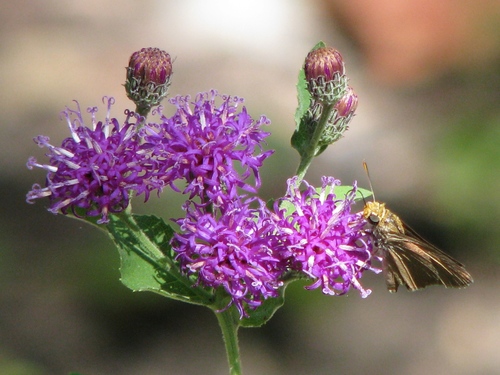


Western Ironweed
vernonia baldwinii
Western Ironweed is a rugged and resilient perennial wildflower native to the central United States, instantly recognizable by its striking, intense magenta-purple blooms that appear in late summer. Earning its common name from its remarkably tough, rigid stems and deep, persistent root system, this plant stands tall in prairie landscapes long after other flowers have faded. It acts as a vital ecological cornerstone during the late growing season, offering a rich source of nectar when many other sources are depleted. Because its foliage is famously bitter, it is largely ignored by grazing mammals, allowing it to thrive and spread in pastures where other flora is quickly devoured.
Habitat: Typically found in tallgrass prairies, open woodlands, dry pastures, and along sunny roadsides across central North America.
Western Ironweed typically grows 3 to 5 feet tall, featuring rigid, upright stems covered in fine, dense hairs. Its alternating, lance-shaped leaves have distinctly serrated edges and a slightly fuzzy underside. The plant's visual highlight is its dense, flat-topped clusters of vivid magenta to dark purple flower heads. Unlike many members of the aster family, these blooms consist entirely of fluffy, tubular disk flowers with no outer ray petals, giving them a distinctively fuzzy, tufted appearance.
Category
PlantsRarity
Common
Danger
1/5 · Very low
Snaps
2
Because farm animals refuse to eat its bitter leaves, Western Ironweed is often considered a weed by farmers, as it can quickly take over overgrazed pastures.
The name 'Ironweed' perfectly describes the plant's exceptionally tough, rigid stems, which can persist upright through harsh winter snows.
Unlike classic daisies or sunflowers, ironweed blooms lack 'ray flowers' (the petal-like structures) and are made entirely of tiny, tubular 'disk flowers'.
Western Ironweed hybridizes very easily with other species of Vernonia in the wild, which can make exact identification quite challenging for botanists.
The plant produces bitter chemical compounds in its foliage that make it highly unpalatable to grazing mammals like cattle, horses, and deer.
It possesses an incredibly tough, deep fibrous root system that allows it to survive prolonged dry spells in harsh prairie environments.
By blooming in late summer and early autumn, it provides a crucial, reliable nectar source for migratory insects preparing for long journeys.
As a photosynthetic plant, Western Ironweed produces its own energy using sunlight, drawing water and essential minerals from the soil.
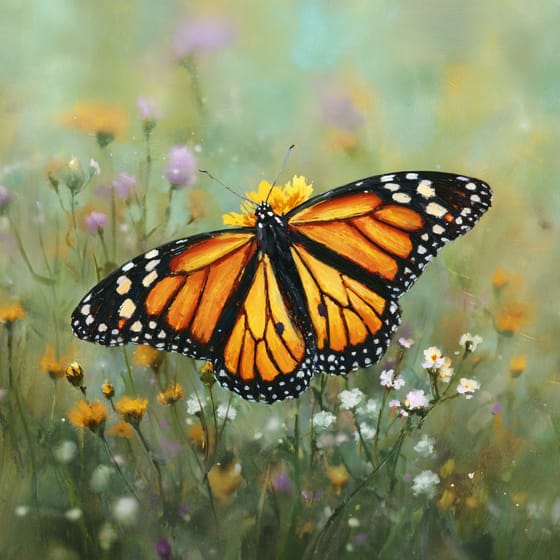
Danaus plexippus
Relies heavily on the late-season nectar of the Western Ironweed to fuel its long autumn migration to Mexico.
Bos taurus
Actively avoids eating the plant due to its bitter, unpalatable leaves, allowing it to flourish in cattle fields.
Papaipema cerussata
Uses the tough stems and root system of the ironweed as the primary host environment for its larvae.
No trait badges are assigned for this object yet.
No aliases listed yet.
Collections for this object will appear here as more themes are added.
Danger
1/5 · Very low
No special safety notes yet.
The easiest way to identify Western Ironweed is to use the Snappit nature identifier app.
90-150 cm
3-15 years
As a photosynthetic plant, Western Ironweed produces its own energy using sunlight, drawing water and essential minerals from the soil.
Typically found in tallgrass prairies, open woodlands, dry pastures, and along sunny roadsides across central North America.
Zoom in to split clusters and explore where this object has been snapped.
Take the discovery with you
Snap it with Snappit to identify it, learn what makes it special, and add the discovery to your collection.













.jpg&width=800)



_001.jpg&width=800)




