





Widow Skimmer
Libellula luctuosa
The Widow Skimmer is a dragonfly with a unique black-and-white pattern on its wings. They are often seen resting on branches!
Habitat: Ponds and lakes
The Widow Skimmer is a medium-sized dragonfly. Males have striking dark patches at the base of their hindwings, followed by broad white patches, and a body often covered in powdery blue. Females are yellowish-brown with dark wing bases but lack the white patches.
Category
InsectsRarity
Common
Danger
2/5 · Low
Snaps
94
An adult skimmer can eat thousands of tiny insects, including mosquitoes, in its short life!
Male Widow Skimmers are fierce defenders, often patrolling the same sunny spots all day.
The "widow" in their name comes from the dark wing patches that look like mourning clothes!
Their underwater babies, called nymphs, can use "jet propulsion" to escape predators!
Widow Skimmers can hover and fly backward because of their independent wing control that helps them chase and escape.
Widow Skimmer larvae can breathe underwater because of gills that allow them to live as aquatic hunters for years.
Tiny flying insects like mosquitoes and flies are a favorite meal for this speedy hunter.
Age differences: Larvae eat aquatic insects, small tadpoles, and even tiny fish, while adults only eat flying insects.
Anopheles quadrimaculatus
Adult skimmers help control mosquito populations.
Musca domestica
They are expert hunters of many types of flying insects.

Micropterus salmoides
Fish will prey on both nymphs and adult dragonflies.

Lithobates catesbeianus
Frogs ambush adult dragonflies when they perch.
Wildlife encompasses all undomesticated animal and plant life existing in their natural habitats.
This trait identifies organisms whose diet primarily consists of insects and other small invertebrates.
Diurnal animals are primarily active during daylight hours, typically resting or sleeping at night.
Freshwater habitats include non-saline aquatic environments such as rivers, lakes, ponds, and wetlands, vital for numerous species.
Danger
2/5 · Low
Do not touch or pick up. Some insects sting or bite. Ask an adult for help.
The easiest way to identify Widow Skimmer is to use the Snappit nature identifier app.
70-90 mm
45-55 mm
30-60 days
30 km/h
Tiny flying insects like mosquitoes and flies are a favorite meal for this speedy hunter.
Ponds and lakes
Pursuit
Zoom in to split clusters and explore where this object has been snapped.
Jun 16, 2026
Haskell-Baker WetlandsPhoto attribution
(c) Lydia Dexter, some rights reserved (CC BY)
License: CC BY 4.0 ↗
Image may be shown cropped inside the card frame.

Georgia, US
You might spot Common Vetch, Tiny Bluet, and Carolina Crane's-Bill.
View guide →

Massachusetts, US
You might spot Eastern White Pine and Common Eastern Bumble Bee.
View guide →
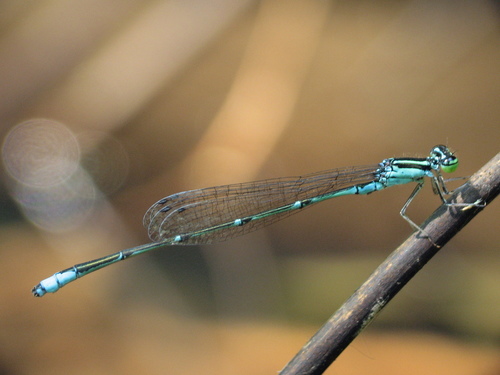
New York, US
You might spot Stream Bluet, Variable Dancer, and Eastern Pondhawk.
View guide →
.jpg)
Virginia, US
You might spot Great Blue Heron and Canada Goose.
View guide →

Ohio, US
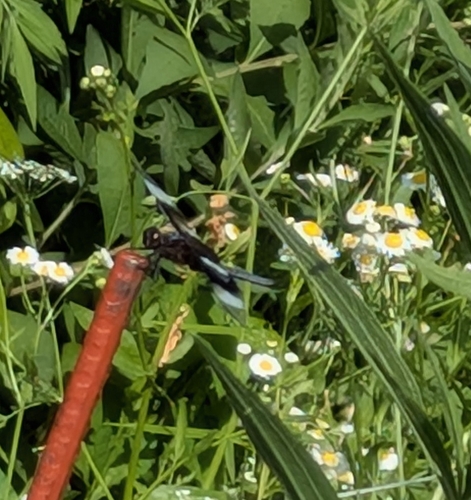
You might spot Widow Skimmer, Eastern Pondhawk, and Bee.
View guide →

Alabama, US
You might spot Eastern Box Turtle, Carolina Wren, and Field Sparrow.
View guide →
Take the discovery with you
Snap it with Snappit to identify it, learn what makes it special, and add the discovery to your collection.









.jpg&width=800)




