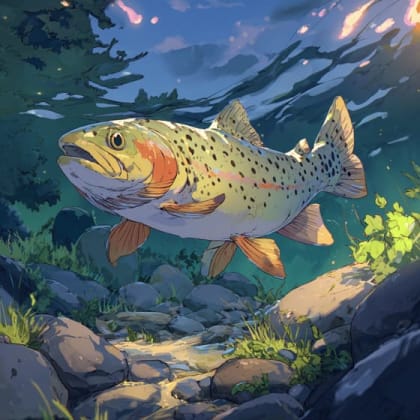
Largemouth Bass
Micropterus salmoides
The Largemouth Bass is a popular fish known for its big mouth! They are fun to catch and are often found in lakes and rivers.
Habitat: Lakes, rivers, and ponds
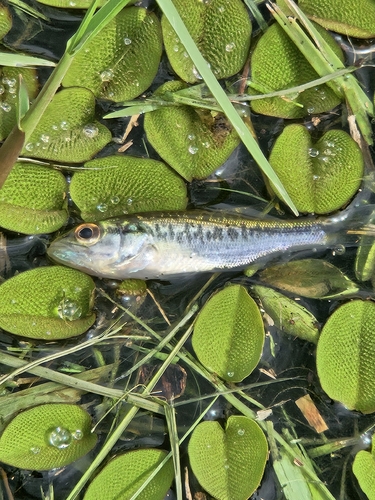
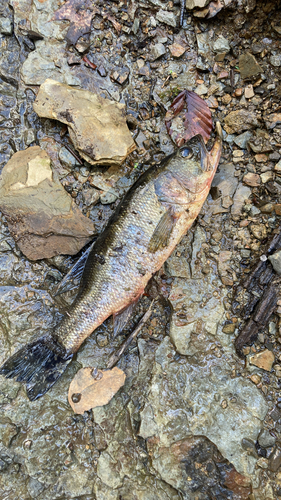
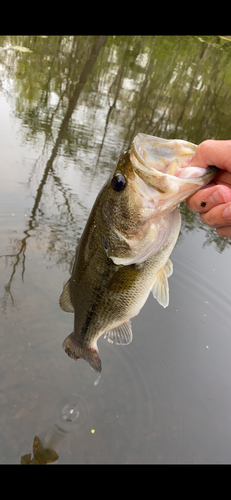
The Largemouth Bass has an olive-green back and lighter sides, fading to a white belly, often marked by a prominent, dark, horizontal stripe. Its most distinctive feature is its massive mouth, which extends well behind its eye.
Category
FishRarity
Common
Danger
2/5 · Low
Snaps
44
Baby bass eat tiny crustaceans before switching to bigger prey as adults.
Male bass build and fiercely guard nests, protecting their eggs from danger.
The world record Largemouth Bass weighed over 10 kilograms, like a small dog!
They can gulp air when stressed or in low-oxygen water to help them breathe.
Largemouth Bass can flare their gills and create a powerful vacuum with their huge mouth, sucking in unsuspecting prey instantly.
Largemouth Bass has a special lateral line system that helps them detect subtle water vibrations to find hidden prey.
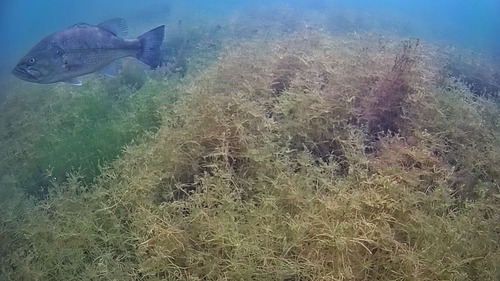
Its mottled green and dark patterns help Largemouth Bass blend perfectly with weedy lake bottoms, becoming nearly invisible.
These hungry fish eat almost anything that fits into their big mouths, from other fish to insects!
Age differences: Young bass eat small insects and crustaceans, gradually transitioning to larger fish and other vertebrates as they grow.
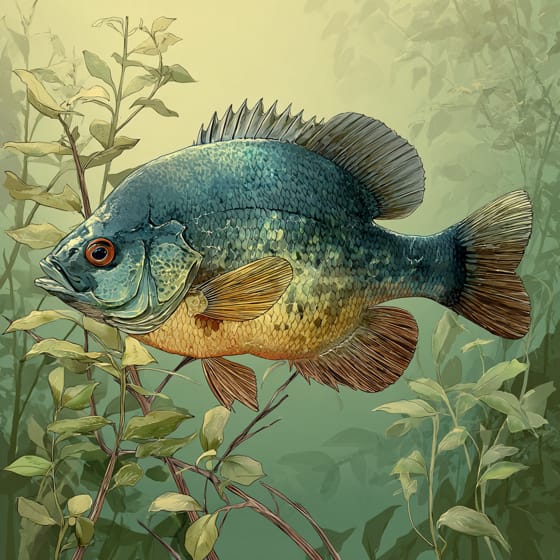
Lepomis macrochirus
A primary food source for adult bass.
Procambarus clarkii
Frequently munches on these crustaceans.
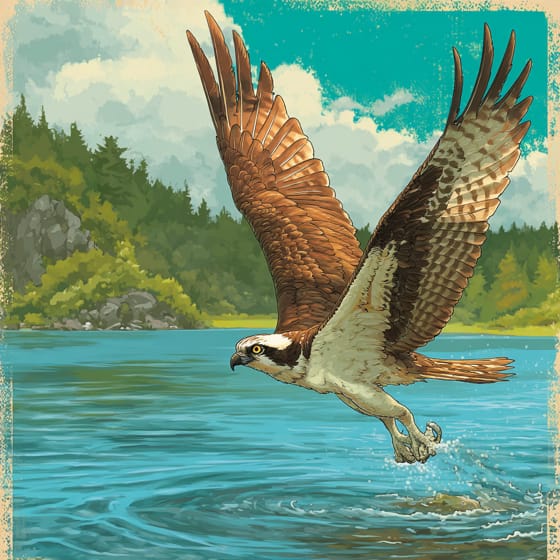
Pandion haliaetus
Ospreys snatch bass from the water.
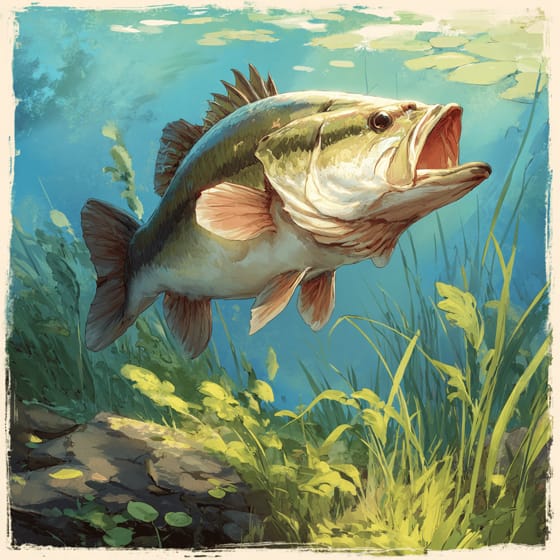
Micropterus salmoides
Bigger bass sometimes eat smaller bass!
Wildlife encompasses all undomesticated animal and plant life existing in their natural habitats.
Colorful describes organisms or objects displaying a wide range of bright and distinct colors.
Piscivorous organisms are animals that primarily subsist on a diet of fish.
An ambush predator hunts by patiently waiting and concealing itself, then launching a sudden attack when unsuspecting prey comes within range.

Freshwater habitats include non-saline aquatic environments such as rivers, lakes, ponds, and wetlands, vital for numerous species.

Aquatic habitats encompass environments where organisms live predominantly in water, including oceans, rivers, lakes, and wetlands.
Danger
2/5 · Low
Watch quietly from a distance and never try to feed or chase wild animals.
The easiest way to identify Largemouth Bass is to use the Snappit nature identifier app.
25-75 cm
0.5-7 kg
10-15 years
These hungry fish eat almost anything that fits into their big mouths, from other fish to insects!
15 km/h
Lakes, rivers, and ponds
Ambush
Zoom in to split clusters and explore where this object has been snapped.
Jun 3, 2026
Algiers PointPhoto attribution
(c) willingarden, some rights reserved (CC BY)
License: CC BY 4.0 ↗
Image may be shown cropped inside the card frame.
May 31, 2026
Ascutney Mill DamPhoto attribution
no rights reserved
License: CC0 1.0 ↗
Image may be shown cropped inside the card frame.
Apr 19, 2026
Chestnut Ridge ParkPhoto attribution
no rights reserved
License: CC0 1.0 ↗
Image may be shown cropped inside the card frame.
May 18, 2021
Maumee State ForestPhoto attribution
no rights reserved
License: CC0 1.0 ↗
Image may be shown cropped inside the card frame.

Rhode Island, US
You might spot Rugosa Rose and American Herring Gull.
View guide →

Connecticut, US
You might spot Bold Jumping Spider and American Tuliptree.
View guide →

New York, US
You might spot Allegheny Mountain Dusky Salamander.
View guide →

Ohio, US
You might spot Blue-Fronted Dancer, American Rubyspot, and Fowler's Toad.
View guide →
New York, US
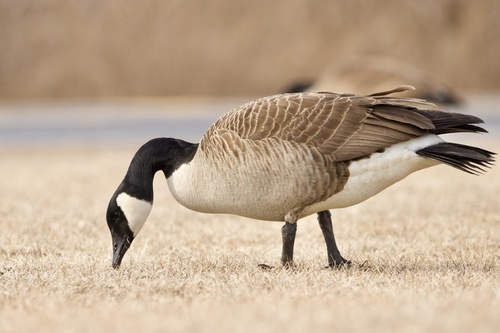
You might spot Canada Goose and Atlantic Horseshoe Crab.
View guide →

South Carolina, US
You might spot Anole, Asian Lady Beetle, and Gulf Fritillary.
View guide →
Take the discovery with you
Snap it with Snappit to identify it, learn what makes it special, and add the discovery to your collection.