

Woronichinia Naegeliana
woronichinia naegeliana
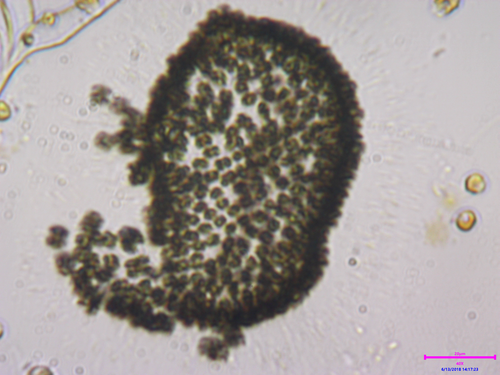
Woronichinia naegeliana is a fascinating colonial freshwater cyanobacterium, commonly recognized for its potential to form conspicuous water blooms. These microscopic organisms play a crucial role as primary producers in aquatic ecosystems, converting sunlight into energy through photosynthesis. What makes Woronichinia particularly interesting is its ability to aggregate into distinctive, often spherical or irregular colonies encased in a clear mucilaginous sheath, allowing it to adapt to varying light conditions and nutrient availability in its watery environment. Its presence, particularly in dense blooms, can indicate eutrophic conditions and may have significant ecological and environmental impacts.
Habitat: This cyanobacterium is typically found in nutrient-rich (eutrophic) freshwater environments such as lakes, ponds, reservoirs, and slow-moving rivers, often thriving in warmer temperatures.
Woronichinia naegeliana appears as microscopic, roughly spherical or irregular colonies, typically ranging from a few micrometers to several millimeters in diameter, often visible to the naked eye as greenish or bluish specks or a cloudy suspension in water. Within these colonies, individual cells are small, spherical to ovoid, and arranged radially or scattered within a transparent, gelatinous matrix. The colonies themselves can be free-floating or attached, and their color can vary from light green to blue-green, sometimes appearing yellowish or brownish depending on pigment composition and environmental factors.
Category
AnimalRarity
Common
Danger
1/5 · Very low
Snaps
Be the first to snap!
Individual cells within a Woronichinia colony are often organized in a radial fashion, appearing like small, star-shaped clusters embedded in the mucilage.
The formation of dense blooms by Woronichinia naegeliana can significantly deplete oxygen levels in water at night or upon decomposition, leading to fish kills.
The gas vacuoles in Woronichinia allow it to regulate its buoyancy, floating to the surface during the day to photosynthesize and sinking at night to absorb nutrients from deeper water.
Woronichinia naegeliana colonies can release foul-smelling compounds when decaying, contributing to taste and odor problems in drinking water sources.
Individual cells within the colonies contain gas vacuoles, which allow the colony to regulate its position in the water column, optimizing exposure to light and nutrients.
Like all cyanobacteria, Woronichinia naegeliana is a photoautotroph, efficiently converting sunlight into organic compounds, forming the base of many aquatic food webs.
It forms distinctive mucilaginous colonies that offer protection against grazers, reduce UV radiation exposure, and aid in nutrient uptake through increased surface area to volume ratio for the entire colony.
Woronichinia naegeliana synthesizes its own food using sunlight, carbon dioxide, and inorganic nutrients dissolved in water, a process fundamental to primary production in aquatic ecosystems.
Various zooplankton species
Consumed by various small aquatic organisms.
Microcystis aeruginosa
Other phytoplankton species compete for light and nutrients.

Cyprinus carpio
Fish can be indirectly affected by toxins or oxygen depletion during blooms.
Various aquatic bacteria
Bacteria break down dead cyanobacteria, contributing to nutrient cycling.
No trait badges are assigned for this object yet.
No aliases listed yet.
Collections for this object will appear here as more themes are added.
Danger
1/5 · Very low
No special safety notes yet.
The easiest way to identify Woronichinia Naegeliana is to use the Snappit nature identifier app.
Woronichinia naegeliana synthesizes its own food using sunlight, carbon dioxide, and inorganic nutrients dissolved in water, a process fundamental to primary production in aquatic ecosystems.
This cyanobacterium is typically found in nutrient-rich (eutrophic) freshwater environments such as lakes, ponds, reservoirs, and slow-moving rivers, often thriving in warmer temperatures.
Photosynthesis And Nutrient Absorption
Zoom in to split clusters and explore where this object has been snapped.
Recent snaps will appear here as new observations are added.
Take the discovery with you
Snap it with Snappit to identify it, learn what makes it special, and add the discovery to your collection.