





Yellow Cosmos
Cosmos sulphureus
The Yellow Cosmos is a bright and cheerful flower that loves to dance in the sunshine! Its yellow petals can brighten up any garden and attract butterflies and bees.
Habitat: Gardens
The Yellow Cosmos is a vibrant plant adorned with cheerful, daisy-like flowers. Its petals unfurl in brilliant shades of yellow and orange, often with a darker center, contrasting beautifully with its delicate, feathery green leaves. Slender stems support these sunny blooms.
Category
PlantsRarity
Common
Danger
1/5 · Very low
Snaps
Be the first to snap!
In some cultures, it was used to create beautiful yellow and orange dyes!
It's a fast grower, often blooming just weeks after its seeds sprout!
Its scientific name 'Cosmos' means 'beautiful order' in Greek, describing its neat petals!
The petals of Yellow Cosmos are actually edible and taste slightly bitter!
Yellow Cosmos has bright, vivid petals that act like a billboard, attracting bees and butterflies to help it reproduce.
Yellow Cosmos can thrive in less fertile soil and handle dry spells, thanks to its adaptable root system that seeks out moisture.
Yellow Cosmos can quickly grow from seed to flower in just a few weeks, allowing it to bloom abundantly.
Apis mellifera
Visits flowers to collect nectar and pollen.
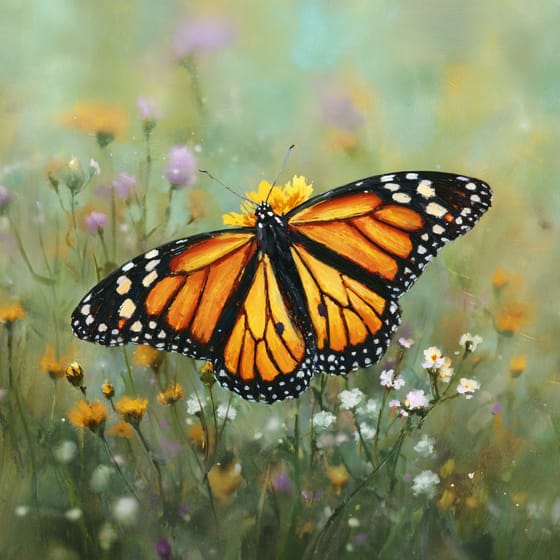
Danaus plexippus
Feeds on nectar, helping transfer pollen between blooms.

Bombus impatiens
An important generalist pollinator in its native range.
Flowering plants are any plants that produce flowers as part of their reproductive cycle.
Summer blooming plants produce their flowers during the summer season, often providing vibrant color when many other plants have finished.
Colorful describes organisms or objects displaying a wide range of bright and distinct colors.
Describes plants that are particularly attractive and beneficial to a wide range of pollinating organisms.

Rapid growing plants exhibit accelerated growth rates, quickly increasing in size and biomass within a short period.

This habitat trait indicates species that can coexist with humans in urban and suburban environments, utilizing man-made structures and green spaces.

Describes organisms that transfer pollen, enabling the fertilization and reproduction of plants.
No aliases listed yet.
Danger
1/5 · Very low
Always ask an adult before picking flowers in a garden.
The easiest way to identify Yellow Cosmos is to use the Snappit nature identifier app.
60-180 cm
30-60 cm
3-5 cm
Summer to fall
Yes
None
Annual
Zoom in to split clusters and explore where this object has been snapped.
Recent snaps will appear here as new observations are added.
Take the discovery with you
Snap it with Snappit to identify it, learn what makes it special, and add the discovery to your collection.








.jpg&width=800)



_001.jpg&width=800)




