





broad-leaved goldenrod
Solidago flexicaulis
Broad-leaved goldenrod is a bright yellow flower that blooms in late summer and fall. It grows tall and has broad leaves, making it easy to spot in gardens and fields.
Habitat: Grasslands
The broad-leaved goldenrod has distinctive broad, oval, toothed leaves along a often zigzagging stem. Its small, bright yellow flowers appear in loose clusters in the upper leaf axils, creating a more delicate, less dense appearance than other goldenrod species. It prefers shaded environments.
Category
PlantsRarity
Common
Danger
1/5 · Very low
Snaps
2
It helps feed hungry bees and butterflies just before winter!
Its stem often zigzags like a lightning bolt!
Native Americans used its leaves to make a comforting tea.
This goldenrod is special because it loves the shade, unlike most goldenrods!
The broad-leaved goldenrod can grow happily in shady spots, an unusual skill for its sunny goldenrod relatives!
Its unique zigzagging stem helps position leaves to capture maximum sunlight in dappled forest light.
It provides vital nectar for insects in autumn when many other flowers have faded away.

Bombus impatiens
Collects nectar and pollen.
Apis mellifera
A vital late-season food source.

Papilio glaucus
Sips nectar from its yellow blooms.
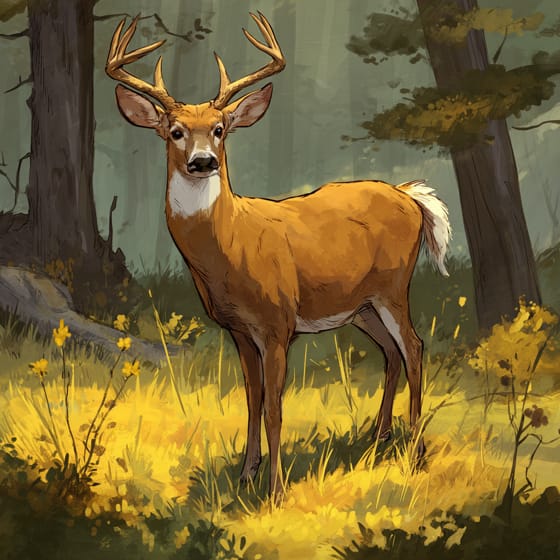
Odocoileus virginianus
Deer occasionally browse its leaves.
Flowering plants are any plants that produce flowers as part of their reproductive cycle.
Summer blooming plants produce their flowers during the summer season, often providing vibrant color when many other plants have finished.
Medicinal plants possess chemical compounds that can be used for therapeutic purposes to treat illnesses or maintain health.
Edible plants are those parts of a plant that are considered safe for human consumption.

Grassland habitats are terrestrial biomes dominated by grasses and herbaceous plants, supporting a variety of grazing animals.

Describes plants that are particularly attractive and beneficial to a wide range of pollinating organisms.

Describes organisms that break down dead organic material, recycling nutrients back into the ecosystem.
No aliases listed yet.
Danger
1/5 · Very low
Always ask an adult before picking any flowers.
The easiest way to identify broad-leaved goldenrod is to use the Snappit nature identifier app.
30-120 cm
30-60 cm
0.2-0.5 cm
Late summer to fall (August-October)
Yes
None
Perennial
Zoom in to split clusters and explore where this object has been snapped.
Take the discovery with you
Snap it with Snappit to identify it, learn what makes it special, and add the discovery to your collection.









.jpg&width=800)



_001.jpg&width=800)



