What to look at when identifying an old object

Material and construction
Start with what the object is made of and how its parts fit together. Cast metal, hammered sheet, carved stone, fired clay, molded plastic and machine-cut wood each leave their own textures, seams, tool marks and break patterns. Mixed materials, like brass with steel screws or glaze over clay, can narrow things down fast.

Complete outline and scale
The overall silhouette matters as much as the tiny details. A hook, fitting, buckle, lid, shard or token can look alike up close but different once you see the full outline. Add a ruler or coin for size, because a two-centimeter fitting and a twelve-centimeter fitting usually come from very different objects.

Maker's marks and inscriptions
Letters, numbers, logos, hallmarks, patent numbers and mold codes can be the strongest clues in a photo. Check the underside, rim, back, edge or inside, where marks often hide. Even part of a word, a fragment of a date or one readable symbol can point to a maker or object type.

Context and history, if you know it
Knowing whether something came from an attic box, a demolished wall, a garden bed or a beach walk helps you compare likely matches. Family stories, original packaging or items found alongside it can matter too. Jot those notes down for yourself and for any museum or specialist you ask later.
Look-alikes worth telling apart
- Old-looking object versus modern reproduction
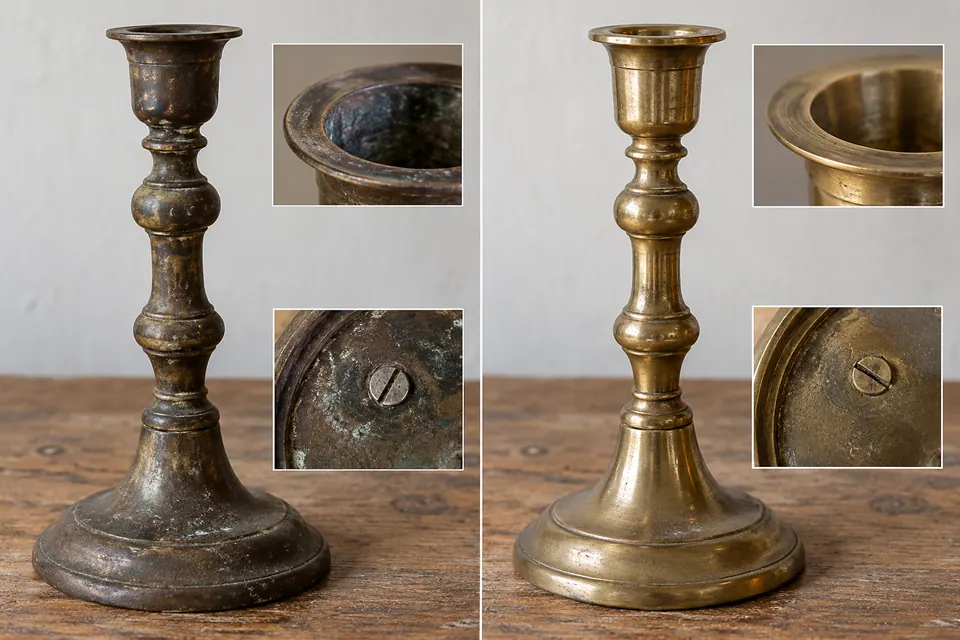
Dark color, dirt and wear don't prove age. Reproductions can fake a patina, while genuine old objects may have replacement screws, repairs or polished surfaces. Compare the construction and any readable marks with documented examples. A photo can suggest what type of object it is, but it can't authenticate the piece or its history.
- Ceramic vessel fragment versus stone
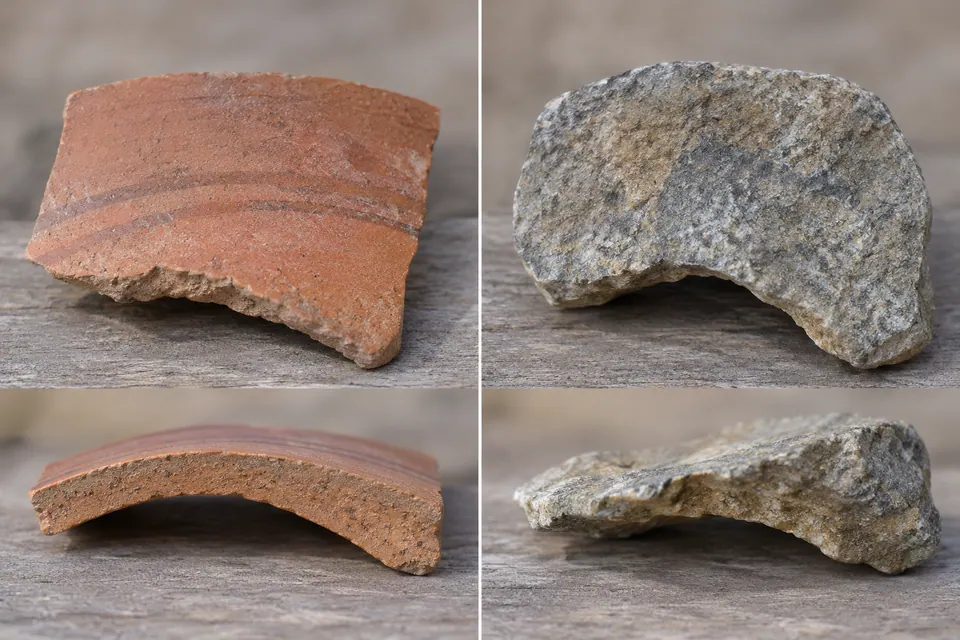
A pottery fragment usually has an even wall thickness and at least one deliberately finished surface, which may be smoothed, slipped, painted or glazed. You may also spot small grains, called inclusions, in the clay. A stone can look like a curved fragment, but it usually lacks that even thickness and surface finish across a broken edge.
- Manufactured fitting versus naturally shaped find
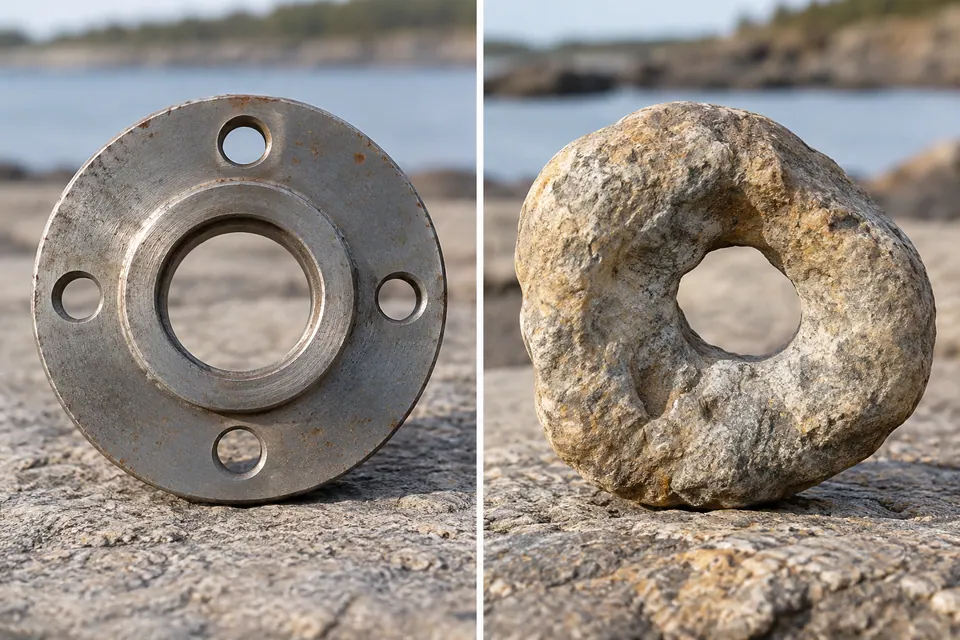
Made objects repeat patterns cleanly: evenly spaced holes, deliberate symmetry, flat contact surfaces, straight edges, screw threads, or a purposeful curve where another part once fit. Natural pieces can look like hooks or discs, especially after erosion, but up close their edges, thickness and surface texture are usually less regular.


What to check on attic and household finds

If an object came from a drawer, toolbox, sewing basket or attic trunk, look at the parts people usually skip: the base, inside, back and attachment points. Fasteners, hinges, feet, rivets and replacement screws often show whether it was furniture hardware, kitchenware, part of a tool, a souvenir or a decorative reproduction.
Wear tells you how something was used. Repeated handling leaves smooth spots on handles, rims, lids and edges, while storage wear usually shows up as scattered scratches. Resist the urge to polish metal or wash ceramics before you take photos. Residue, finish and dirt in the seams can hold useful clues, especially on fragile pieces.
What matters with pottery and possible archaeological finds

With pottery and other fragments, the broken edge tells you as much as the outer face. Notice the thickness, color changes through the cross-section, temper or small grains, the curve, and whether one side is glazed or burnished. A rim, base, handle join or foot ring is usually far more distinctive than a plain body fragment.
If something might be an archaeological find, handle it as little as possible and don't scrape, soak or glue pieces together. Photograph it where you found it if you can, then ask a local museum or archaeology specialist for help. They can judge its context, material and care needs in ways a photo can't.
Photo tips for old objects
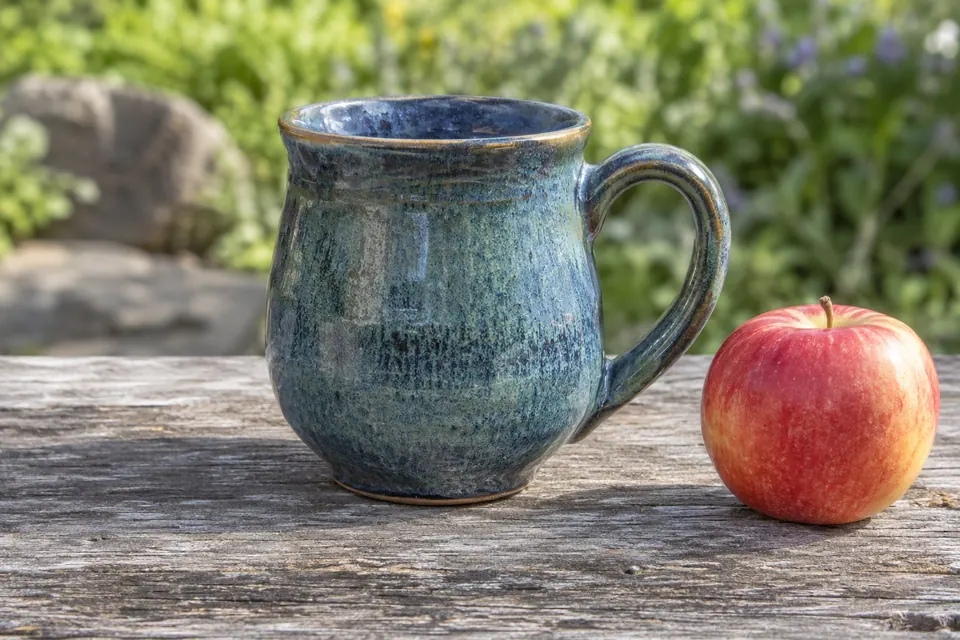
Show the whole object first
Choose one clear image with the full outline and something for scale. For small items, get close enough to see marks and joins without cutting off the edges.
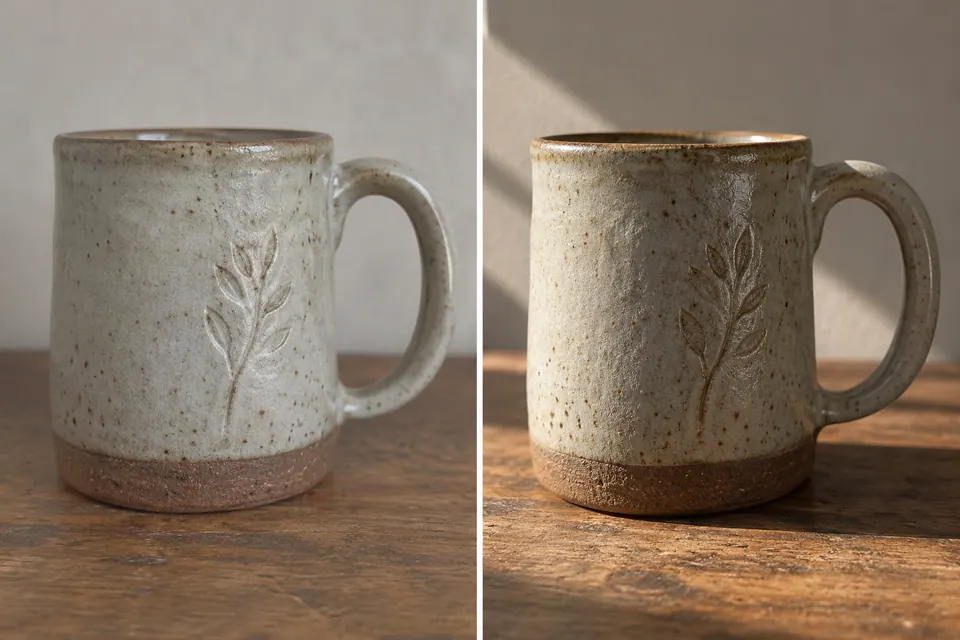
Use side light for texture
Window light from the side brings out stamped marks, carved lines, glaze, dents and casting seams far better than overhead room light or a direct flash.
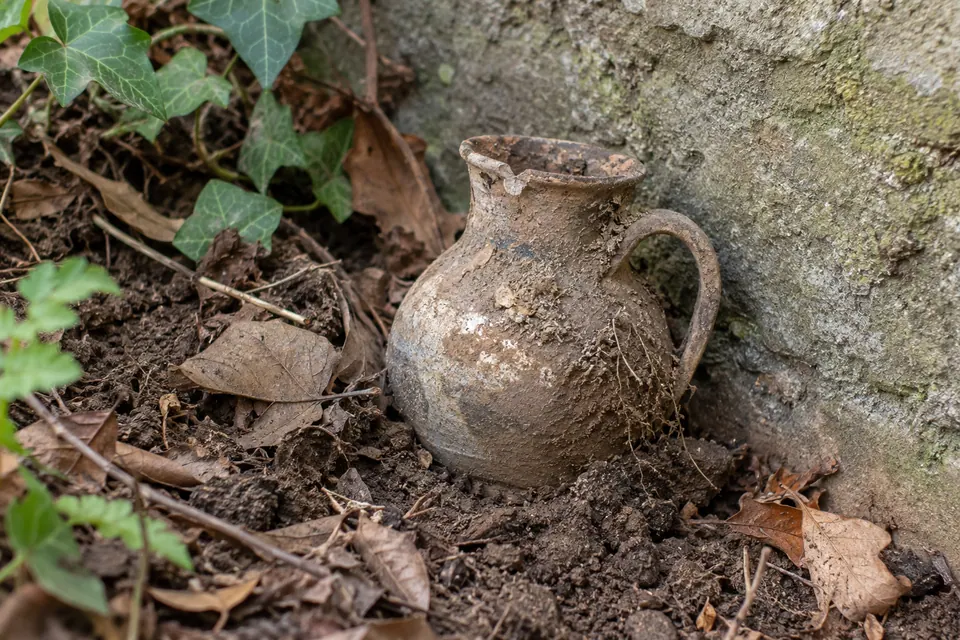
Keep fragile finds as they are
Don't polish, scrape or pick dirt out of cracks before photographing. Gently setting the piece on a plain background is safer and keeps more useful detail.


Old object and artifact identification FAQ
How do I identify an old object I found in the attic?
Start with a photo of the whole object, then look for a mark, fastening or opening on the base or back. Include something for size in the same shot. With attic finds, hinges, screw types, handles and wear patterns often tell you more than the surface color.
Can you identify a pottery shard from a photo?
Often, yes, especially if the piece has a rim, base, handle join or decoration. A plain body sherd is harder because so many vessels share similar surfaces. The best clues are wall thickness, curve, any glaze or slip, and how the clay body looks along the broken edge.
How do I identify an old coin or token?
Look for readable text, numbers, portraits, symbols and edge details such as reeding or a plain rim. Size matters too. You upload one image, so take a few views for yourself first, then pick the one that shows the most detail.
Where do I find a maker's mark or inscription?
Check the base, inner rim, back, clasp, underside of the lid, blade tang, mounting plate and the edge of a metal disc. On molded objects, marks may be raised instead of stamped. Even part of a word, logo or number can be useful.
What should I do if I think I found an archaeological artifact?
Leave it as it is, uncleaned, and don't disturb the ground around it any further. Photograph the object and its setting if you can, then contact a local museum or archaeology service. Where it was found can matter as much as the object itself, and in some places finds must be reported by law.
Can a photo tell if an antique is real, how old it is or what it's worth?
No. A photo can suggest the object type, material and a broad period, but it can't authenticate, date or value a piece, or prove its provenance. That takes a hands-on look, sometimes paperwork and comparison by a specialist. If it matters, ask a local museum, reputable dealer or appraiser.
Should I clean an old object before photographing it?
No, not yet. Cleaning can strip away residue, finish, tool marks and wear that help identify the piece, and it can damage fragile items. Loose dust that falls away without rubbing is fine, but skip scraping, soaking, metal polish and scrubbing until you know what you have.
Can I identify old objects and nature finds on my phone?
Yes, Snappit – Identify Anything for iPhone and Android identifies finds from a photo, from plants, insects and birds to much more. Each find becomes a collectible card with a rarity tier and short kid-friendly facts, kept in a private family collection with no ads or chat. It's free to download with free daily IDs, and an optional subscription unlocks unlimited snaps.